Scene · Entertainment
Oasis: Somewhere You Can Charge Me
I love Oasis. That is precisely why the machine works. The brothers are back, the stadiums are full and Britain is paying hundreds of pounds to revisit its own past.
The reconciliation may be real. So is the business.
For the past few days, I have had Champagne Supernova stuck in my head.
It arrives without invitation. That melody, that voice and that feeling that belongs to a particular version of Britain—and perhaps to a particular version of me.
That is the power Oasis still possess. Their songs no longer need to be released, promoted or discovered. They are already inside us. A few seconds can return millions of people to bedrooms, pubs, school corridors, first relationships, old friendships and summers that now seem warmer than they probably were.
Oasis understand the value of that feeling.
More importantly, the music industry understands it too.
They are not selling us the future. They are charging us admission to the past.
The mythology
The brothers who couldn’t remain in the same room
The Oasis story has never been only about music. It has always been about two brothers who appeared incapable of living with or without each other.
They came from Burnage and became one of the defining British bands of the 1990s. Definitely Maybe arrived in 1994. (What’s the Story) Morning Glory? followed in 1995. By August 1996, Oasis were playing to 250,000 people across two nights at Knebworth.
It became one of those moments Britain would spend the next three decades looking backwards at.
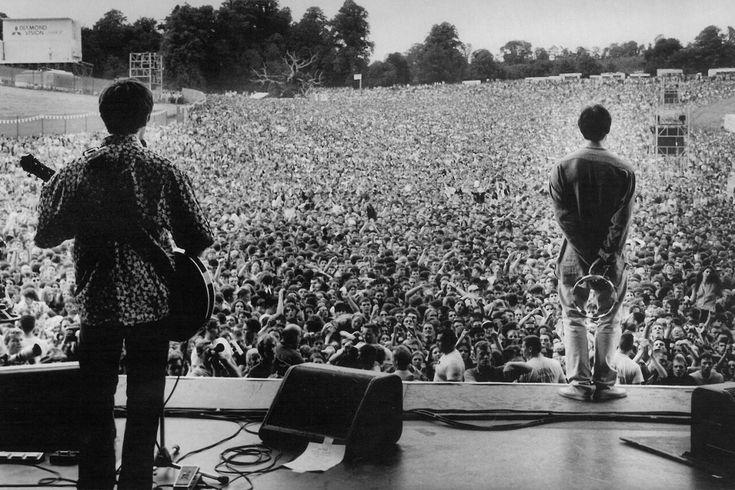
The instability was always part of the spectacle. Liam walked away from performances. Noel temporarily left tours. Interviews became arguments. Arguments became headlines. The relationship between them was not an unfortunate distraction from Oasis; it became part of what Oasis was.
Then, before a performance in Paris in August 2009, it finally collapsed. A backstage confrontation ended with Noel leaving the band. He said he could no longer work with Liam.
For the next 16 years, the insults continued in public. They pursued separate careers, spoke about each other through interviews and social media, and allowed the possibility of an Oasis reunion to hover permanently over British culture.
Every denial fed another rumour. Every insult made reconciliation appear less likely. And every year apart made the eventual reunion more valuable.
Scarcity
Every insult increased the ticket price
Scarcity does not always happen naturally. Sometimes it is cultivated.
Oasis did not need to manufacture their breakup. The hostility between Liam and Noel appeared real enough. But the music business could still convert that hostility into value.
The longer they remained apart, the more the reunion became an event rather than another tour. A generation that had seen Oasis in the 1990s wanted to experience them again. Another generation that had inherited the songs wanted its own Knebworth moment.
People were not merely buying the opportunity to hear “Wonderwall” performed live. They were buying proof that the impossible had happened.
The brothers were standing together again.
The sale
When the queue changed the price
When the reunion was announced in 2024, demand overwhelmed the ticketing system. Millions attempted to buy tickets. Fans spent hours in digital queues, afraid that refreshing a page could send them back to the beginning.
Then some reached the front and discovered that the price had changed.
Standing tickets originally listed at around £150 appeared as far more expensive “in-demand” tickets. The stage was the same. The view was the same. The performance was the same.
Only the level of desperation had changed.
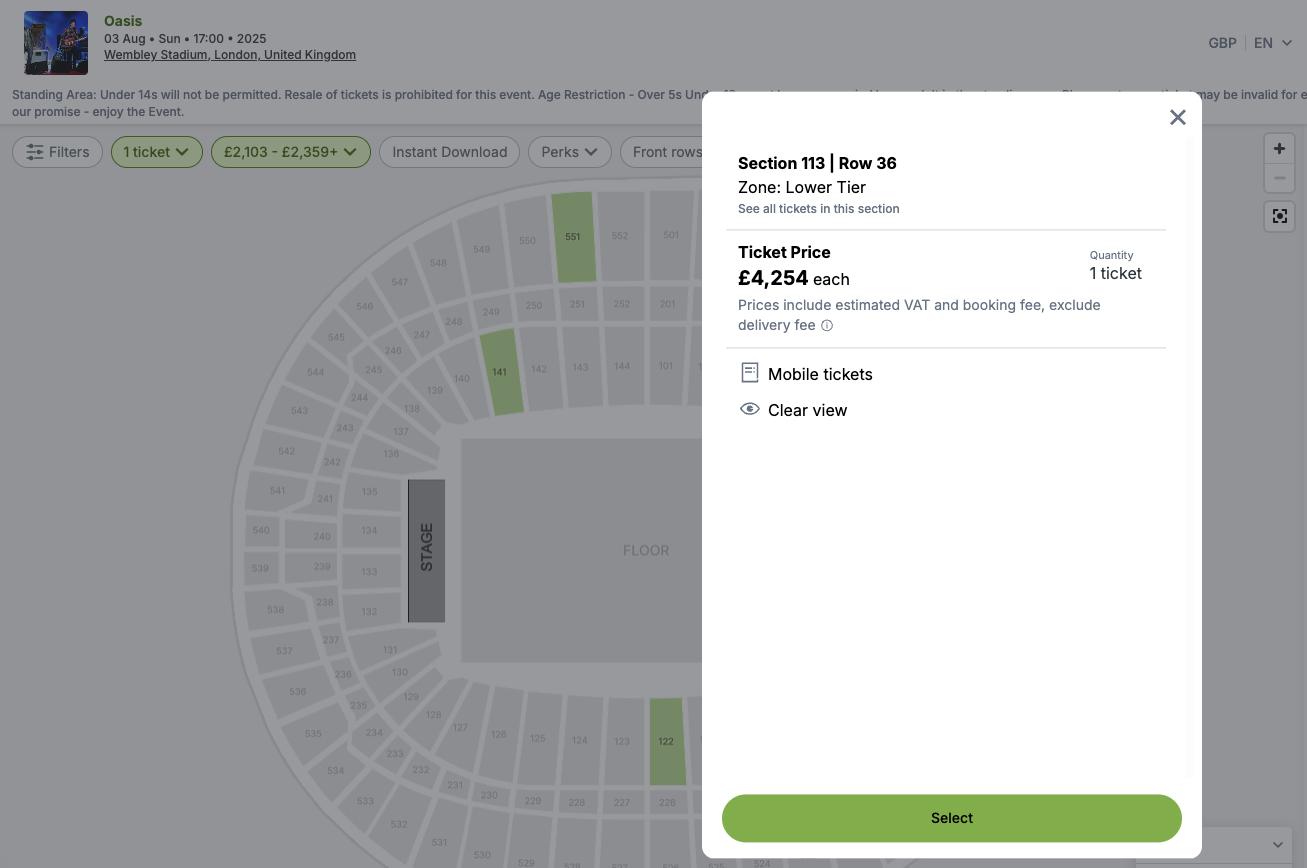
Dynamic pricing does not create another concert. It watches demand rise and asks how much more emotion can be extracted.
Responsibility
Don’t blame everything on the computer
Oasis said they had not known dynamic pricing would be used.
Ticketmaster became the public villain, as it often does. The platform controlled the queue, displayed the prices and absorbed the anger.
But Ticketmaster is not an entirely independent force that randomly decides what every artist’s fans must pay. Artists, management companies, promoters and ticketing platforms all operate within the same commercial structure. Ticket categories, premium packages, resale arrangements and pricing systems do not emerge from nowhere.
That does not mean Liam Gallagher personally sat behind a laptop increasing ticket prices. It means the familiar defence—we didn’t know—reveals how convenient the modern music industry has become.
The response
The government that can describe the problem
The political response followed the usual British pattern. Ministers expressed concern. The Competition and Markets Authority investigated Ticketmaster’s handling of the sale. Committees gathered evidence. Consultations discussed transparency, ticket resale and consumer protection.
But transparency is not the same thing as affordability.
The government can require companies to explain prices more clearly. It can pursue misleading advertising. It can restrict professional touts and regulate resale. Those things matter.
Yet it still struggles to establish the clearest possible rule.
If a standard ticket is advertised at a particular price, that price should not rise while the customer is waiting to purchase it.
Someone who has waited for hours before being shown a higher price is not making an ordinary choice. The system has already taken their time, raised their anxiety and reminded them that thousands of other people are waiting behind them.
Dynamic pricing monetises panic.
The government does not lack the power to intervene. It lacks the willingness to draw a hard boundary across a highly profitable industry.
Oasis Live ’27
A fairer queue—or a better-looking one?
For the 2027 tour, Oasis have changed the process.
There will be no ordinary general sale. Fans must register for the chance to receive a unique access code. Codes will be randomly allocated, and receiving one still does not guarantee a ticket. Sales will be staggered across several days.
Prices are being published in advance, with UK tickets reportedly ranging from £71.50 to £266.60. Official face-value exchanges are intended to prevent resale at vastly inflated prices.
That is better than allowing prices to mutate while people queue. But it does not suddenly transform the system into a public service. It replaces one form of anxiety with another. Instead of everybody entering an enormous queue, everybody enters a draw for permission to enter the sale.
The scarcity remains. The emotional pressure remains. And the most expensive experience still costs hundreds of pounds before travel, accommodation, food, drink or merchandise.
This time, at least, the price should be clear. That is progress—but it is a remarkably low standard.
The return
Knebworth, again
The clearest evidence of what Oasis are selling comes at the end of the 2027 tour.
Knebworth.
Not one night, or even the two nights that entered British music history in 1996. Oasis are returning for four performances across two weekends.
This is not merely a convenient venue. It is the deliberate reopening of a national memory.
Knebworth represents Oasis at their commercial and cultural peak: the enormous crowd, the confidence, the Union flags and the idea that Britain was temporarily standing at the centre of popular culture.
The new performances will take place 31 years later, but every poster, photograph and headline will invoke 1996.
The venue itself has become merchandise.
People will not only be buying tickets to see Oasis at Knebworth. They will be purchasing the right to place themselves inside a story they already know.
The original moment cannot be recreated. Britain has changed. The music industry has changed. The brothers have changed. The audience has aged.
But the memory can still be licensed for another weekend.
Or four.
The clash
Glastonbury without Oasis
For months, rumours suggested that the reunion would eventually reach Glastonbury. It seemed like the obvious ending: Britain’s most mythologised band returning to Britain’s most mythologised festival.
It is not happening.
Glastonbury 2027 runs from Wednesday 23 June to Sunday 27 June. Oasis are scheduled to perform at Manchester’s Etihad Stadium on 22, 25 and 26 June.
While hundreds of thousands gather at Worthy Farm, Oasis will effectively operate their own enormous festival of nostalgia in Manchester.
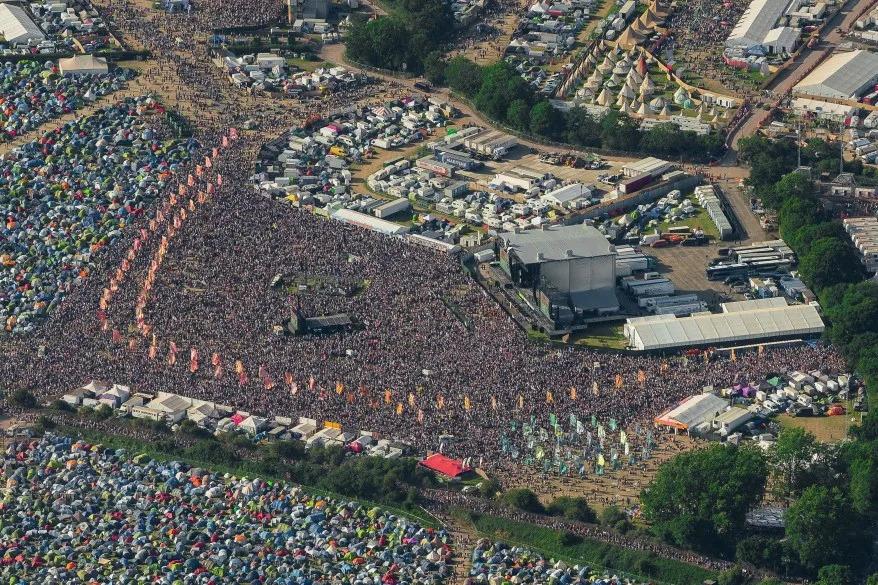
Commercially, that makes sense. Why appear as one act on somebody else’s bill when you can fill your own stadium repeatedly, control the presentation and sell tickets directly to an audience arriving specifically for you?
But Glastonbury belongs in this story for another reason. It shows that the rising cost of live music is much larger than Ticketmaster or Oasis.
The comparison is not completely straightforward. Glastonbury provides five days of access, thousands of performances and an entire temporary city. Its operating costs are immense, and the festival distributes millions of pounds to charitable causes.
It also does not use dynamic pricing. The published price remains the price.
Yet crossing £400 still tells us something important. Add transport, equipment, food and time away from work, and participation becomes much harder for the very people who supposedly give British music its atmosphere.
Dynamic pricing is the aggressive version of the problem. Glastonbury’s published price is the respectable version.
Either way, shared culture is becoming a luxury purchase.
The comparison
Take That came back differently
There is another way to stage a reunion.
When Take That returned, nostalgia opened the door—but they did not remain standing inside it. They recorded new albums, produced successful new singles and developed a different identity as an older band.
Their return included memory, but it also involved creation.
Oasis appear to have made the opposite calculation.
Noel has indicated that there are no plans for new Oasis recordings. The set lists may change around the edges, but the product remains the catalogue that already exists.
New albums, new singles and a new identity.
The catalogue, the mythology and the stadiums.
A new album might disappoint. It could expose the distance between who Oasis were and who they are now. It might interrupt the mythology with something ordinary.
The old songs carry no such danger. They have already survived changing fashions, hostile reviews and the passage of time. Every audience knows when to sing. Every emotional response has already been rehearsed.
Take That used their reunion to move forward. Oasis have turned standing still into a stadium tour.
The brothers
Getting on better than ever
Perhaps the most surprising part of the reunion is that it appears to be working.
The predicted explosion has not happened. Noel has publicly praised Liam’s performances. The shows have been completed. The relationship seems calmer than it has for years.
Maybe age has softened them. Maybe time apart created the distance they needed. Maybe they genuinely missed being brothers.
And maybe earning an extraordinary amount of money together makes reconciliation considerably easier.
These possibilities do not cancel each other out. The reunion does not need to be fake for it to be commercial. Liam and Noel can genuinely be happier while also understanding that Oasis is worth vastly more than either of them alone.