Scene Screen & Sound
Too Close to Be Funny
I watched Don’t Look Up on Netflix when it first came out, during that strange COVID period when time had started to lose its shape.
I was sitting there with my other half. He found it funny—or at least he found something funny in it that I didn’t.
I lasted about twenty minutes.
It wasn’t that I didn’t understand what the film was trying to do. The message was obvious: an approaching catastrophe, politicians refusing to confront it, the media turning it into entertainment and a population too distracted to recognise the danger.
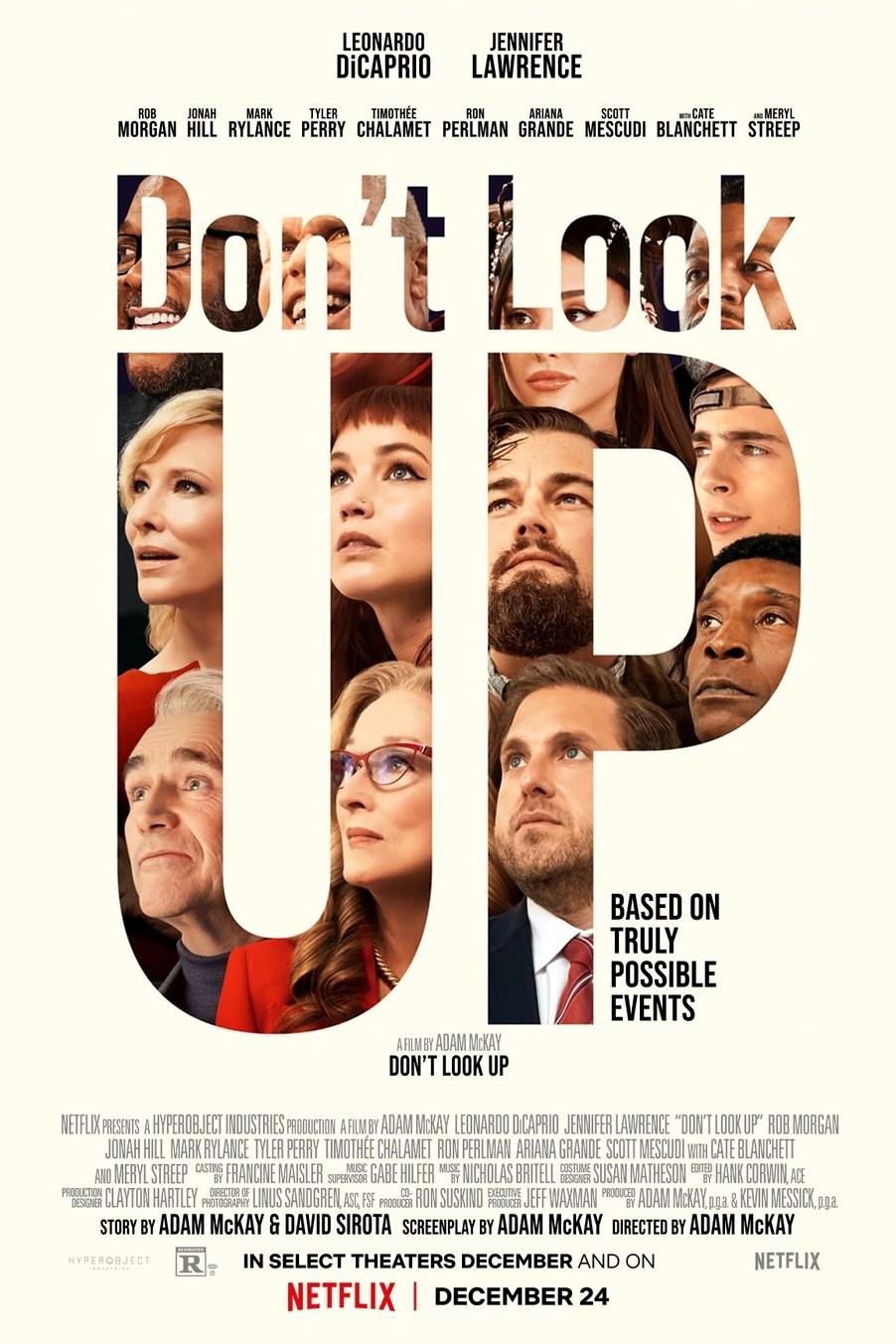
The film
Reality had already overtaken the satire
By the end of 2021, Britain had already spent more than five years tearing itself apart over Brexit. Boris Johnson was still prime minister. We had lived through lockdowns, daily briefings, contradictory rules, political slogans and a government that appeared to operate inside a reality of its own.
The country had been told to follow the science, stay indoors, protect the NHS and trust the people in charge. At the same time, confidence in those people—and in the institutions supposedly holding everything together—was steadily collapsing.
Everything felt unstable.
The rules kept changing. The explanations rarely matched what people could see happening around them. Serious questions became culture wars. Expertise became suspicious. Every failure was pushed into the next news cycle, where it would be replaced by another argument before anybody had properly dealt with it.
Then Don’t Look Up arrived and asked me to laugh at politicians ignoring evidence, broadcasters trivialising catastrophe and the public carrying on as though nothing was wrong.
But I had already spent years watching that happen in real time.
There was something surreal about sitting through a fictional version of the political behaviour we were already living with. The film presented it as an absurd exaggeration. To me, it barely felt exaggerated at all.
That was the problem.
The distance
Satire needs some distance
Satire usually creates a distorted version of reality so that we can recognise the truth hiding inside it. It stretches things just far enough for the madness to become visible.
But what happens when reality has already become ridiculous?
What happens when political life is so theatrical, contradictory and detached from consequences that the satire feels like a reconstruction?
I wasn’t watching the characters and thinking, Nobody would behave like this.
I was thinking, Yes. That is probably exactly what they would do.
And once I reached that point, the comedy disappeared. It became frustrating rather than funny.
I don’t need famous actors to show me politicians denying what is directly in front of them. I don’t need a screenplay to demonstrate how the media can turn a crisis into light entertainment. I can watch that on the news.
That doesn’t mean Don’t Look Up is a bad film. I didn’t watch enough of it to make that judgement.
It simply met me in the wrong state of mind, at the wrong political moment.
After about twenty minutes, I switched it off.
The song
Then there is Chained to the Rhythm
Katy Perry’s Chained to the Rhythm reaches me in a completely different way.
It delivers much the same warning, but it doesn’t feel like somebody repeatedly pointing at the madness and waiting for me to laugh. It places the warning inside the distraction itself.
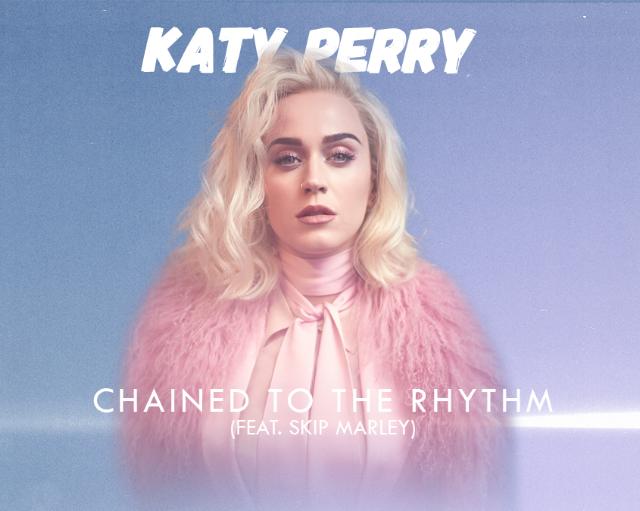
The music is bright, polished and ridiculously catchy. The world surrounding it is colourful, comfortable and artificial. Everybody is smiling, consuming, repeating the same movements and enjoying the experience prepared for them.
That is what makes it work.
The song understands how easily comfort can become sedation. Give people enough entertainment, convenience, outrage and noise, and they can continue living through decline without ever stopping to confront it.
They can see that something is wrong without allowing that knowledge to interrupt the rhythm of their lives.
That feels far closer to where we are.
We know about the political failures. We know about the collapsing services, the environmental pressure, the inequality and the institutions that no longer appear capable of correcting themselves. We discuss all of it constantly.
Then we scroll to the next thing.
The rhythm continues.
The difference
Same warning. Different rhythm.
Maybe that is why the song connects with me while the film didn’t.
Don’t Look Up turns society’s refusal to face catastrophe into an overt comedy. It asks us to stand outside the madness and laugh at it.
Chained to the Rhythm recognises that we are already inside it.
We are not simply watching the distraction. We are participating in it. We know that the world around us is becoming more unstable, but the music is still playing, the screens are still glowing and there is always something else waiting to occupy our attention.
The song doesn’t interrupt the performance to explain the message.
The performance is the message.
One turned the world I was already living in into a comedy, and I couldn’t find it funny.
The other turned it into a pop song.
I switched one off after twenty minutes. I still turn the other one up.