Identity / Asexuality
When “everyone wants it” doesn’t include everyone.
A personal look at the assumptions we make about sex, attraction, relationships and what counts as “normal”.
We talk as if everyone wants sex.
We assume people will grow up, find someone, fall in love, have sex and perhaps have children. It is treated as the natural order of things—so familiar that we can forget it is an assumption.
But not everyone experiences sexual attraction in the same way. Some people experience little or no sexual attraction, and may describe themselves as asexual or ace. That does not automatically tell us whether they want a relationship, have a libido, choose to have sex, or want children. People’s experiences vary.
Not everyone experiences attraction in the same way.
I’m not asexual. I’m bisexual, and attraction is part of how I experience the world. So I can’t write this as if I know what being ace feels like. What I can do is look honestly at what I thought I knew—and at what I hadn’t understood.
A personal assumption
What I thought I knew
For a long time, when someone said they were asexual, I thought I understood what that meant. I assumed it meant they didn’t want sex, and that meant we probably wouldn’t get on. Sex matters to me in a relationship. Even if I found someone attractive, I thought that difference would settle the question. I would keep my distance because I assumed we wanted fundamentally different things.
That was my assumption, based on what mattered to me. I hadn’t really stopped to ask what asexuality meant to the person using the word. I was taking my own experience of attraction and sex and using it to fill in the parts I didn’t know.
I’ve since understood that asexuality describes someone’s experience of sexual attraction. It doesn’t, by itself, tell you whether they want a relationship, have a libido, choose to have sex, or want children. Asexual people’s experiences differ. The label alone can’t tell me what a particular person wants, or whether we would be compatible. I would have to listen and talk to them.
I still know what matters to me in a relationship. I’m not pretending every relationship would work for me. But I can see the difference between having my own boundaries and deciding what another person’s identity must mean before I understand it.
The scripts we inherit
The scripts we learn
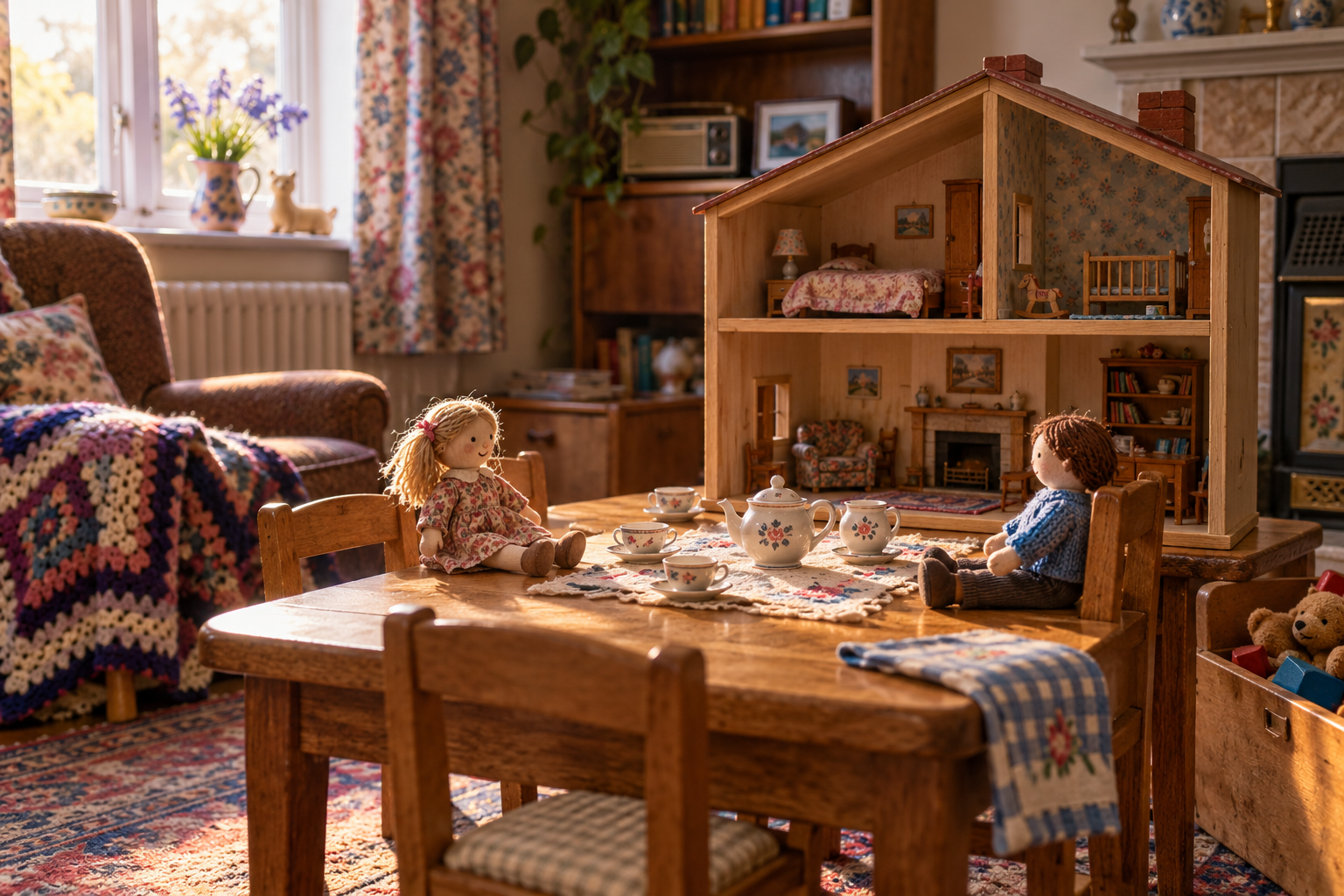
We absorb ideas about sex and relationships early. As a child, I played “mummies and daddies”. My husband has described me as a “sexual child”. I don’t see it that way. I was a child playing at the roles I saw around me and learning how the world worked. That isn’t the same as being an adult with a developed understanding of sex or attraction.
Sex is everywhere in the culture we grow up in: in jokes, television, advertising, music, conversation and the expectations adults place on relationships. We can mistake a child noticing or repeating those scripts for evidence that every person grows up with the same desires.
The scripts are gendered, too. Women are often expected to want a partner, sex and children; men are often presumed to want sex by default. Those expectations can make anyone who does not follow the script seem strange, even when the script itself is the thing that needs questioning.
Not one universal feeling
Attraction is not a universal experience
We often speak about attraction as if everybody feels it, just in different amounts. Asexuality challenges that assumption. Some people experience little or no sexual attraction. Some may still feel romantic attraction; some may not. Some may choose to have sex; others may not. There is no single experience that applies to everyone who uses the word “asexual”.
That distinction matters. Sexual attraction, romantic attraction, libido, behaviour and relationship preferences are not interchangeable. Assuming they all come as one package can leave people having to explain themselves again and again.
It can also make the rest of us treat our own experience as the default. I know what attraction feels like to me. I cannot use that as proof that everyone else experiences it, or should experience it, in the same way.
Who gets to be in the story?
Making room for different stories
Representation matters because books, television and film help shape who we imagine when we talk about love, desire and relationships. If asexual characters appear only rarely—or only as an explanation of a label—then ace people can seem like an exception rather than part of ordinary human variety.
Asexual characters belong in all kinds of stories: friendship, family, adventure, comedy, romance and stories that are not organised around relationships at all. They should be able to exist as full characters, with their own personalities and choices, rather than being reduced to a question for everyone else to solve.
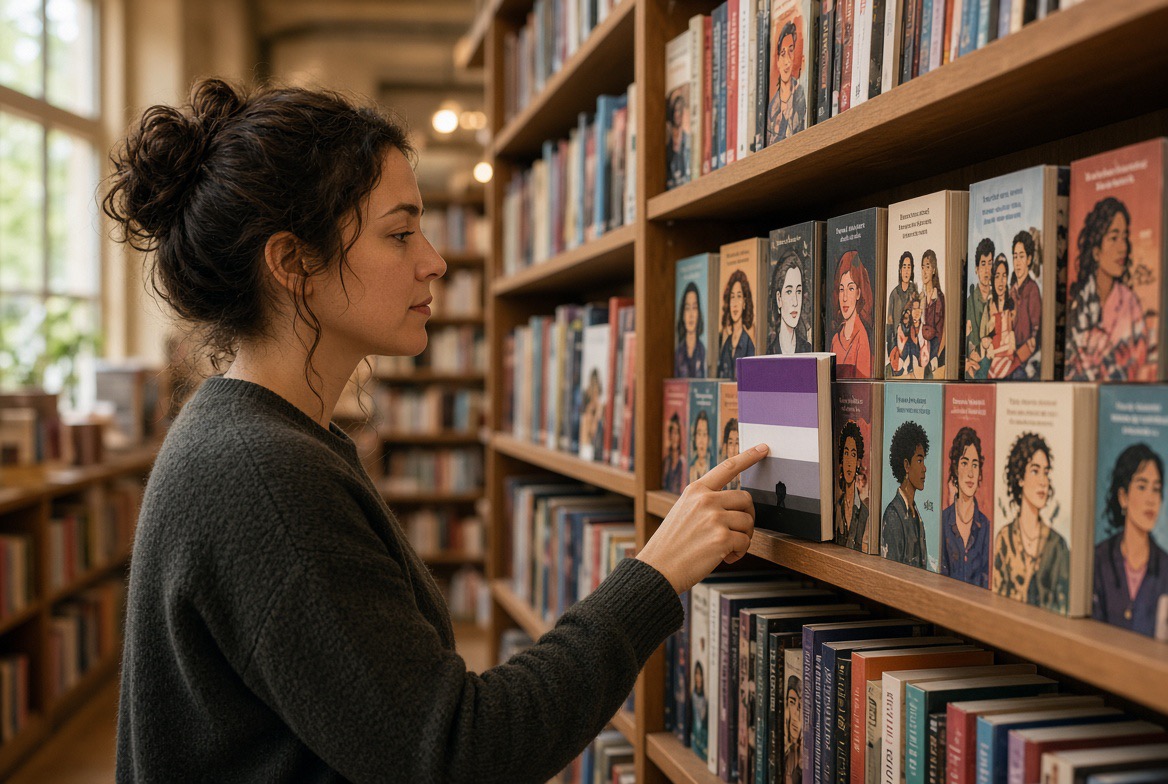
The point is not to prescribe what an asexual character’s story must be. It is to make room for those stories to exist.
A wider idea of ordinary
What “normal” leaves out
I still know what I want in a relationship. I still have boundaries. Acknowledging that does not require me to assume that everyone else wants the same things—or to treat asexuality as a synonym for incompatibility before I know anything about the person.
“Normal” often means familiar to the people doing the defining. If we assume everyone wants sex, partners and children, then anyone outside that expectation has to explain themselves. Ace Week is a chance to pause over that assumption: not everyone experiences attraction in the same way, and no one should have to prove that their way of living is real.
The question is not whether every person would be compatible with me. They wouldn’t. It is whether I can recognise that my own experience is one experience among many—and stop treating it as the rule everyone else is measured against.