Queer in the Corridors of Power
Sexuality, secrecy, Christianity and the politics of Westminster
There are things about attraction that people recognise without needing a conversation about them.
A look held a little longer. A particular kind of attention. The difference between somebody being friendly and somebody wanting you. Sometimes attraction is obvious. Sometimes it isn’t. And sometimes we convince ourselves we’ve recognised something that was never there.
I’ve never believed that sexuality needs to be the great mystery we sometimes make of it. I’m bisexual. I know who I am, what attracts me and what doesn’t. But I’ve also spent enough time around people to understand that what somebody feels, what somebody does and what somebody is prepared to tell the world can be three very different things.
And that raises a question I’ve always found fascinating.
Why do people have to come out at all?
Nobody expects a heterosexual politician to stand in front of a camera and announce that they’re straight. Nobody demands an explanation of when they first realised it. A wife, a husband, a family photograph — these things are routinely accepted as ordinary parts of a public life.
Yet for generations, gay politicians were expected to make a choice. Remain silent, or turn something entirely ordinary about themselves into a political event.
And nowhere is that history more revealing than Westminster.
Because behind the parliamentary speeches, the legislation, the arguments about morality and the repeated declarations about family values, there have always been people whose private lives were far more complicated than the political language surrounding them.
Some came out. Some never needed to. Some waited until their careers were established. Others lived through periods when openness carried consequences that today’s politicians may struggle to imagine.
The question isn’t how many gay people are hiding in Parliament.
It’s why Parliament ever made hiding necessary.
The assumption that everybody is straight
I’ve always found something strange about the way we discuss sexuality.
If a man introduces his wife, nobody asks him when he came out as heterosexual. If a woman mentions her husband, nobody congratulates her for being brave enough to disclose her attraction to men.
Heterosexuality is simply presumed.
Everything else becomes an announcement.
And that tells us something about the society we’ve constructed. We treat one sexuality as the default and ask everybody else to explain how they differ from it.
But sexuality isn’t always as straightforward as the categories we create.
Some people are gay. Some are bisexual. Some are asexual. Some experience attraction without wanting relationships. Others form relationships without experiencing sexual attraction in the way society expects.
And some people simply don’t want their sexuality to become everybody else’s business.
I can understand that.
What I find more difficult to understand is why a person’s sexuality should ever have determined whether they could become a politician, a minister or a prime minister.
For much of Britain’s parliamentary history, however, it could influence precisely that.
You don’t look gay
I remember coming out and one of the first things my cousin Cameron said to me was, “You don’t look gay.”
I found that fascinating.
What exactly was I supposed to look like?
I asked him whether he could recognise a rapist or a sexual predator simply by looking at somebody. Of course he couldn’t. So why did he think sexuality came with a recognisable face, voice or way of behaving?
I wasn’t comparing being gay with committing a crime. I was challenging the idea that you can reliably identify something about a person simply from their appearance.
I remember a guy called Ryan from college. He had seven sisters and was one of the most flamboyant people I knew. If you’d relied on stereotypes, you might have assumed he was gay.
He wasn’t. He was straight.
And that’s the problem with assumptions. We think we’re reading people when sometimes we’re just reading the expectations we’ve been taught.
In my own extended family, which runs into the hundreds, openly queer relatives have been relatively few. That doesn’t mean everybody else is heterosexual. It means I know what people have chosen to tell me.
And there are families where sexuality is barely discussed at all.
Marriage, religion, children and family expectations can shape the lives people lead. Some marriages are arranged, some are chosen independently, and some are influenced by cultural or religious expectations.
None of that tells us someone’s sexuality.
But it does make me wonder how many people, particularly from older generations, ever felt they had the freedom or even the language to explore who they were.
And that brings me back to Parliament.
If an ordinary family can struggle to have these conversations, imagine an institution built around reputation, public scrutiny, political loyalty and the fear of scandal.
Perhaps the greatest misunderstanding about coming out is the assumption that everybody starts from the same position.
They don’t.
Westminster before the closet door opened
To understand queer politicians today, we need to understand the institution they inherited.
Until 1967, sexual activity between men was criminalised across England and Wales. The Sexual Offences Act that year introduced partial decriminalisation, subject to restrictions including age and privacy.
Scotland followed in 1980 and Northern Ireland in 1982.
The change didn’t suddenly make homosexuality socially acceptable.
A man could hold public office, serve his country and participate in making the law while knowing that aspects of his private life had previously been treated as criminal.
Even after decriminalisation, exposure could carry professional and personal consequences.
The threat wasn’t necessarily prosecution anymore. It could be humiliation, blackmail, tabloid headlines, damaged relationships or the end of a career.
And this was particularly significant in Westminster, where political reputations were closely tied to ideas about respectability, marriage and family.
The institution didn’t need every politician to be heterosexual.
It needed them to appear respectable according to the standards of their time.
Those weren’t always the same thing.
Maureen Colquhoun: when somebody else opens the closet
In 1976, Labour MP Maureen Colquhoun was outed as a lesbian by the Daily Mail.
She hadn’t chosen the timing or circumstances of that public exposure.
Her sexuality became part of a wider political controversy, and she faced difficulties within her constituency party. Her political experience was complicated by other disputes too, but the treatment of her relationship demonstrated how easily private life could become political ammunition.
There is a fundamental difference between coming out and being outed.
Coming out is a person’s decision to share something about themselves.
Being outed takes that decision away.
And for politicians, that distinction was particularly important.
The press could turn someone’s sexuality into a story. Political opponents could exploit the attention. Constituency organisations could react. A person’s ability to represent voters could become entangled with arguments about whom they loved.
Colquhoun’s experience reminds us that queer parliamentary history isn’t simply a sequence of uplifting milestones.
Some people paid a substantial price for visibility they hadn’t even chosen.
Chris Smith and the beginning of a different Parliament
In 1984, Labour MP Chris Smith publicly came out as gay while serving in Parliament.
It was a significant moment because Smith was already an elected representative.
He was challenging the assumption that a politician’s sexuality had to remain hidden.
He later became Britain’s first openly gay Cabinet minister, serving as Secretary of State for Culture, Media and Sport under Tony Blair.
But what interests me isn’t simply the historical first.
It’s the fact that there had to be a first.
Parliament had existed for centuries. It had governed an empire, fought wars, passed legislation and shaped the lives of millions.
Yet an openly gay Cabinet minister was still a historic development at the end of the twentieth century.
That tells us something about how slowly institutions can change.
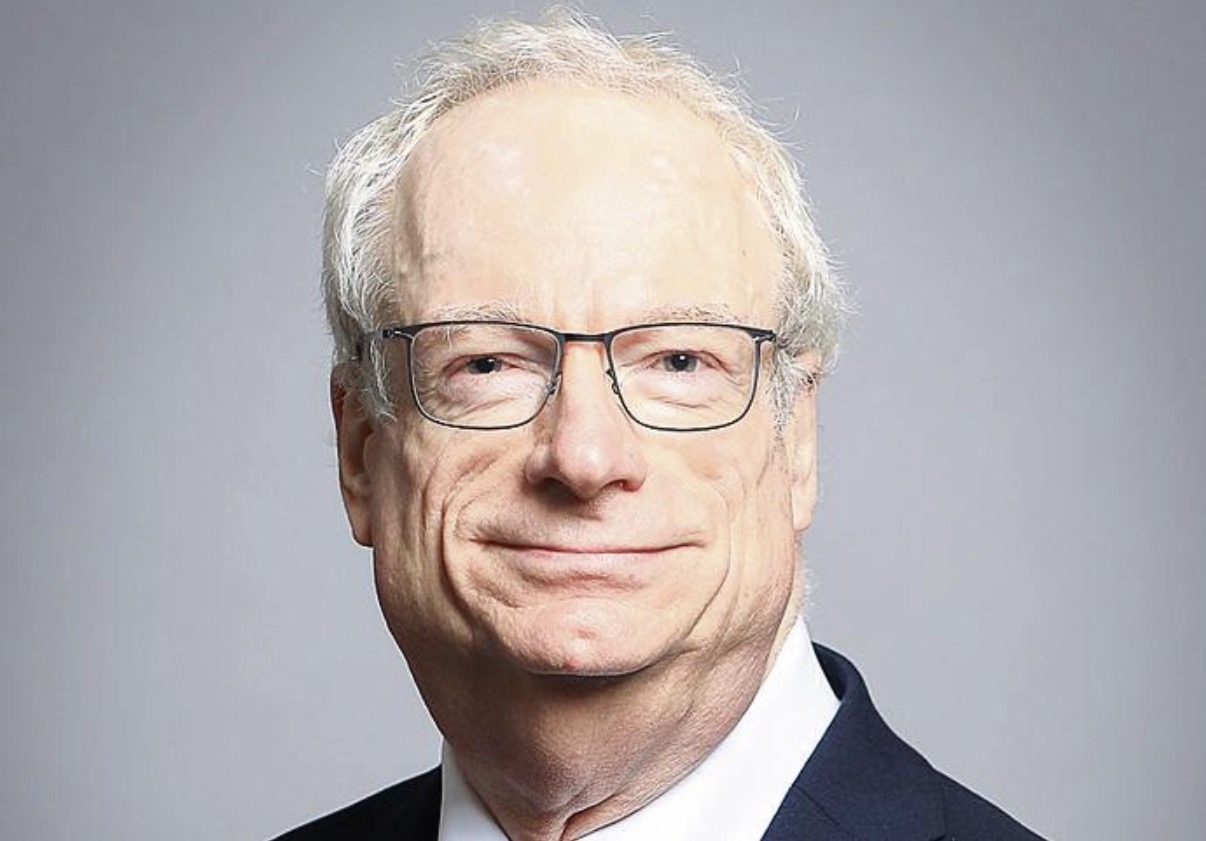
Alan Duncan and the Conservative silence
In 2002, Alan Duncan became the first serving Conservative MP to voluntarily announce publicly that he was gay.
That distinction matters.
For decades, homosexuality had been associated in parts of Conservative political culture with something to be tolerated privately rather than acknowledged publicly.
Duncan challenged that convention from inside the party itself.
He didn’t suddenly become gay in 2002.
He became publicly identifiable as gay.
And that is precisely the distinction society so often struggles to make.
A person’s sexuality doesn’t begin when everybody else finds out about it.
Duncan later entered a civil partnership with James Dunseath in 2008.
Here was a Conservative politician whose relationship could be acknowledged rather than concealed.
But why had that ever been remarkable?
Why should a politician introducing his male partner have represented a milestone when colleagues had been introducing their wives for generations?
And why had an institution responsible for making laws about other people’s relationships taken so long to accept the ordinary reality of its own members?
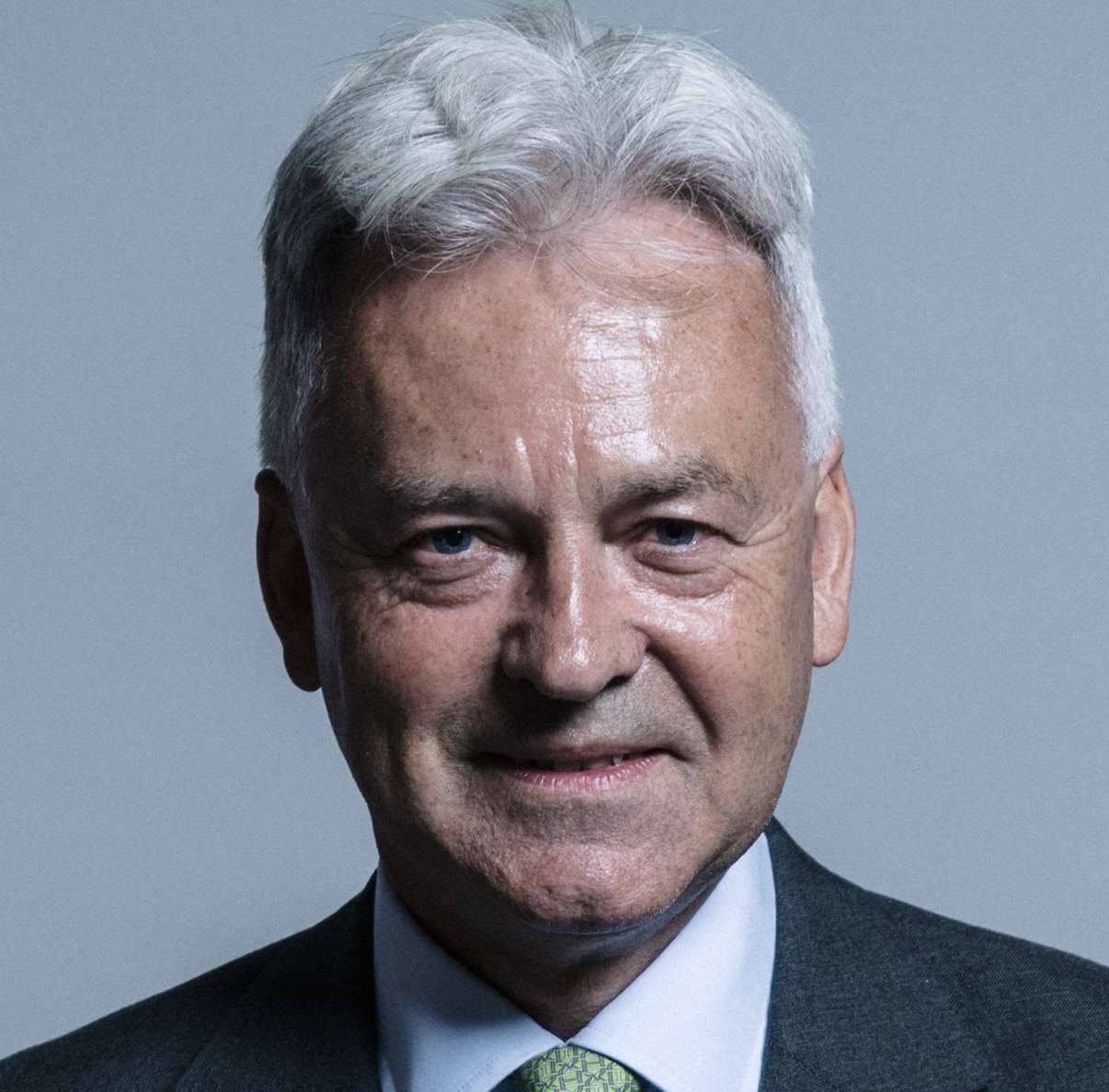
The Conservatives and their queer contradiction
The Conservative Party provides a particularly interesting case study because its relationship with LGBT rights has changed substantially over time.
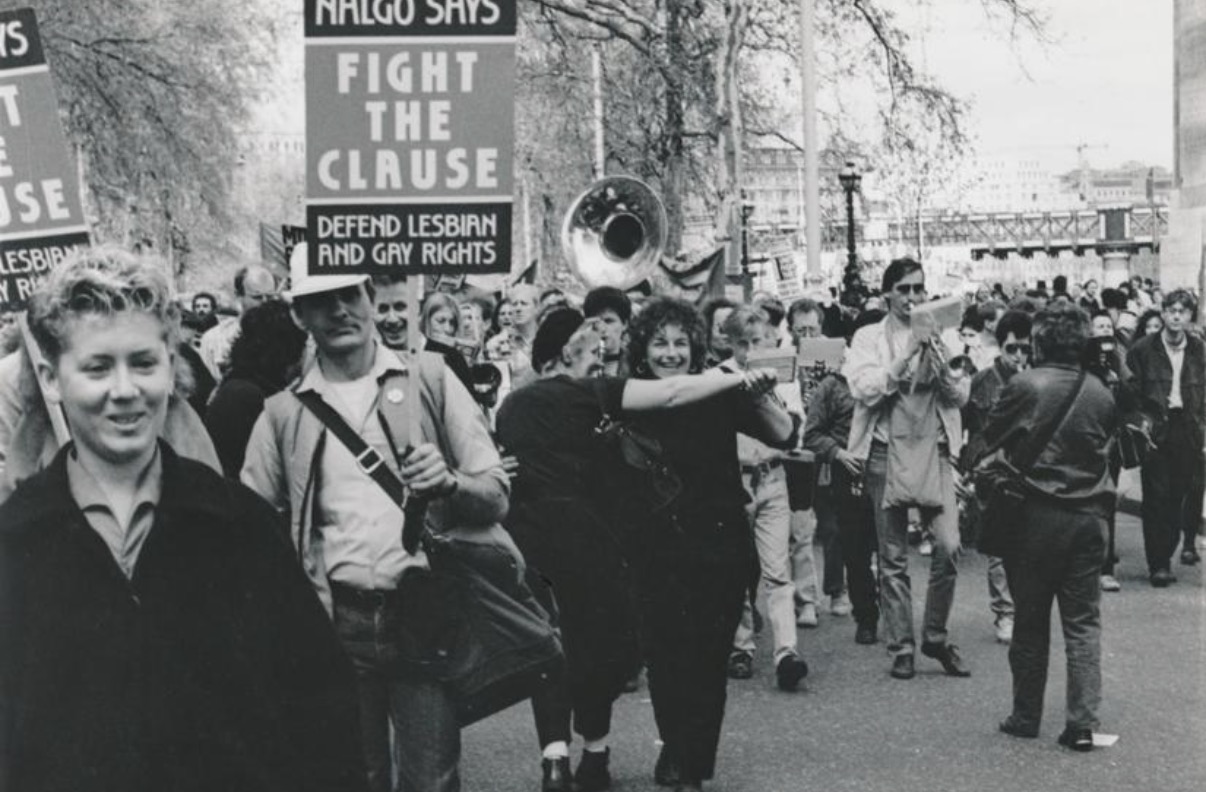
In 1988, Margaret Thatcher’s government introduced Section 28 through the Local Government Act.
The provision restricted local authorities from intentionally promoting homosexuality and from promoting teaching in maintained schools that presented homosexuality as a pretended family relationship.
Its wording, implementation and effects became subjects of intense controversy.
For many LGBT people, Section 28 represented a political message that their relationships and identities were not to be discussed positively within public institutions.
The provision was repealed in Scotland in 2000 and in England and Wales in 2003.
But the Conservative story didn’t end there.
In 2013, David Cameron’s Conservative-led coalition government introduced legislation allowing same-sex marriage in England and Wales.
Cameron supported the change and argued that allowing same-sex couples to marry was consistent with his understanding of conservatism.
Yet the legislation exposed significant divisions within his own party.
Many Conservative MPs voted against it, even as others supported it.
This is what makes the history more complicated than simply describing the Conservatives as either pro-gay or anti-gay.
The party that had introduced Section 28 also produced a prime minister who championed equal marriage.
It contained politicians who opposed the legislation and politicians whose own same-sex relationships were publicly acknowledged.
Those contradictions deserve examination rather than being flattened into a single political label.
And they raise a question that applies across political parties.
Does having gay politicians in positions of power necessarily mean a political institution supports gay equality?
Not automatically.
Representation and policy are different things.
A gay politician may support a particular economic policy, immigration policy or social position that another gay person strongly opposes.
Sexuality doesn’t dictate a complete political philosophy.
And nor should it.
God, marriage and the politics of respectability
Religion adds another dimension to this history.
Christianity has influenced British political thinking for centuries, particularly in debates about marriage, sexuality and family life.
And conservative politics has frequently drawn upon ideas of tradition, religious duty and social stability.
But Christianity is not a single political position.
Some Christians regard marriage as a union exclusively between a man and a woman. Others believe that Christian principles of love, commitment and equality support same-sex marriage.
Those disagreements exist within churches, families and political parties.
And they were visible in Parliament during the debates over equal marriage.
In February 2013, Conservative MPs were divided over the Marriage (Same Sex Couples) Bill. More Conservative MPs voted against its second reading than supported it, although the legislation passed with substantial support from other parties.
For some opponents, the argument concerned religious doctrine and the definition of marriage.
For supporters, marriage equality was compatible with religious freedom and with the conservative value placed on stable, committed relationships.
What interests me is how these arguments affect the people living within religious communities.
If somebody grows up being taught that heterosexual marriage is the expected destination, how easily can they acknowledge attractions or feelings that don’t fit that expectation?
If marriage is understood as a religious or family obligation, how much freedom does someone feel to question it?
And what happens when those expectations extend into political life?
It would be wrong to assume that every religious marriage conceals unhappiness or that every conservative Christian rejects homosexuality.
But it would be equally wrong to pretend that religious expectations have never contributed to silence around sexuality.
The real question is whether faith provides people with the freedom to live honestly, or whether particular interpretations of faith can make honesty more difficult.
That is a question for religious communities themselves as much as for Parliament.
David Mundell: coming out in your fifties
In January 2016, David Mundell, then Conservative Secretary of State for Scotland, publicly announced that he was gay.
He was 53.
He had previously been married to a woman and had three children.
His announcement demonstrated something important about the assumptions we make regarding people’s relationships.
Being married to somebody of the opposite sex doesn’t necessarily tell us everything about a person’s sexuality.
Nor does having children.
Mundell described coming out as something that had taken considerable personal reflection.
And I find that interesting.
Not because he was gay, but because he had reached his fifties before publicly acknowledging something so personal.
What pressures had shaped that decision? How much came from politics, family, upbringing, professional expectations or simply his own readiness?
Only Mundell can fully answer those questions.
But his experience illustrates how coming out isn’t always a single event that happens in adolescence.
For some people, it happens decades later.
And for others, it never becomes a public announcement at all.
Crispin Blunt and the politics of saying it aloud
Crispin Blunt provides another fascinating example.
The former Conservative MP for Reigate publicly came out as gay in 2010, having previously been married to a woman and having two children.
But one of his most memorable parliamentary interventions came in January 2016.
During debate on the Psychoactive Substances Bill, Blunt openly acknowledged using poppers, a term commonly used for alkyl nitrites.
He was challenging proposals that could have restricted their supply.
It was an unusual moment in the House of Commons.
Here was a Conservative politician openly discussing a substance associated with sexual activity, explaining that the proposed law would affect him personally.
Blunt wasn’t simply discussing an abstract moral principle.
He was describing the consequences of legislation for people whose experiences were often absent from parliamentary debate.
And that matters.
Politicians routinely legislate on subjects they may never personally experience.
Sometimes that distance is unavoidable.
But when somebody affected by a proposed law speaks openly about their own experience, the discussion can become more concrete.
The debate wasn’t settled merely because Blunt disclosed his use. Questions about health, safety and regulation still required evidence.
Nevertheless, his intervention demonstrated how personal experience can challenge the assumptions behind public policy.
It also illustrated how far Westminster had travelled.
A Conservative politician openly discussing his same-sex sexuality and his personal use of poppers in the Commons would have been difficult to imagine in an earlier political era.
More than a handful of names
And these aren’t isolated examples.
Nick Herbert, a former Conservative minister, publicly advocated LGBT equality and helped establish LGBT+ Conservatives.
Nick Boles was openly gay and married his partner, Shayne.
Margot James became one of the most prominent openly lesbian Conservative MPs and served as a minister.
Mike Freer, another Conservative minister, was openly gay and advocated LGBT rights.
Stuart Andrew has served as an openly gay Conservative MP and minister.
Ruth Davidson, who led the Scottish Conservatives, has spoken publicly about her relationship with Jen Wilson and their family.
Their experiences demonstrate that queer representation within conservatism is neither new nor confined to a single political generation.
But the wider parliamentary picture matters too.
Labour has included openly gay politicians such as Chris Smith, Chris Bryant and Wes Streeting, alongside Angela Eagle, who publicly came out as a lesbian during her parliamentary career.
The Liberal Democrats have included Layla Moran, who has publicly identified as pansexual.
These people don’t all share the same political beliefs.
They don’t all agree on economic policy, social policy, constitutional reform or the role of the state.
And why should they?
A gay person can be economically conservative.
A bisexual person can be politically radical.
A lesbian can support traditional institutions.
An asexual person can hold almost any political philosophy.
Sexuality is one aspect of identity.
It isn’t a complete political manifesto.
How many queer MPs are there?
There is an important distinction between the number of openly LGBT+ MPs and the number of MPs who may privately identify as LGBT+.
The House of Commons Library’s analysis of the July 2024 general election reported that 64 openly LGBT+ MPs had been elected.
Of those, 50 were Labour, five Conservative, seven Liberal Democrat, one SNP and one Green.
A separate LGBT+ parliamentary database identifies at least 78 LGBT+ MPs associated with the Parliament elected in July 2024, using a broader identification process.
The two figures should not be treated as interchangeable.
But both demonstrate that openly queer representation has become an established feature of modern Westminster.
The number of politicians who are not publicly out remains unknown.
And that is where the discussion becomes more difficult.
We cannot reliably calculate someone’s sexuality from whether they are married, whether they have children, how they speak, how they dress or whom they socialise with.
Someone may be privately out to friends and family but not publicly out to journalists.
Someone may consider their sexuality irrelevant to their political career.
Someone may fear discrimination.
And someone may simply value privacy.
None of those circumstances necessarily makes them dishonest.
The interesting political question isn’t whether we can identify every queer person in Westminster.
It’s whether politicians feel free to be themselves without fearing that their sexuality will be used against them.
Marriage, children and the stories we tell ourselves
One of the most persistent assumptions about sexuality is that someone’s relationship history must reveal their identity.
A man has a wife, therefore he must be straight.
A woman has children with a man, therefore she cannot be a lesbian.
Someone has had same-sex experiences, therefore they must identify as gay.
But human sexuality doesn’t always fit those conclusions.
Former Conservative politician Michael Portillo publicly discussed having had homosexual experiences when he was younger.
That disclosure became a major political story.
Yet sexual experiences, romantic attraction and personal identity are not interchangeable.
Someone can have a same-sex experience without identifying as gay. Someone can be bisexual and spend decades in a relationship with one person. Someone can realise or acknowledge their sexuality later in life.
And someone can choose not to discuss it publicly.
The important distinction is between what we know and what we assume.
I might recognise attraction when somebody is interested in me. I might even have a strong suspicion about another person’s sexuality.
But a suspicion isn’t proof.
And it certainly doesn’t give me ownership of somebody else’s identity.
That matters particularly when discussing politicians, because public speculation can quickly become a substitute for evidence.
The people we think we recognise
There’s a temptation to look at a politician and decide that we know something about them.
Perhaps they aren’t married.
Perhaps they don’t have children.
Perhaps they speak or behave in ways we associate with gay men.
Perhaps they have never publicly discussed a relationship.
And from those fragments, people construct an entire private life.
I’ve caught myself making assumptions about people too.
But I also remember Ryan from college.
I remember my cousin telling me that I didn’t look gay.
And I remember how easily people confuse stereotypes with knowledge.
That is why I think we need to be careful about the language of secrecy.
A person who hasn’t publicly disclosed their sexuality isn’t necessarily concealing it.
They may simply not be discussing it.
And unless there is a direct connection to a politician’s public responsibilities, we should question why we feel entitled to know.
There is a legitimate public interest in exposing corruption, hypocrisy, abuse of power or discrimination.
There isn’t automatically a public interest in establishing whom somebody privately finds attractive.
Privacy is not the same thing as dishonesty.
And being openly queer should be a freedom, not an obligation.
Sex scandals are not evidence of sexuality
Westminster has experienced numerous scandals involving sexual misconduct, inappropriate behaviour and allegations of abuse of power.
The case of former Conservative MP Chris Pincher is one example.
In 2023, the House of Commons Committee on Standards upheld allegations concerning his conduct towards two individuals at the Carlton Club in June 2022.
Its findings led to a recommendation for suspension, and Pincher subsequently resigned as an MP.
The political consequences extended beyond his individual conduct, becoming part of the crisis surrounding Boris Johnson’s premiership in 2022.
But there is a distinction worth making.
Sexual misconduct is about behaviour, consent and accountability.
Sexual orientation is about attraction and identity.
They are not the same thing.
And it would be wrong to treat allegations involving men as proof that a politician is gay.
The more significant questions concern institutional responsibility.
What did colleagues know? How were complaints handled? Were people protected? Were standards applied consistently?
Those are legitimate matters of public interest.
A politician’s private sexuality, by itself, is not evidence of wrongdoing.
Why do we still care who is gay?
This is the question I keep coming back to.
We live in a country where same-sex couples can marry, openly gay politicians have served in Cabinet, and LGBT people occupy prominent positions throughout public life.
Yet sexuality can still become a headline.
Sometimes that attention is understandable. A politician publicly coming out may be important to people who have never seen somebody like themselves represented in government.
Visibility matters.
But there is also something uncomfortable about the expectation that every queer public figure must eventually make an announcement.
Why?
Why must a bisexual person explain whether they are attracted to men or women more frequently?
Why must a gay politician discuss when they first realised they were gay?
Why should an asexual person have to justify not experiencing sexual attraction?
And why do we sometimes regard somebody’s refusal to answer as evidence that they are hiding something?
Perhaps we’ve confused visibility with entitlement.
We want people to feel free to live openly, but that shouldn’t mean demanding access to every aspect of their personal lives.
There is a difference between being free to come out and being expected to.
The politics of being ordinary
For me, the most important part of this history isn’t the number of gay Conservative MPs, Labour MPs or parliamentarians from any other party.
It’s the changing relationship between sexuality and political legitimacy.
Maureen Colquhoun’s experience mattered because it demonstrated the consequences of being publicly exposed without choosing it.
Chris Smith’s announcement mattered because being openly gay in Parliament was still politically significant.
Alan Duncan’s announcement mattered because of the particular history and culture of the Conservative Party.
David Mundell’s announcement mattered because it showed that public acknowledgement could come much later in life.
Crispin Blunt’s parliamentary intervention mattered because it demonstrated how personal experience could enter debates about laws affecting sexual minorities.
Ruth Davidson’s public family life matters because it demonstrates how different the political landscape has become.
These are not identical stories.
And they shouldn’t be treated as though every queer politician has travelled the same path.
Some faced hostility. Some found support. Some became advocates for LGBT equality. Others focused on political priorities that had little to do with sexuality.
That diversity is important.
Because equality doesn’t mean every gay person thinks alike.
It means sexuality should not determine whether someone is entitled to participate in public life.
The question Westminster still has to answer
I started with attraction because I think people sometimes make sexuality far more complicated than it needs to be.
We notice people. We experience attraction. We form relationships. Sometimes those relationships last. Sometimes they don’t.
Some of us are gay. Some are straight. Some are bisexual. Some are asexual. Some don’t particularly care for labels.
And some of us do far worse things than simply love or desire somebody of the same sex.
Some people rape. Some sexually assault others. Some exploit children. Some abuse their partners. Some violate the trust of people who depend on them. And some hide behind marriage, religion, professional respectability or positions of power while doing so.
Those behaviours aren’t sexual orientations. They are acts of abuse, exploitation and, in many cases, serious criminal offences.
Yet we have spent generations treating homosexuality as a moral question while sometimes failing to confront the conduct that genuinely harms people.
I’ve never understood that contradiction.
Why should somebody have to explain being gay when somebody else’s marriage, religious beliefs or respectable public image can be accepted without question?
None of those things tells us whether someone is a decent human being.
And none of us can reliably identify somebody’s sexuality, morality or capacity for wrongdoing simply by looking at them.
But Westminster has spent generations debating, regulating and sometimes restricting the private relationships of the very people it represents.
That is what makes its own queer history so revealing.
The same institution that criminalised sexual behaviour between men eventually decriminalised it.
The same Parliament that enacted Section 28 eventually repealed it.
And the same political system that once made coming out a potential career-ending event now includes openly queer politicians across its parties.
That is substantial change.
But it doesn’t mean every contradiction has disappeared.
We still live in a society where people make assumptions about sexuality based on appearance, where religious respectability can be mistaken for moral character, and where somebody’s private relationships can attract more attention than the way powerful institutions respond to actual wrongdoing.
And perhaps that is the distinction we should have been making all along.
Not between people who are gay and people who are straight.
Not between people who are married and people who aren’t.
Not between people who attend church and people who don’t.
But between people who respect the autonomy, dignity and consent of others and those who violate them.
Political representation doesn’t automatically settle disagreements about rights. Public visibility doesn’t guarantee private acceptance. And greater openness doesn’t eliminate the right to privacy.
So perhaps the question isn’t how many queer politicians remain hidden in Westminster.
Perhaps it’s whether we have reached the point where their sexuality no longer needs to be an announcement, a defence, a controversy or a political calculation.
Because the ultimate achievement wouldn’t be a Parliament in which everybody feels obliged to come out.
It would be a Parliament in which nobody feels they have to hide.
Research & references
Editorial source list. Verify facts and links against the latest records before publishing.
- House of Commons Library — General Election 2024
- LGBT+ MPs — Parliament starting July 2024
- National Archives — Section 28
- Swansea University — Maureen Colquhoun
- Alan Duncan announcement — The Guardian
- David Mundell — New Year, New Start
- Hansard — Psychoactive Substances Bill
- Standards Committee — Christopher Pincher