- 01Patterns
- 02Structures
- 03Power
- 04Feedback Loops
- 05Optimisation
- 06Decline
- 07Future Pressure
- 08Trade-offs
Systems / Decline · Eastbourne
The Shops Didn’t Fail.
The Competition Was Rigged.
A forgotten row of shops in Eastbourne reveals something larger about Britain: the customers did not disappear. The economy moved somewhere else.
I wasn’t looking for a story when I saw this row of shops in Eastbourne. I was simply passing through, looked across the road and stopped.
There was something about the whole scene that felt stranded.
The old shopfronts were still there. The outlines of businesses could still be seen beneath the white paint. One shop remained open, another appeared to be hanging on, while several units between them had been boarded up and quietly removed from economic life.
Nothing dramatic had happened. There had been no fire, no demolition and no sudden disaster. The world had simply moved on around them.
That was what caught my attention.
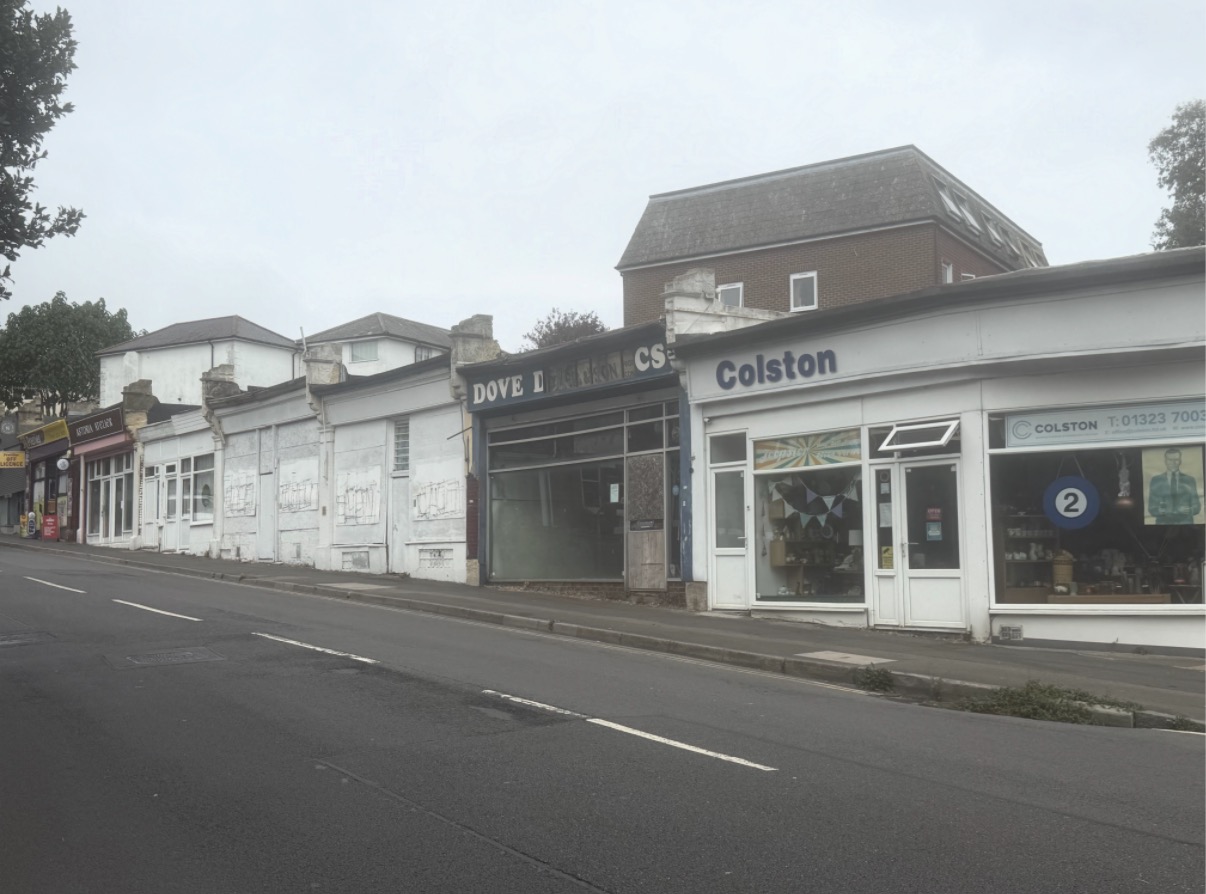
This little row looked as though it belonged to another economy—one built around neighbourhood shops, local trades and physical businesses serving the people living nearby. Then supermarkets expanded. Retail parks appeared. Shopping moved online. Amazon arrived in almost every home.
But the buildings remained.
Once you notice places like this, you see them everywhere. Eastbourne may be a seaside town, and this may not be its main high street, but that is almost the point. These forgotten rows exist throughout Britain: boarded windows, faded signs and premises waiting for businesses that are unlikely ever to return in the same form.
We say the shops failed
But did they?
How was a small independent shop supposed to compete with a supermarket buying products by the million? How was it supposed to compete with a retail park offering free parking and larger premises?
How was it supposed to compete with an online platform operating from enormous warehouses while the shopkeeper paid rent, energy bills, wages and business rates simply for occupying a physical space?
Britain placed the local shop in a race against companies with lower costs, greater buying power, better access to finance and national distribution networks. It then watched the shop disappear and called it consumer choice.
The internet cannot explain everything
Online shopping undoubtedly changed our behaviour. Britain embraced it more enthusiastically than most comparable European countries. But the internet exists in France. It exists in Germany. Supermarkets, delivery companies and global platforms operate there too.
Their smaller towns are not immune to decline, and we should not romanticise them. France and Germany have empty shops and struggling centres of their own.
The difference is that they have often been more willing to treat town centres as places worth managing and protecting—not simply property markets that must accept whatever outcome competition produces.
France gives municipalities powers to intervene in designated commercial areas, including the ability to acquire certain commercial premises or leases and return them to local trading use. German planning has traditionally placed greater emphasis on protecting established centres from developments that pull activity elsewhere.
Britain took another route
It allowed supermarkets to grow, permitted retail activity to migrate out of town, taxed physical premises heavily, embraced online shopping and weakened local government’s ability to intervene.
Each change may have had its own justification, but together they created an environment in which the traditional local shop was expected to compete without being given the conditions needed to survive.
And the demand did not vanish completely. Much of it simply moved.
Britain’s retail parks are busy. Warehouses are expanding. Delivery vans fill residential streets. Large online platforms continue to grow. People are still buying things—the money now travels through different buildings, different companies and often different parts of the country.
The old shopping street is left carrying the physical evidence of that transfer.
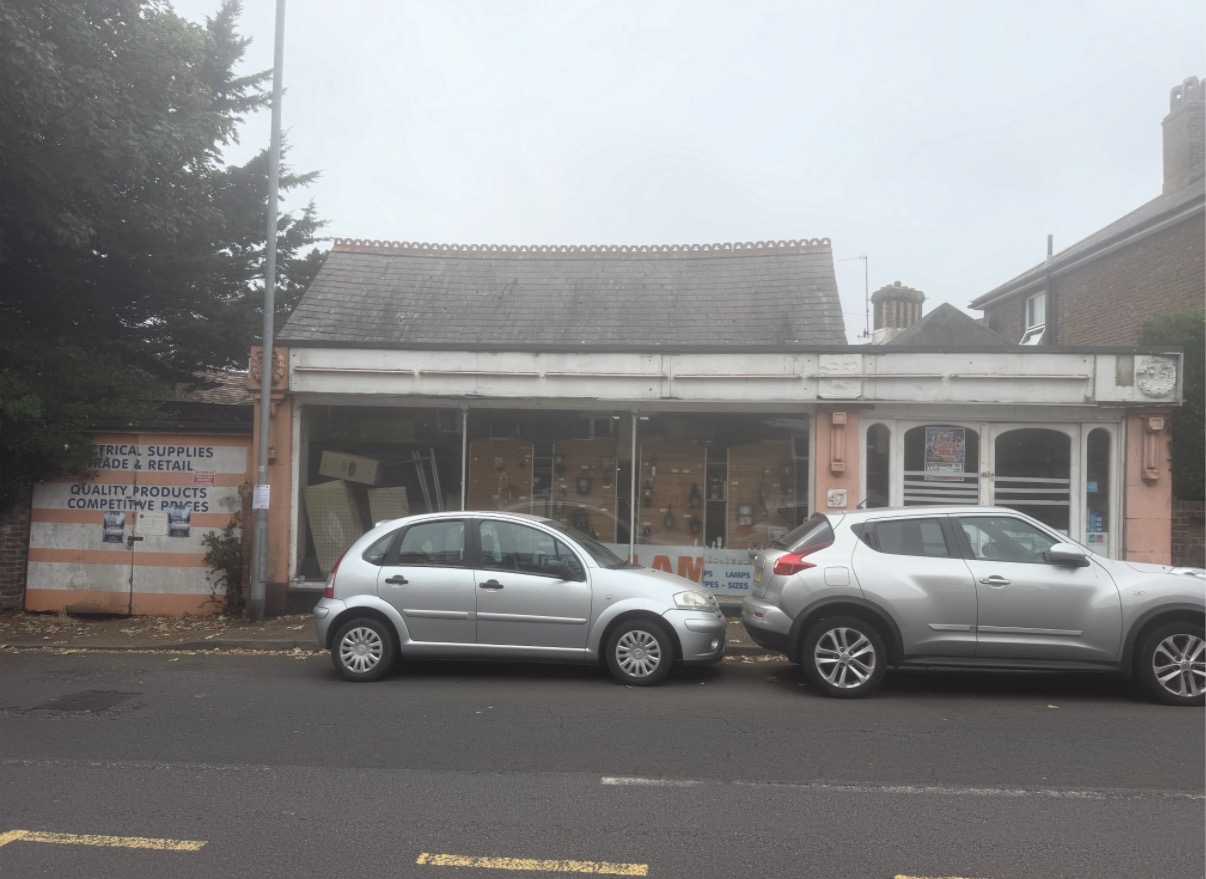
The remains of another economy
That is what I saw in Eastbourne. Not merely several empty shops, but the remains of one economic system after activity had been redirected into another.
We talk about regeneration as though fresh paint, new paving or a council slogan can reverse this. But cosmetic improvements cannot resolve a structural disadvantage.
A small shop cannot survive because the pavement outside has been repaved if every major economic force continues pulling customers and money elsewhere.
Nor is the answer to recreate the past. We cannot force people to abandon the convenience of online shopping, and not every empty unit should become another shop.
Some could become homes, workshops, community spaces, health services or small offices. The buildings need a new purpose built around how people live now.
What Britain cannot continue doing is leaving them suspended between two eras—no longer commercially viable, but never properly adapted for anything else.
The internet did not do this alone
It was the result of decisions about planning, taxation, property, transport and competition. Britain constructed an economy in which almost every advantage flowed towards scale and convenience, while the cost of maintaining a physical presence remained with the smallest businesses.
Then we blamed those businesses for losing.