A Black Bond, a White Shaft and the Difference Between Them
Robert Pattinson is James Bond
Robert Pattinson is James Bond. Fine.
Casting is not about preserving every minute detail of a fictional character. It is about identifying what makes that character work—and finding an actor capable of carrying it into another generation.
And, to be clear, I like Robert Pattinson. In fact, his Batman was banging.
My favourite Batman film is still Batman Returns, with Michael Keaton as Batman, Danny DeVito as the Penguin and Michelle Pfeiffer as Catwoman. That film remains undefeated for me. It was dark, grimy, gothic and slightly grotesque. Gotham felt like a real place, but also like a nightmare somebody had constructed underneath a Christmas tree. DeVito’s Penguin was disgusting, tragic and strangely memorable, while Pfeiffer’s Catwoman was simply iconic.
But Pattinson may be my favourite portrayal of Batman himself.
That is not an attack on Christian Bale. I liked Bale, and Christopher Nolan’s films obviously did plenty right. But his Batman existed inside a more polished, technologically advanced world. There was always another vehicle, machine or piece of Wayne Enterprises equipment waiting to solve the next problem.
Pattinson’s Batman felt less polished and more exposed. He looked exhausted, damaged and slightly detached from everybody around him. Gotham was wet, corrupt and genuinely unpleasant. His suit looked as though it had actually been dragged through alleyways, and he appeared to be investigating crimes rather than simply waiting for another machine to arrive.
It reminded me slightly of what I loved about Batman Returns: not because the films look identical, but because both versions understand that Gotham should feel dirty, strange and dangerous. Batman should look as though living in that city is slowly consuming him.
Pattinson did not attempt to become Christian Bale, Michael Keaton or anybody else. He inherited an enormous character, identified what mattered and found another way into him.
That is exactly what the next James Bond needs.

Inheritance
What actually makes Bond?
Pierce Brosnan remains my James Bond. That has not changed.
But saying Brosnan is my Bond is not the same as demanding that every future Bond resemble him. Bond has already survived Sean Connery, George Lazenby, Roger Moore, Timothy Dalton, Brosnan and Daniel Craig. All of them brought something different to the same character.
Pattinson will do the same.
The question is not whether he looks exactly like Ian Fleming’s original description. The question is whether he can carry Bond’s intelligence, danger, arrogance, charm and damaged relationship with intimacy.
Can he enter a room and appear to belong there while simultaneously calculating how to escape it? Can he be sophisticated without becoming decorative? Can he be violent without turning Bond into another generic action hero?
Those are the qualities that matter.
Whiteness is not one of them.
Bond must feel British. He must understand establishment institutions while never appearing entirely comfortable within them. He needs the confidence to move between embassies, casinos, luxury hotels and violent back rooms.
None of those qualities requires him to be white.
A Black British actor could possess every one of them.
That does not mean every character can or should be changed without thought. For me, it depends on whether ethnicity is fundamental to the character—or merely something audiences have become accustomed to seeing.
There is a difference.
Identity
Why Shaft cannot simply be white
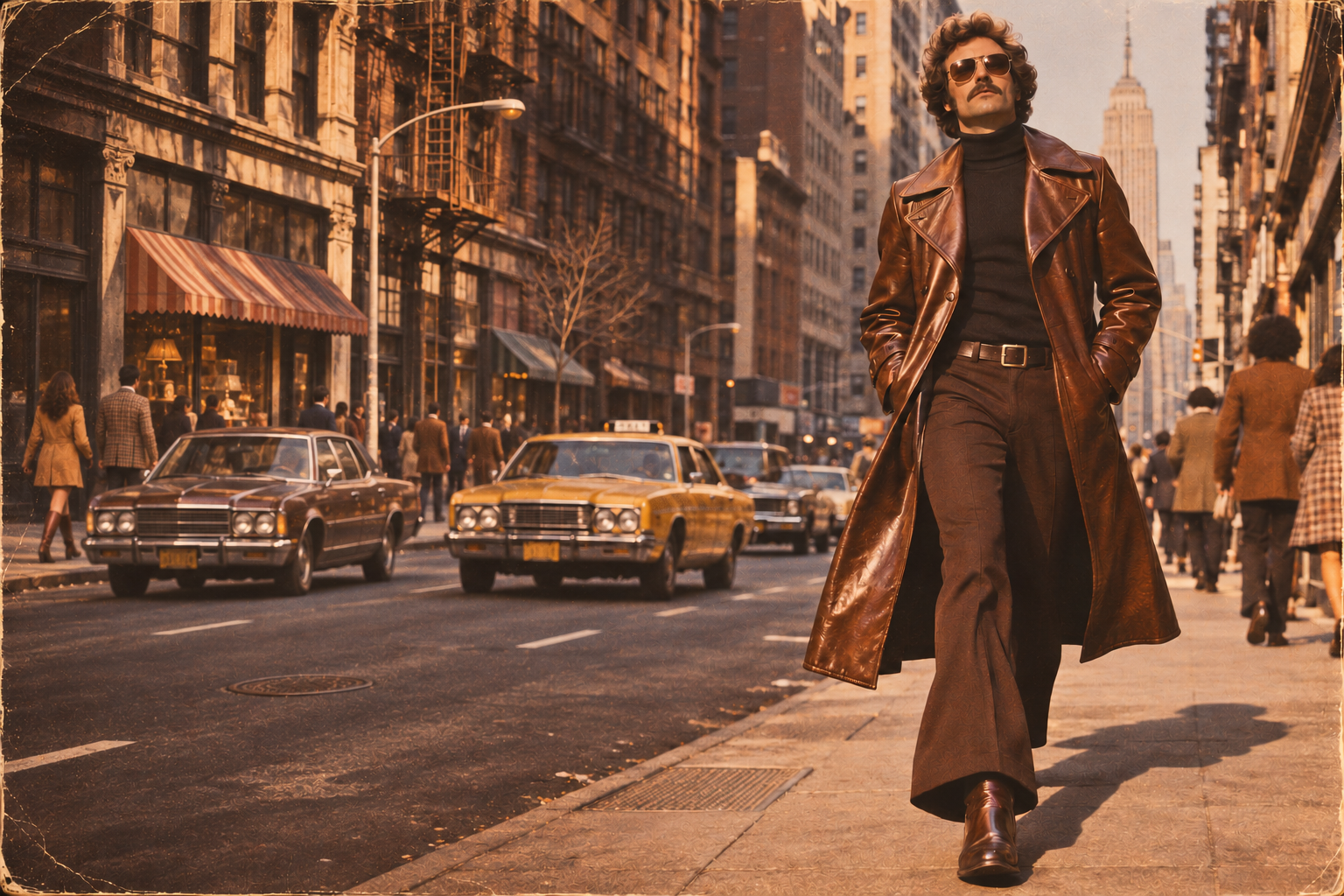
The feature image for this article deliberately presents a white version of John Shaft.
It looks wrong.
That is the point.
John Shaft is not simply a private detective who happens to be Black. His Blackness is embedded within the character’s history, attitude, environment and cultural significance.
Richard Roundtree’s Shaft emerged from 1970s New York and a period in which Black audiences were finally seeing heroes who possessed confidence, sexuality and authority rather than existing solely as servants, victims or supporting characters.
Gordon Parks’s 1971 film helped open doors for Black filmmakers and drew Black audiences into cinemas while reaching far beyond them. Shaft’s identity was part of the intervention the film was making. Remove that and you are not simply changing his appearance—you are removing part of the reason the character mattered.
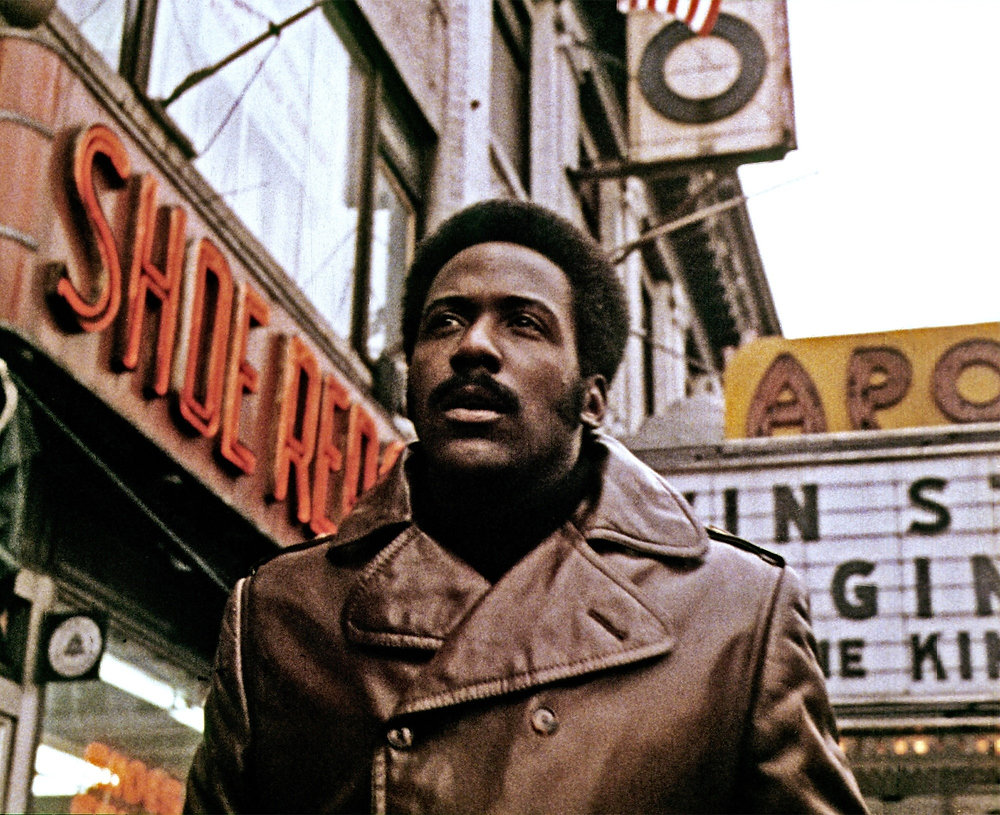
A white Shaft walking through Harlem in the leather coat might retain the name, music and swagger, but he would lose something essential.
Bond is different.
His whiteness is familiar, but familiarity and necessity are not the same thing.
Context
The character test
Put the examples beside one another and the principle becomes clearer.
This is not a one-way rule in which white characters can change while everybody else must remain untouched. Sometimes a character’s whiteness is fundamental. Sometimes their Blackness is fundamental. Frequently, neither is essential.
The question is always the same:
What function is ethnicity performing within this particular story?
When race is not carrying the character
| Character | Could a Black actor play the role? | Why? |
|---|---|---|
| James Bond | Yes | Britishness, confidence, danger, intelligence and establishment access define Bond. Whiteness does not. |
| Jack Reacher | Yes | His size, military background, independence, intelligence and capacity for violence are essential. His race is not. |
| Commissioner Gordon | Yes | Gordon’s integrity, exhaustion and uneasy alliance with Batman define him. Jeffrey Wright has already demonstrated that the character loses nothing by being Black. |
These characters were traditionally presented as white, but their whiteness is not doing essential work within their stories.
Change the actor and the foundations remain.
When whiteness is part of the story
Whiteness is not always a neutral appearance that can be changed without consequence. Sometimes it determines the access, protection or moral position a character occupies within society.
| Character | Why would making him Black change the story? |
|---|---|
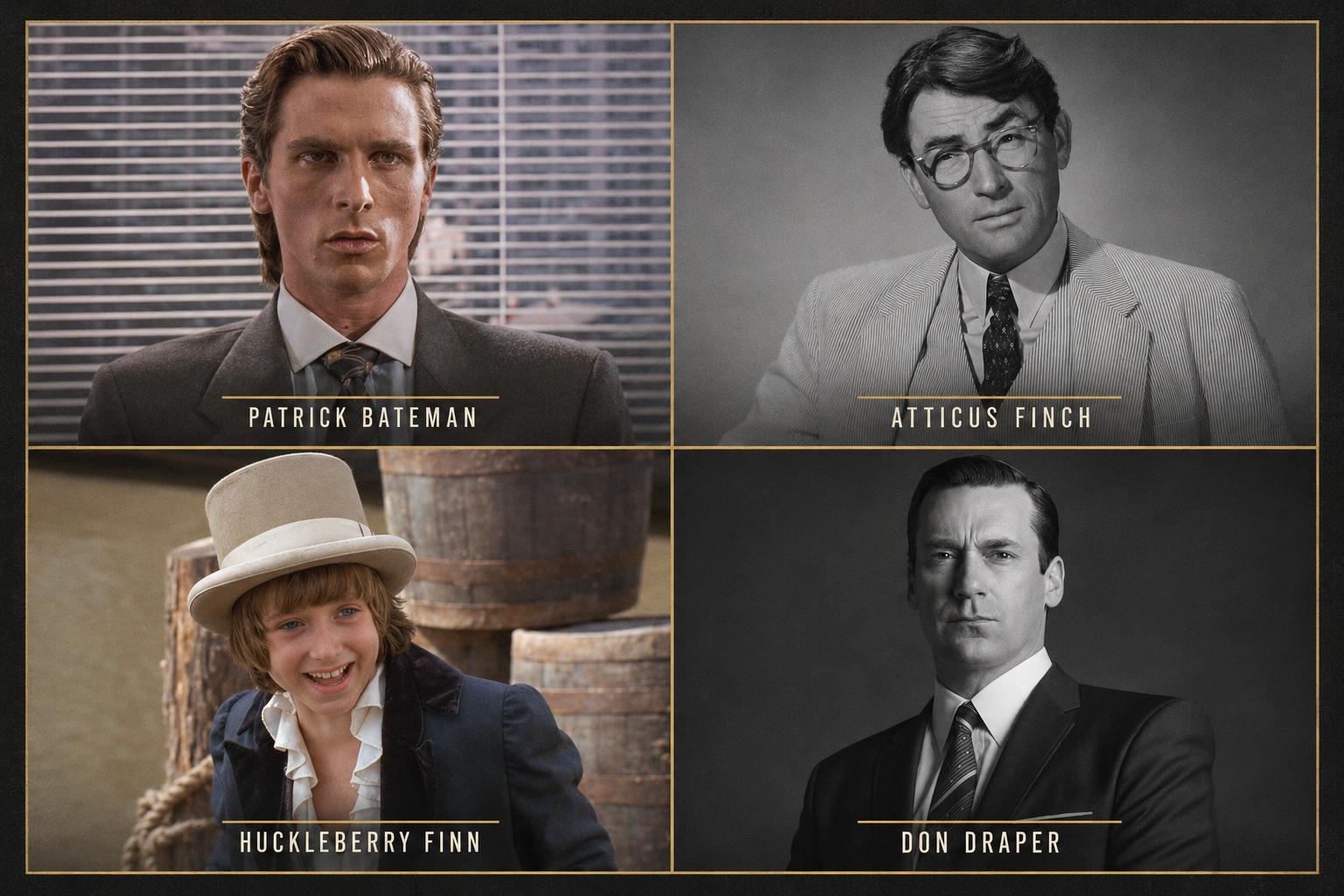
| Patrick Bateman | His protection by wealthy, white male Wall Street conformity is central to the satire of American Psycho. |
| Atticus Finch | His standing as a respected white lawyer inside a racist white community creates the power dynamic of To Kill a Mockingbird. |
| Huckleberry Finn | His journey depends upon a white boy questioning the racist morality he has inherited while helping Jim escape slavery. |
| Don Draper | His ability to invent himself and move through 1960s corporate advertising depends partly upon the access given to a handsome white man. |
Patrick Bateman is not merely a serial killer wearing an expensive suit. He is deliberately interchangeable with the other wealthy white men surrounding him. The film’s satire is rooted in 1980s Wall Street, misogyny, capitalist obsession and a corporate culture in which nobody can even tell these men apart.
A Black Patrick Bateman could produce a fascinating story about visibility, suspicion and power—but it would not be the same satire. He could not disappear into that environment in quite the same way.
Atticus Finch’s whiteness matters because he possesses standing inside the community persecuting Tom Robinson. A Black lawyer defending the same man in 1930s Alabama would face a completely different level of danger and exclusion.
Huckleberry Finn’s moral conflict similarly depends upon what white society has taught him. His decision to help Jim means rejecting the racist values he has inherited. Make Huck Black and the entire internal conflict changes.
A Black Don Draper could also be compelling—but a Black man could not simply walk through 1960s Madison Avenue with exactly the same opportunities, anonymity and authority. The social machinery of Mad Men would have to be rebuilt around him.
When Blackness is part of the story
The same rule applies in the opposite direction. These are not characters who merely happen to be Black. Their identities, communities and cultural significance are built into their stories.
| Character | Why would making the character white change the story? |
|---|---|
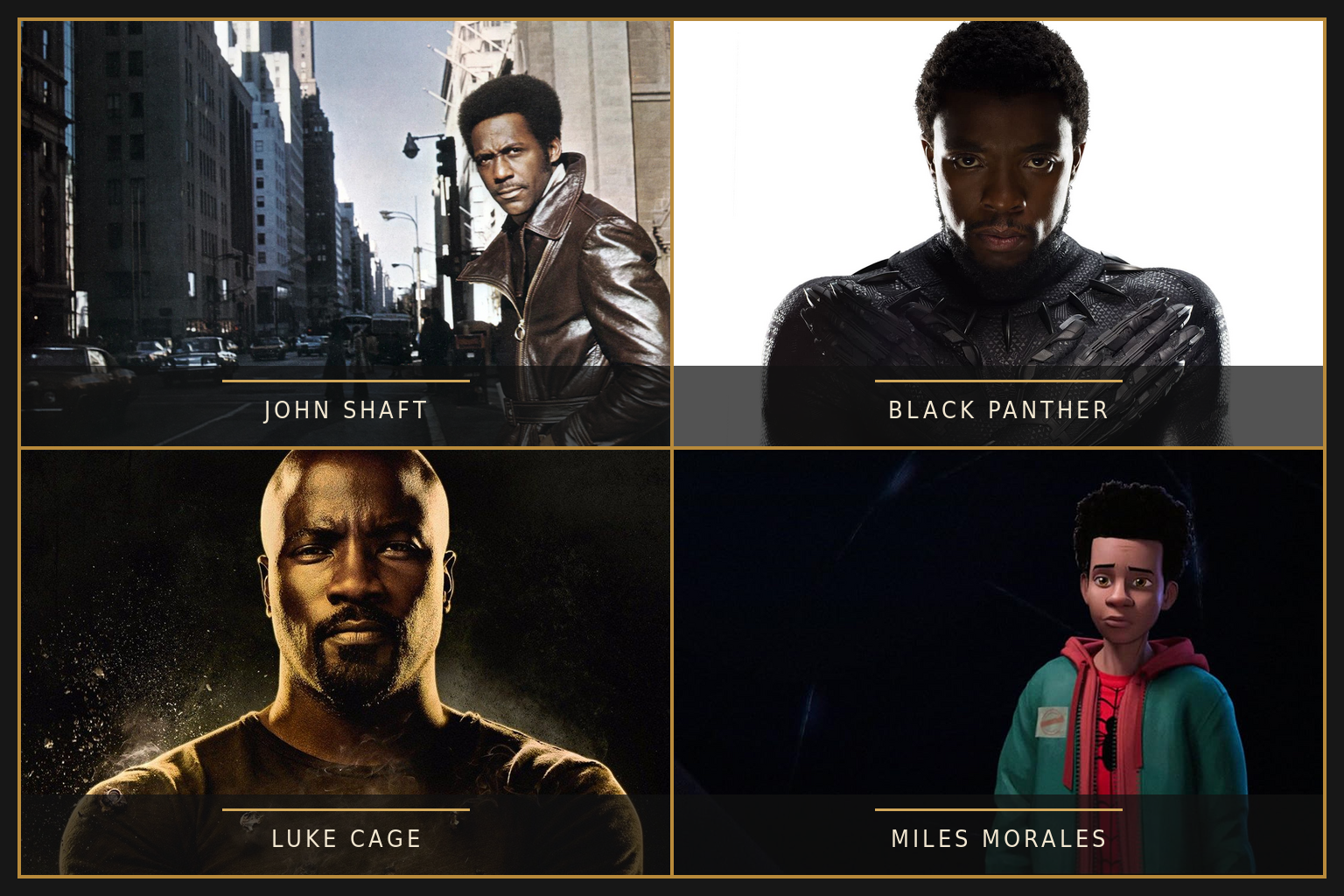
| John Shaft | His Blackness, Harlem environment and emergence from the cultural confidence of the 1970s are inseparable from the character. |
| T’Challa / Black Panther | Wakanda, African sovereignty, colonialism and the African diaspora are built into the character’s purpose. |
| Luke Cage | His significance as Marvel’s first African-American superhero to headline his own series, alongside his relationship with Harlem, is fundamental. |
| Miles Morales | Spider-Man is a flexible mantle, but Miles is a specifically Black Puerto Rican character whose family and community shape him. |
A white Black Panther is obviously nonsense. T’Challa is not simply a man wearing a technologically advanced cat costume. Wakanda and the character’s relationship with Africa, colonialism and the wider diaspora are the story.
Luke Cage’s Black identity and relationship with Harlem are equally foundational. His historical importance as the first African-American Marvel superhero to headline his own series is part of what made him significant.
Miles Morales gives us another useful distinction.
Spider-Man can be white, Black, Latino, Asian or almost anything else. It is a heroic mantle that can pass between people.
But Miles Morales himself cannot simply become white.
His Black Puerto Rican identity, his parents, his Brooklyn upbringing and his relationship with language and community all belong to that particular character. Peter Parker can remain Spider-Man. Miles can also be Spider-Man. That does not make them interchangeable individuals.
That is the balance.
A Black James Bond would still be James Bond.
A Black Jack Reacher would still be Jack Reacher.
A Black Patrick Bateman would create a different examination of power and criminal impunity.
A white John Shaft might retain the leather coat and theme music, but he would no longer represent what Shaft was created to represent.
The usual response—“If Bond can be Black, why can’t Shaft be white?”—is therefore not the clever reversal people imagine it to be.
It ignores context.
Bond’s whiteness is an inherited appearance. Shaft’s Blackness is part of his cultural architecture.
Equally, Bateman’s whiteness is part of his cultural architecture, while Reacher’s is merely an inherited appearance.
Preserve what carries the story. Be willing to reinterpret what does not.
Presence
Two men built for Reacher
Then there is Jack Reacher.
Alan Ritchson currently looks as though somebody took Lee Child’s description, fed it into a laboratory and added extra protein. He has the size, stillness and slightly weary confidence of a man who already knows exactly how the fight will end.
But Aaron Pierre possesses that presence too.
Pierre plays John Stewart in Lanterns. John Stewart is already an established Black character, so that casting is not a racial reinvention of Green Lantern. But watching Pierre made me think about another character entirely.
Jack Reacher.

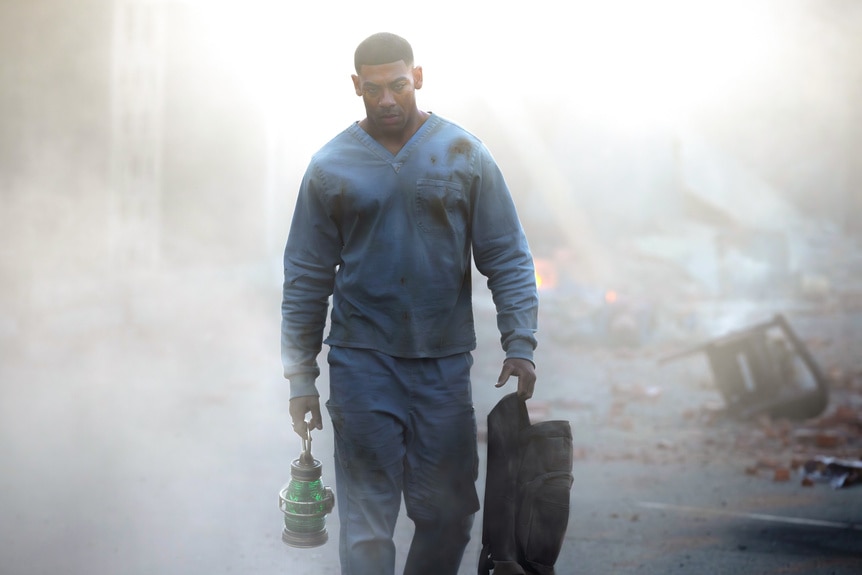
Pierre is physically imposing, exceptionally good-looking and capable of communicating danger without bouncing around or shouting about it.
Both Pierre and Ritchson are enormous, exceptionally stunning men—and either one could throw me around any time they wished.
Purely in the interests of casting research, obviously.
More importantly, both can project what Reacher actually requires: physical authority, intelligence, independence, stillness and a controlled capacity for violence.
Nothing about those characteristics requires Reacher to be white.
Tom Cruise proves the point from another direction.
Cruise played Reacher in two films—Jack Reacher in 2012 and Jack Reacher: Never Go Back in 2016—and I liked them both.
He was physically nothing like the character described in the books. Lee Child’s Reacher is 6 feet 5 inches tall; Cruise is approximately 5 feet 7 inches. The difference caused considerable criticism from readers, although Child praised Cruise’s ability to capture the character internally.

Cruise made his version work through presence, intelligence and controlled aggression. Audiences were asked to overlook one of Reacher’s most famous physical characteristics because the actor could carry the films.
Aaron Pierre is considerably closer to the physical idea of Reacher than Cruise ever was.
So if Tom Cruise could be accepted despite lacking Reacher’s defining size, why should Pierre’s skin colour suddenly present an insurmountable problem?
Pierre could play Shaft because Shaft is Black.
Pierre could play Reacher because Reacher does not need to be white.
The same actor could suit both characters for completely different reasons.
I can genuinely imagine Pierre becoming the next John Shaft. Nothing has been announced, but he has the stature, voice, elegance and quiet sense of danger the role requires.
And if somebody ever puts Pierre’s smooth, watchful John Shaft opposite Ritchson’s human-demolition-vehicle version of Jack Reacher, I will be seated immediately.
One would glide into the room and read everybody in it.
The other would remove the door from its hinges.
It could be ridiculous.
It could also be absolutely brilliant.
Reinterpretation
Reinterpretation is not destruction
None of this is particularly new.
Characters have been reinterpreted across race, sex, gender, nationality and historical setting for generations. Sometimes that introduces an old story to people who may never previously have seen themselves anywhere near it.
Sometimes it reveals something new within the material.
And sometimes it simply does not work.
The difference is whether the change preserves the foundations of the character or removes them.
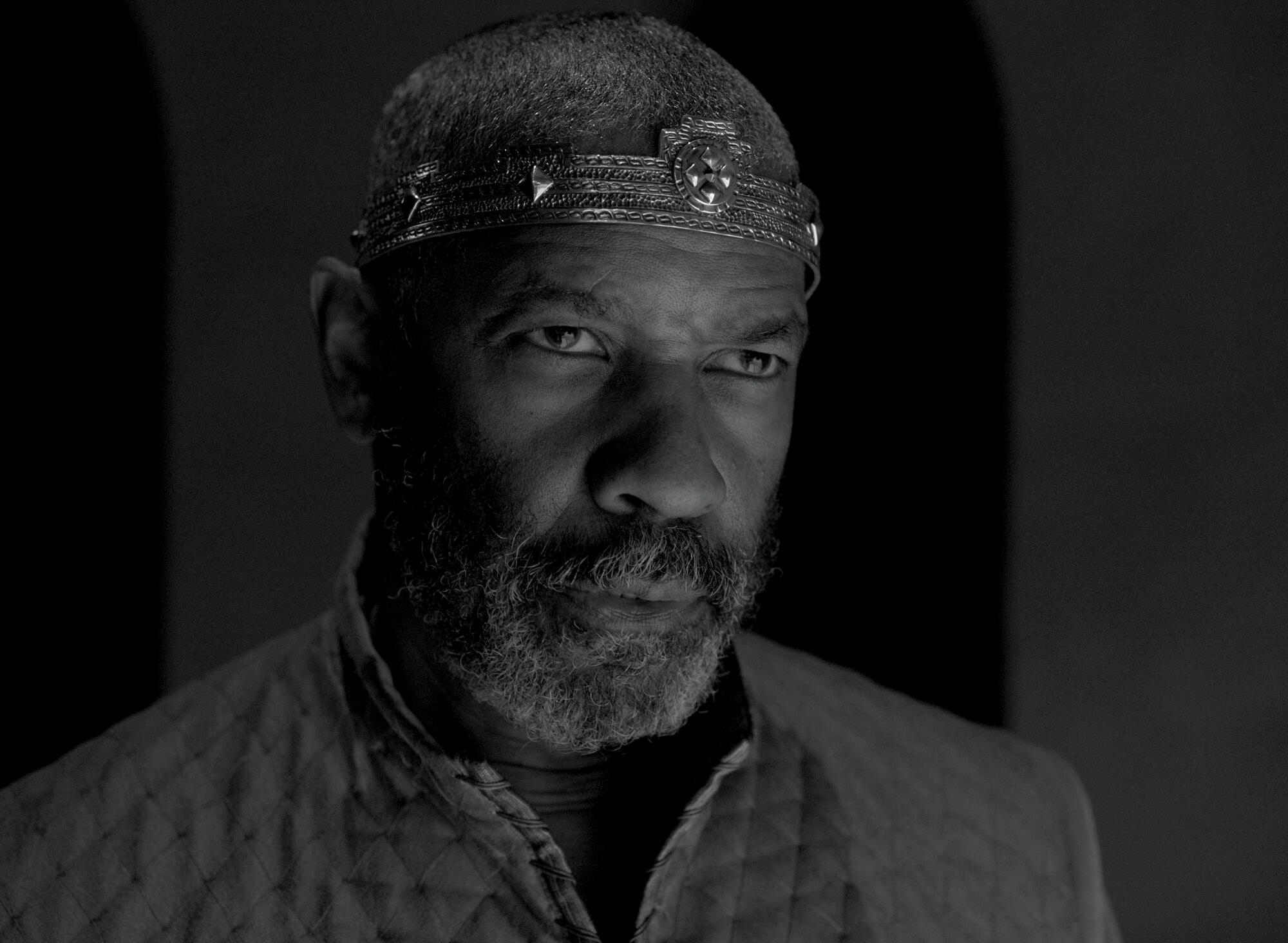
Denzel Washington played Macbeth in Joel Coen’s The Tragedy of Macbeth. Macbeth’s Scottishness belongs to the setting, but his race is not the engine of the tragedy.
Ambition, insecurity, manipulation, guilt and the pursuit of power are not exclusively white experiences. Washington did not need to resemble a conventional image of a medieval Scottish nobleman to understand the character.
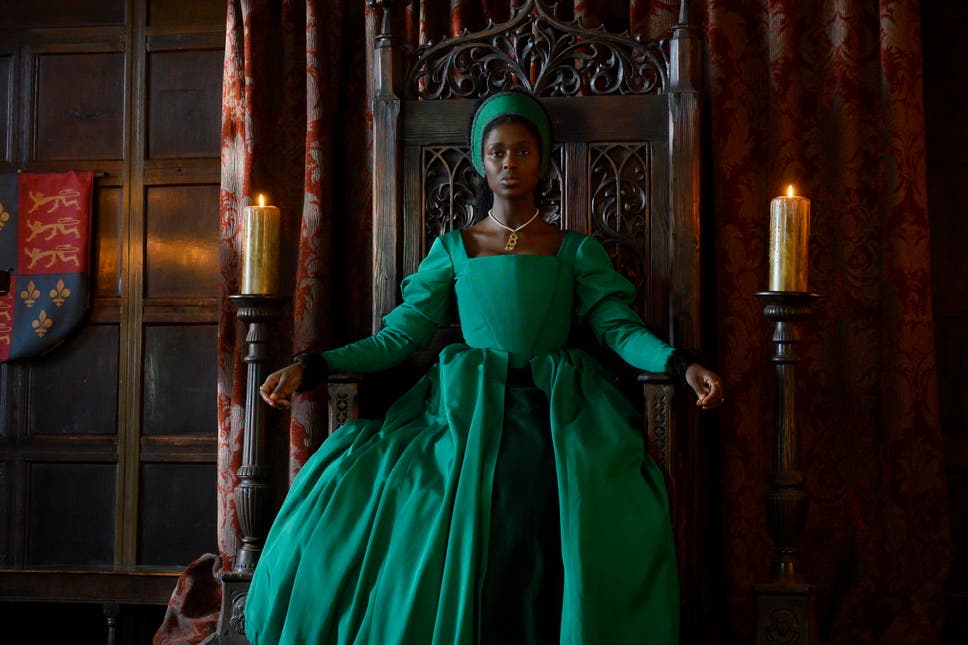
Then there was Jodie Turner-Smith as Anne Boleyn in Channel 5’s 2021 psychological drama.
That was the production that caused the predictable uproar: a Black woman playing a white Tudor queen.
But the series was not pretending to be a photographic reconstruction of Anne Boleyn. It was an interpretive psychological drama exploring her final months, her humanity and her struggle against the patriarchal system closing around her.
The casting director described the approach as identity-conscious rather than colour-blind. Turner-Smith was chosen because she possessed the fierceness, complexity and passion that the production wanted from Anne.
You did not have to like the production. Not everything works for everybody. But casting Turner-Smith did not travel backwards through time and alter Anne Boleyn’s actual ethnicity.
It offered another route into a story that has already been retold repeatedly.
| Production | What changed? | What remained? |
|---|---|---|
| The Tragedy of Macbeth | Denzel Washington played a role traditionally associated with a white Scottish nobleman. | Macbeth’s ambition, marriage, guilt, paranoia and collapse. |
| Anne Boleyn | Jodie Turner-Smith portrayed a white historical queen in an identity-conscious drama. | Anne’s humanity, political position, motherhood and struggle against patriarchal power. |
| The Tempest | Helen Mirren played Prospera rather than Prospero. | The character’s power, vengeance, relationship with Miranda and eventual movement towards compassion. |
| Hamlet | Maxine Peake played the traditionally male prince. | Grief, indecision, revenge, family corruption and psychological collapse. |
Gender changes are nothing new either.
Helen Mirren played Prospera rather than Prospero in Julie Taymor’s film of Shakespeare’s The Tempest. Mirren explained that virtually nothing in the dialogue needed changing. The relationships acquired different shades, but the character’s journey from vengeance towards compassion remained intact.
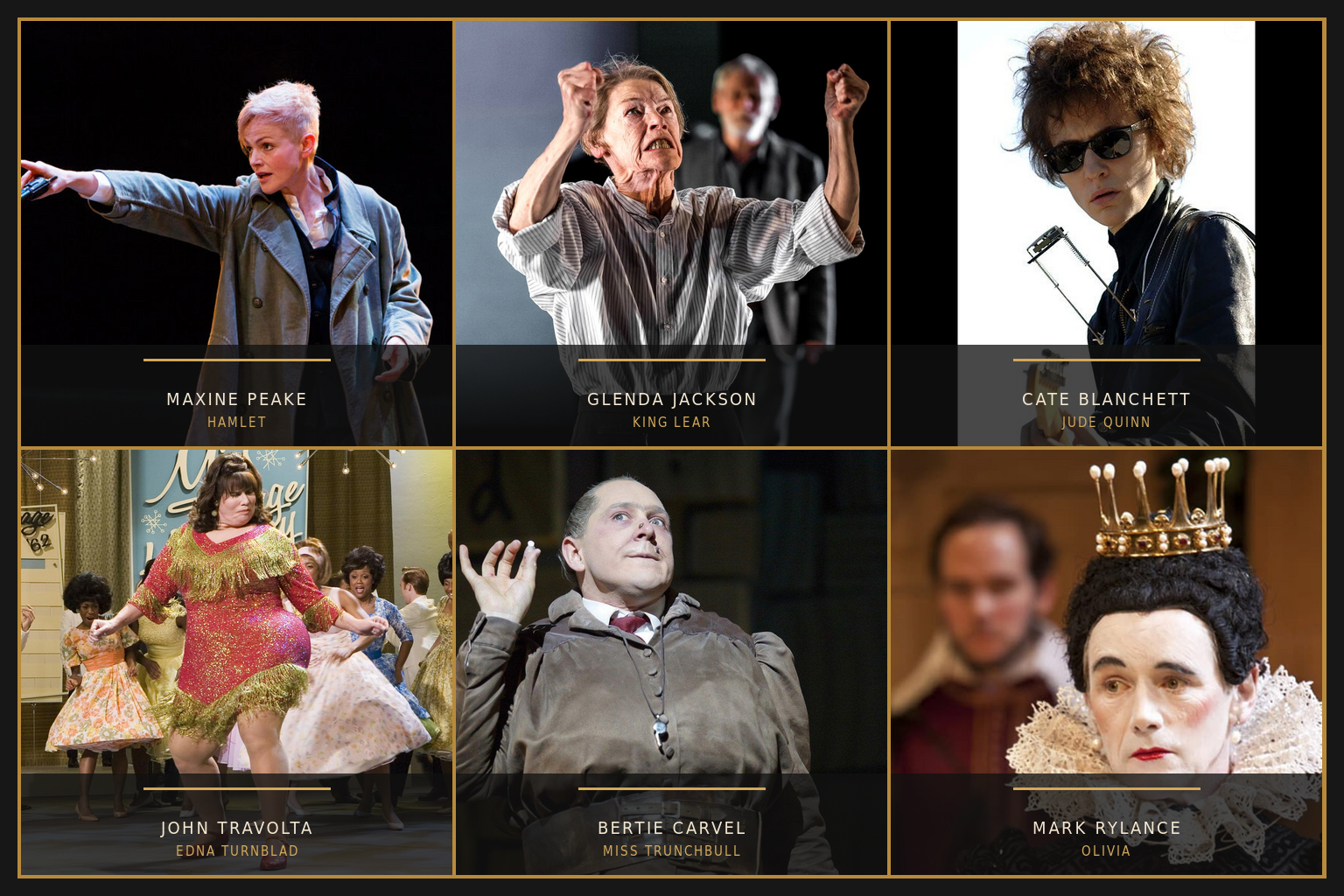
Maxine Peake played Hamlet in a production created at Manchester’s Royal Exchange and later released as a stage-to-screen film. Glenda Jackson played King Lear. Cate Blanchett embodied a Bob Dylan-inspired figure in I’m Not There.
The movement has also happened in the other direction. John Travolta played Edna Turnblad in Hairspray. Bertie Carvel played Miss Trunchbull in the stage production of Matilda the Musical. Mark Rylance played Olivia in Twelfth Night.
Not every example is identical.
Some productions change the character’s gender. Some retain the original gender and cast across it. Others deliberately turn performance itself into part of the story.
But all of them expose the same weakness in the rigid argument that every fictional character must permanently resemble the first or most famous person who played them.
Stories survive because their foundations are stronger than one actor’s face, body, race or sex.
That freedom is not limitless, however.
Hamlet’s ethnicity is not the engine of his tragedy. Othello’s status as a racial and cultural outsider is.
A Black Macbeth works because Macbeth’s race does not create his ambition or guilt. A conventionally white Othello surrounded by white Venetians would remove one of the forces that makes him vulnerable inside that society.
A production could consciously rebuild that outsider dynamic around nationality, religion or another form of difference—but it would have to acknowledge what it was changing.
That is what thoughtful reinterpretation looks like.
It is not simply changing somebody’s appearance and congratulating yourself. It is understanding the material well enough to know what can move and what must remain.
New casting can also bring new audiences into old stories.
Someone who was never interested in a conventional Tudor costume drama might watch Turner-Smith as Anne Boleyn. Someone who assumed Shakespeare had nothing to say to them might encounter Denzel Washington’s Macbeth or Maxine Peake’s Hamlet and discover a route inside.
That is not destroying culture.
It is one of the ways culture remains alive.
The test
The story still has to be banging
Ultimately, none of this matters if the film is boring.
Bond cannot survive indefinitely by appealing only to people defending whichever actor they grew up watching. It is a commercial franchise. It needs another generation to care about it.
Some of the later Bond films lost me. I could sit there for fifteen minutes and realise that nothing was grabbing me. Expensive locations, tailored suits and enormous explosions cannot compensate for a story that is not saying anything.
The story has to be banging.
That applies whether Bond is played by Robert Pattinson, Aaron Pierre or anybody else.
Casting can create curiosity, but it cannot rescue a weak script. A Black Bond attached to a poor film would still be a poor Bond film. A white Bond attached to a great story could still reinvent the franchise.
Pattinson has already shown through Batman that he can take a familiar cultural institution and make it feel grimier, stranger and more psychologically damaged.
That makes him an interesting choice for Bond.
Perhaps he will be brilliant.
Perhaps he will not.
But the colour of the actor playing James Bond has never been the most important question.
The real question is whether the filmmakers understand which parts of Bond must be protected—and which parts are free to change.
Bond can be Black.
Shaft cannot simply be white.
Aaron Pierre could play Shaft and Reacher.
Patrick Bateman’s whiteness matters.
Miles Morales’s Black Puerto Rican identity matters.
Denzel Washington can be Macbeth.
Jodie Turner-Smith can embody Anne Boleyn inside an interpretive drama.
Those statements are not contradictory.
They follow exactly the same rule:
Race is not sacred when it is merely inherited. Identity is not disposable when it is carrying the story.
Sources and further reading
- Amazon MGM Studios — Robert Pattinson confirmed as James Bond
- 007.com — Official James Bond announcement
- BFI / Sight and Sound — Blaxploitation, from Shaft to Original Gangstas
- Library of Congress — Gordon Parks and the impact of Shaft
- BFI — American Psycho, masculinity and Wall Street satire
- Library of Congress — To Kill a Mockingbird
- National Endowment for the Humanities — Huckleberry Finn, Jim and slavery
- Smithsonian — Advertising culture and the Don Draper era
- Marvel — Luke Cage’s historical significance
- Marvel — Miles Morales and his Puerto Rican family
- Penguin — Lee Child on Tom Cruise and Jack Reacher
- Paramount Pictures — Jack Reacher (2012)
- Paramount Pictures — Jack Reacher: Never Go Back (2016)
- Apple TV Press — The Tragedy of Macbeth
- Fable Pictures — Anne Boleyn
- The Guardian — Identity-conscious casting in Anne Boleyn
- The Guardian — Helen Mirren on playing Prospera
- BAFTA — Maxine Peake on Hamlet and gender-blind casting
- Royal Shakespeare Company — Othello, race and outsider status
- DC — John Stewart character history