Industry / Energy / Technology / Power
China The Long Game
Power is rarely built overnight.
Neither was this.
The premise
China did not become indispensable by accident.
For decades, China accumulated productive capacity while much of the developed West became increasingly comfortable purchasing that capacity from somewhere else.
Factories became supply chains. Supply chains required ports. Ports required infrastructure. Manufacturing required energy. Scale created expertise. Expertise enabled technology.
None of those things alone explains modern China. Together, they begin to.
became a system.
Energy.
Materials.
Infrastructure.
Manufacturing.
Technology.
Trade.
Power.The system
Nothing exists
on its own.
Industrial power is cumulative. Energy, materials and infrastructure support production. Production creates scale. Scale creates expertise. Expertise enables technology. Technology and trade extend influence.
The story is not energy. It is not manufacturing. It is not infrastructure. It is not technology.
The story is how they connect.The original series
Ten essays.
One argument.
The Long Game follows the structures behind China’s transformation — not as isolated policies or individual moments, but as parts of a much larger strategy.
The original series
Ten essays.
One argument.
The Long Game follows the structures behind China’s transformation — not as isolated policies or individual moments, but as parts of a much larger strategy.
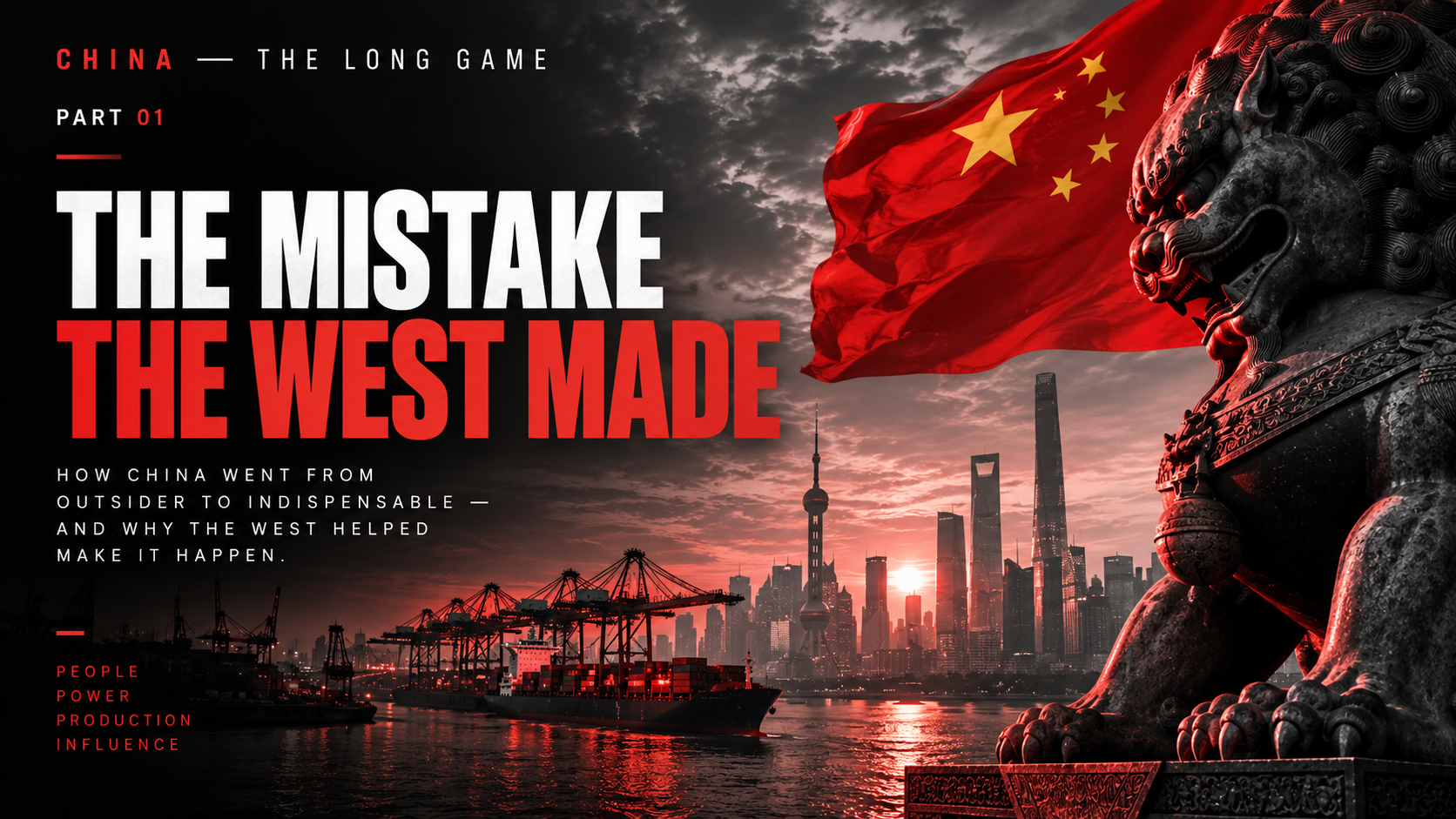
Part One
The Mistake the West Made
How China went from outsider to indispensable — and why the West helped make it happen.
Coming Soon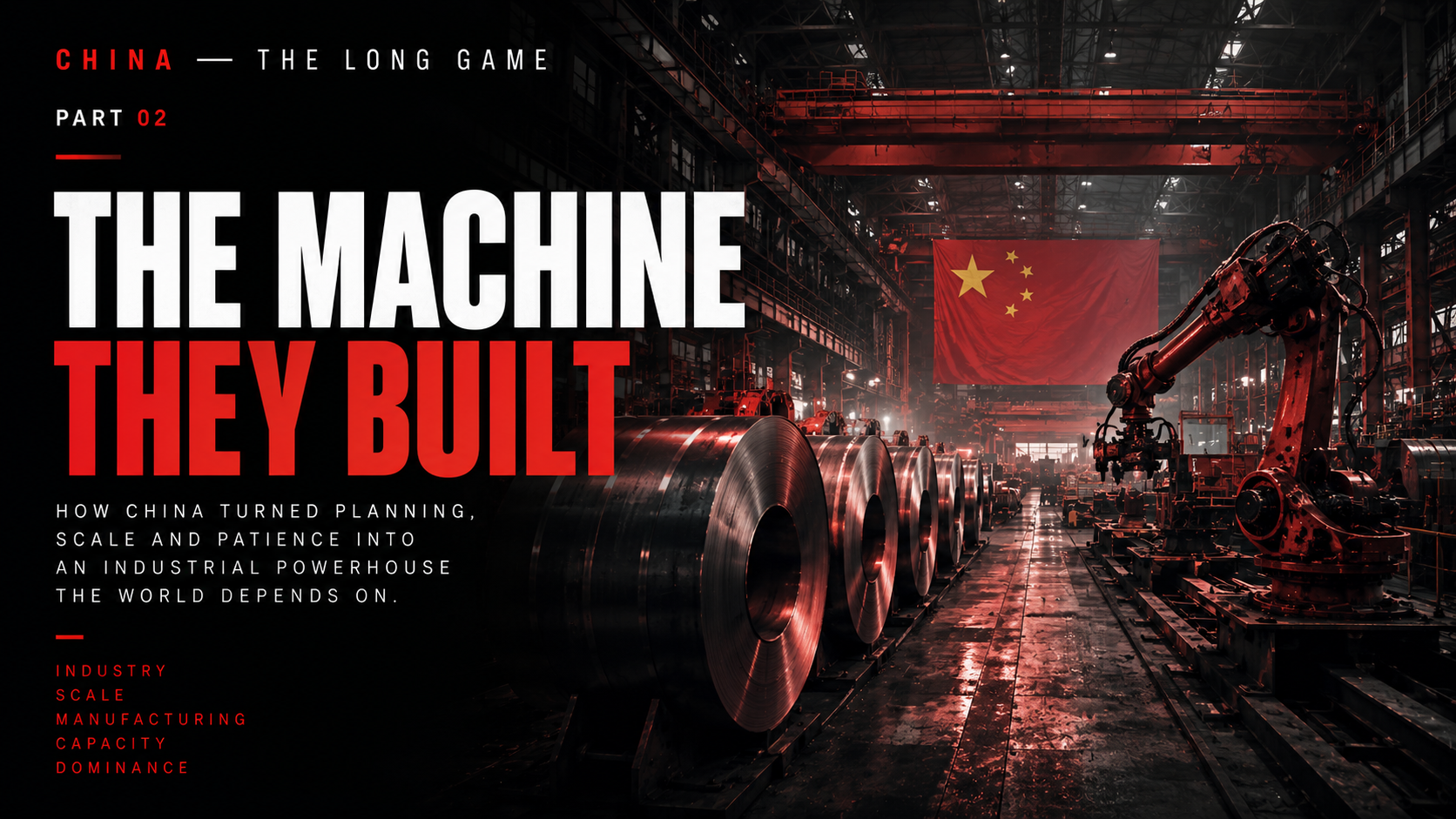
Part Two
The Machines That Changed Everything
How China built the world’s factories — and what that means for the rest of us.
Coming Soon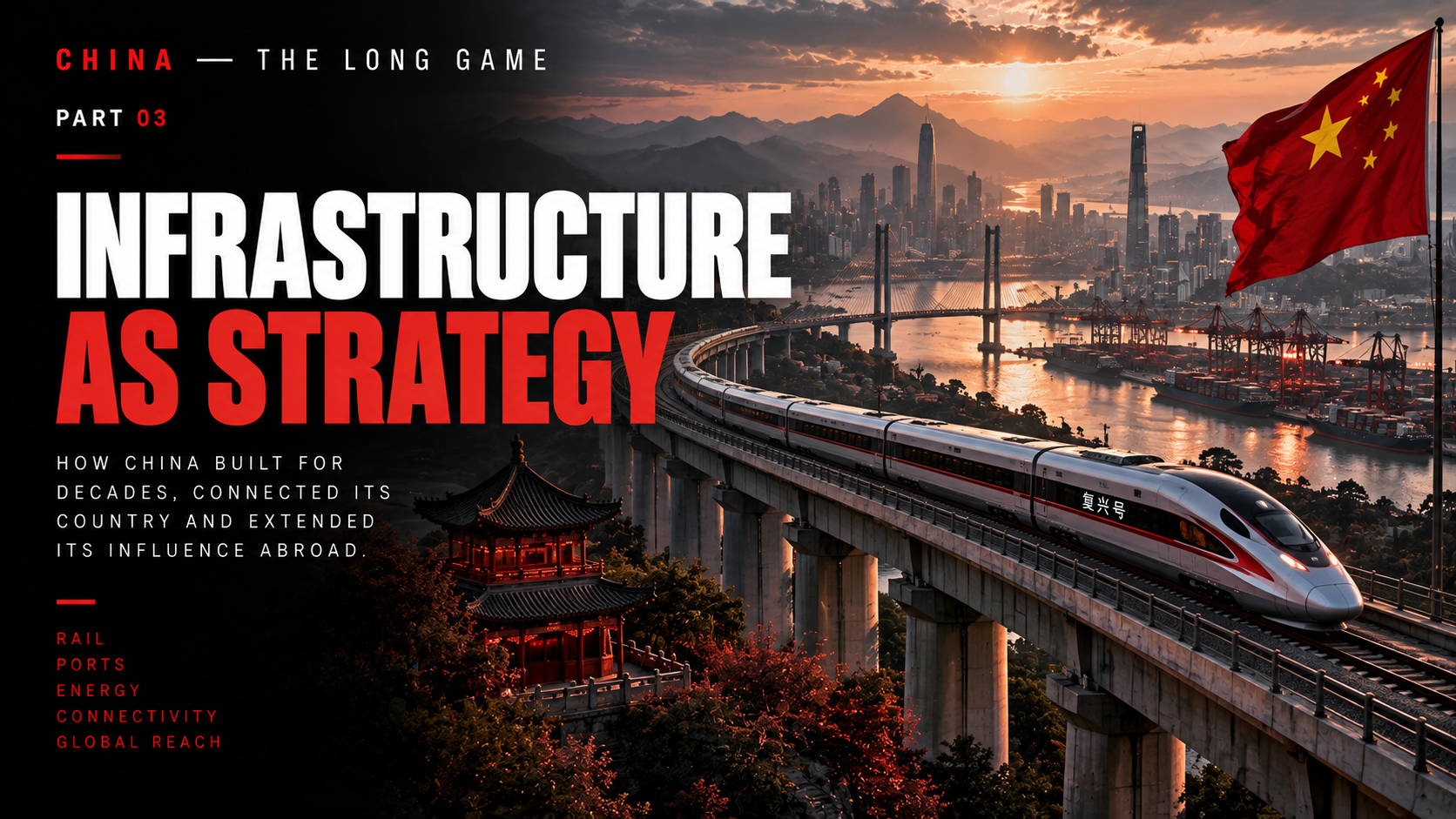
Part Three
Infrastructure as Strategy
How China built for decades, connected its country and extended its influence abroad.
Coming Soon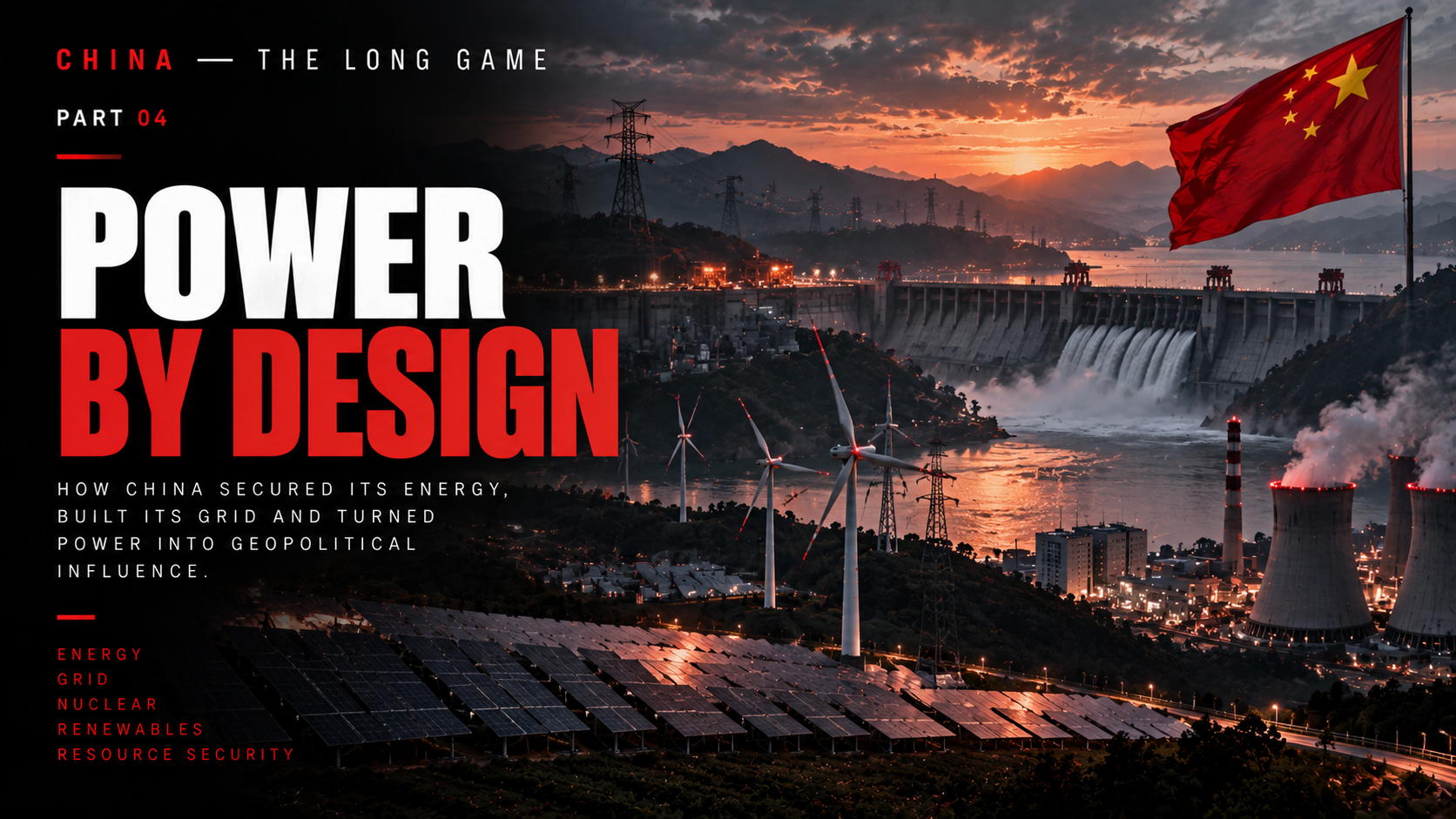
Part Four
Power by Design
How China secured its energy, built its grid and turned power into strategic influence.
Coming Soon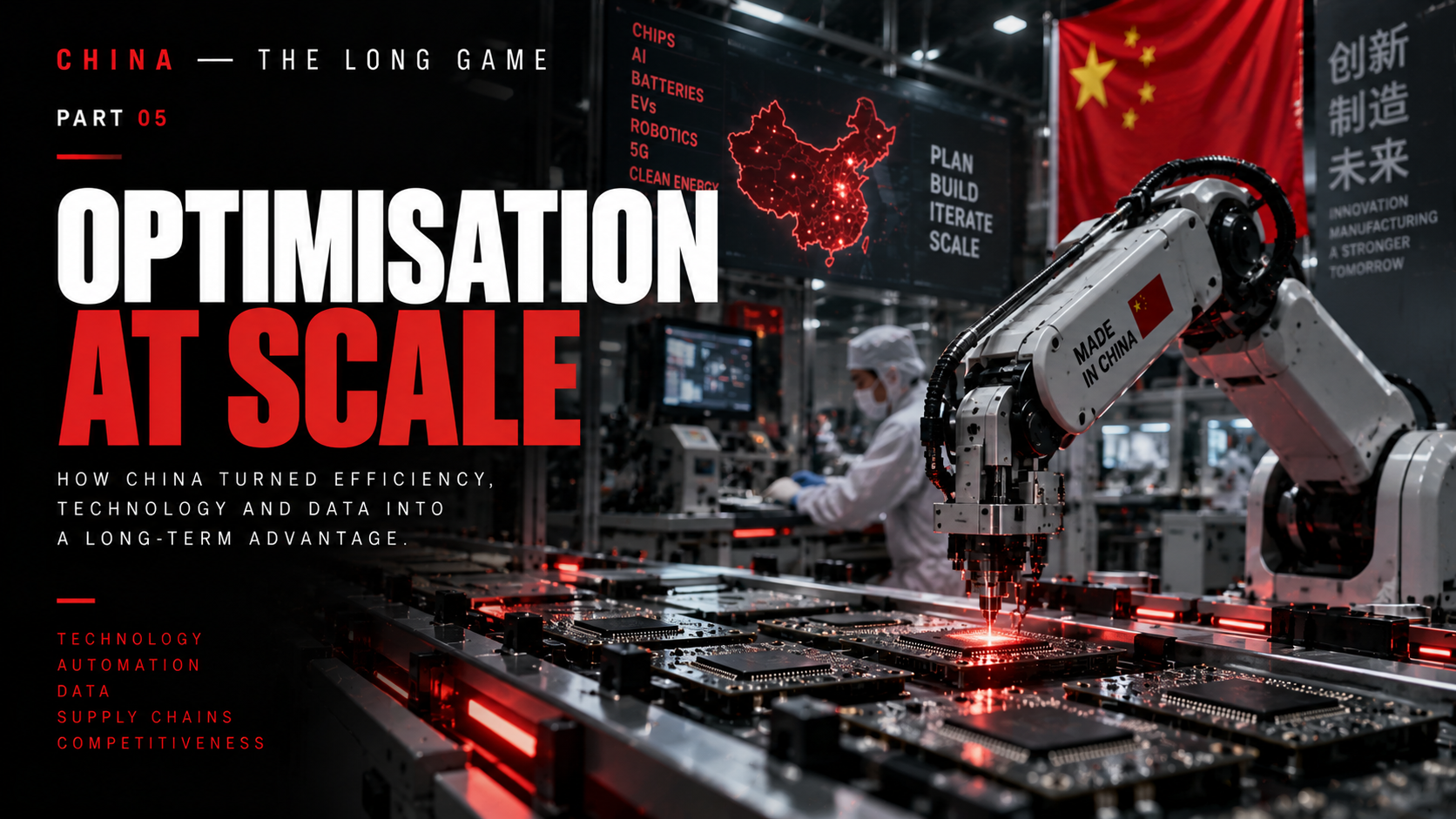
Part Five
Optimisation at Scale
How China turned efficiency, technology and data into a long-term industrial advantage.
Coming Soon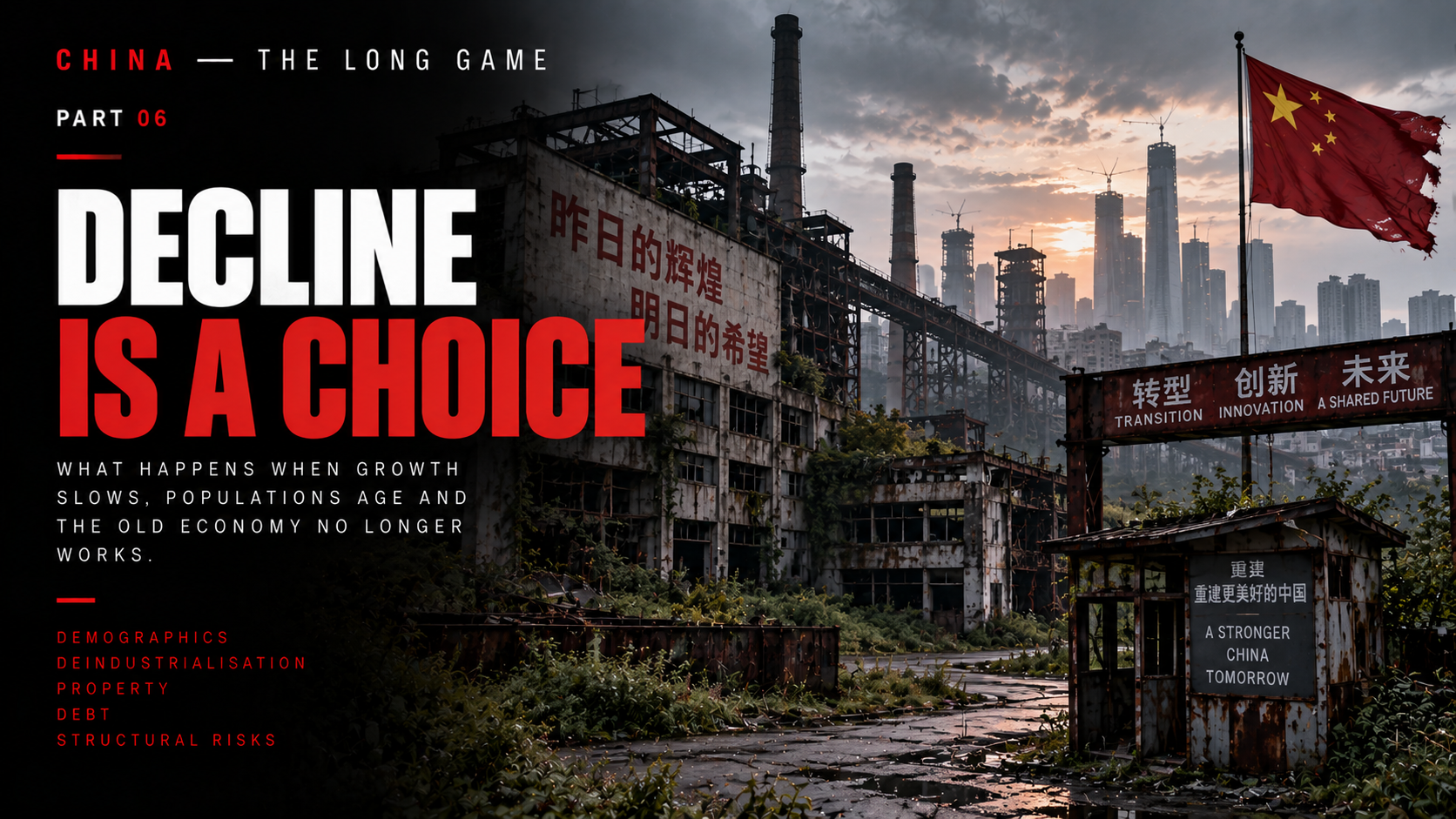
Part Six
Decline Is a Choice
What happens when growth slows, populations age and the old economic model no longer works.
Coming Soon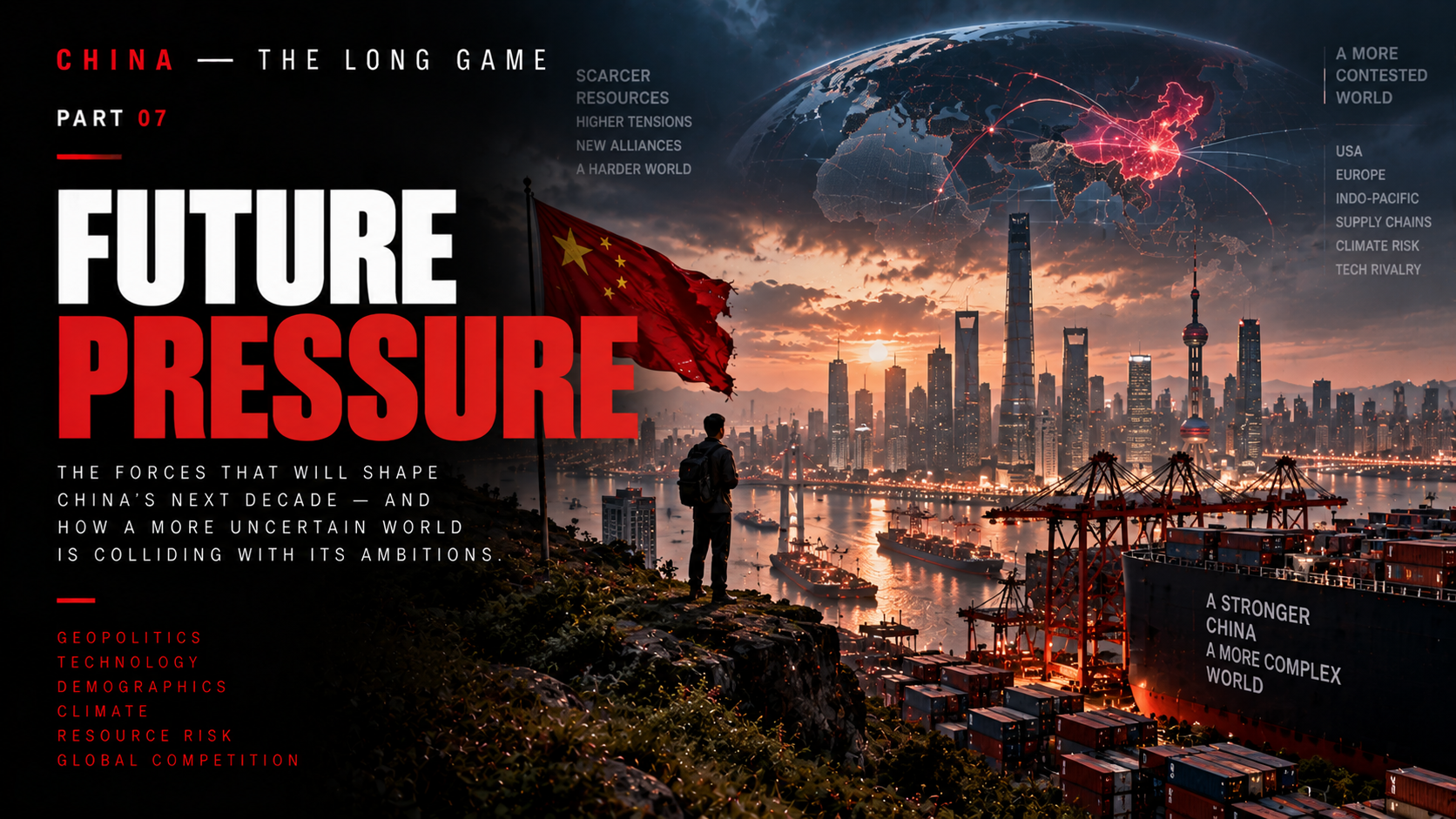
Part Seven
Future Pressure
The forces shaping China’s next decade — and the more contested world surrounding it.
Coming Soon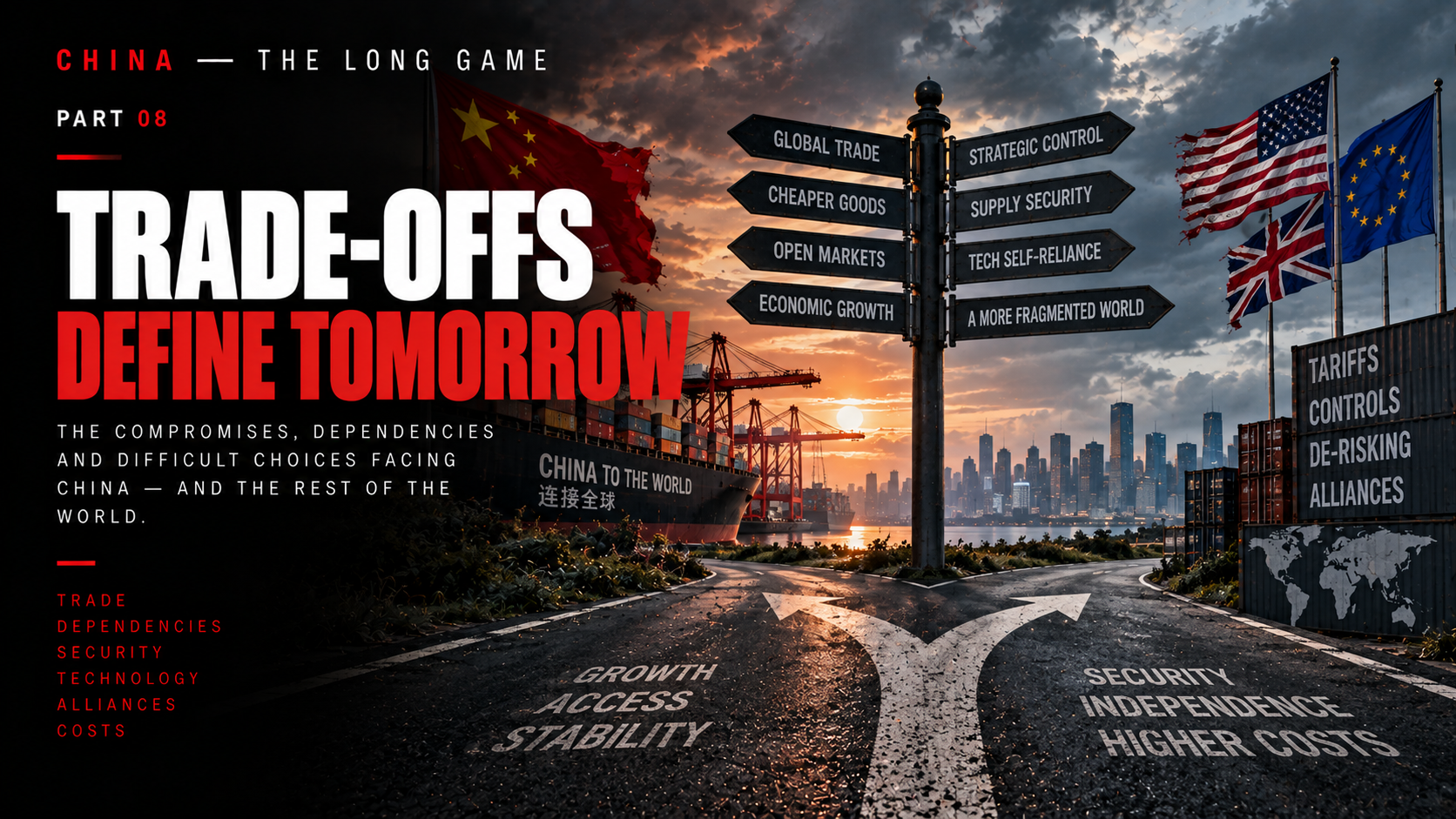
Part Eight
Trade-Offs Define Tomorrow
The compromises, dependencies and difficult choices facing China — and the rest of the world.
Coming Soon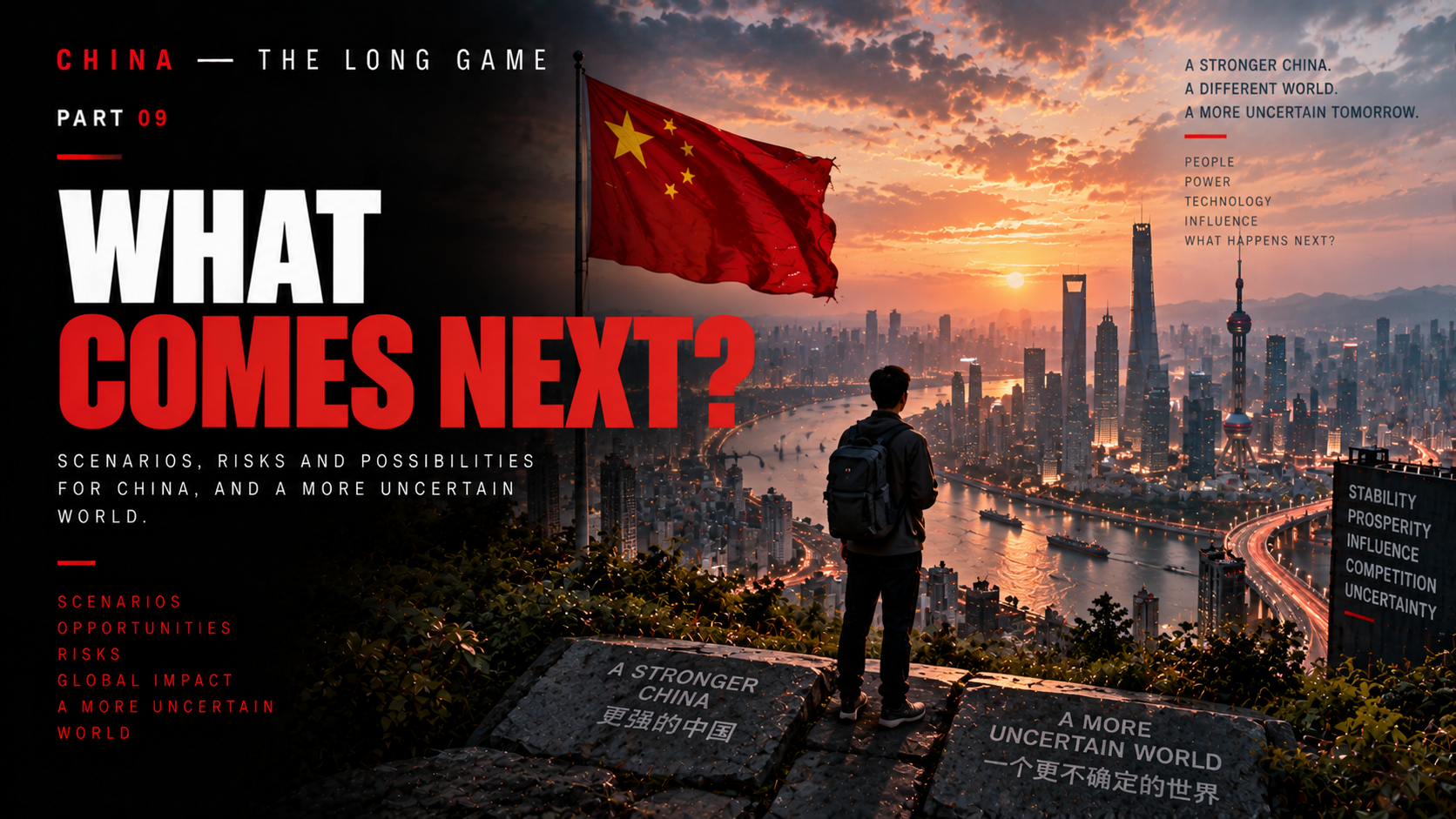
Part Nine
What Comes Next?
Scenarios, risks and possibilities for China — and for a more uncertain world.
Coming Soon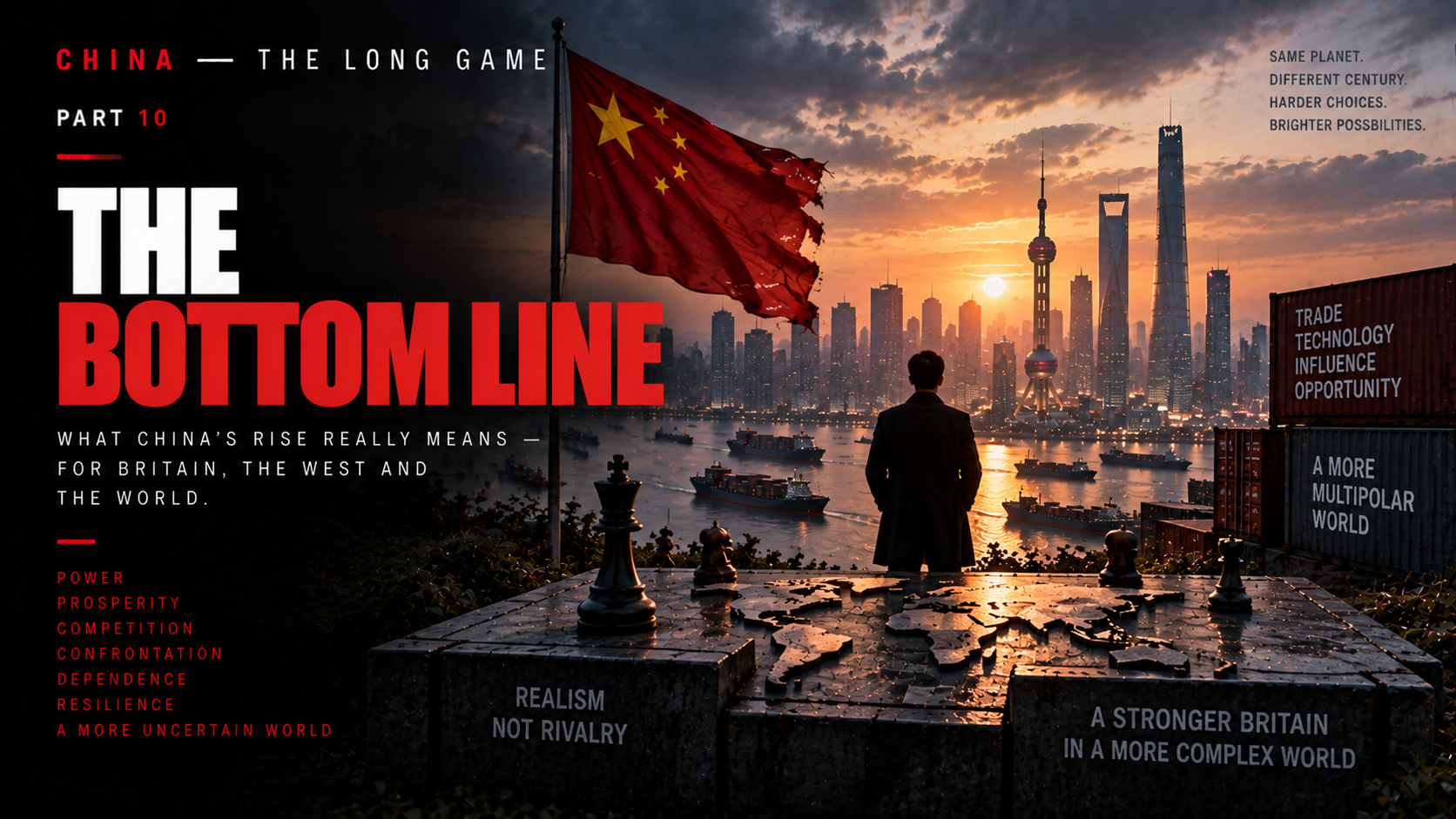
Part Ten
The Bottom Line
What China’s rise really means — for Britain, the West and the world.
Coming SoonOne long game.
The result
The West didn’t just buy the goods. It helped build the capacity.
Every order looked like a transaction. Collectively, they became something much larger.
Demand created scale. Scale created skills. Skills deepened supply chains. Supply chains justified infrastructure and investment. Production became expertise. Expertise moved into technology.
Two long games
Build. Buy.
This is not a comparison of political systems. It is a comparison of what different countries chose to regard as strategically important.
Expanded electricity generation to support industrial growth.
Became increasingly comfortable relying on international energy markets.
Expanded production and developed increasingly sophisticated industrial capability.
Allowed significant amounts of production to move elsewhere.
Built ports, railways, roads, grids and cities at extraordinary scale.
Continued relying heavily on infrastructure built generations earlier.
Deepened domestic networks around production, processing and components.
Became increasingly dependent on international production networks.
Used manufacturing scale to develop technical knowledge and move further up the value chain.
Retained world-class research while losing parts of the industrial base needed to manufacture at scale.
Treated productive capability as an element of national power.
Often treated productive capability as something global markets could provide.
This isn’t an argument that Britain should become China.
It is an argument about what happens when one country treats capacity as strategic while another assumes it can always be bought.The contradiction
China is not
a simple story.
The mistake is believing that one fact must cancel out another.
superpower / World’s largest
coal consumer
fortunes / State
power
supplier / Strategic
threat
giant / Demographic
pressure
growth / Extraordinary
debt
can be true.
Beyond the series
More From China.
The ten-part series follows the central argument. China doesn’t stop there.
These pieces follow the pressures, relationships and consequences surrounding the wider story.
Taiwan
The island at the centre of technology, trade and geopolitics.
Semiconductors
Why advanced chips and the machines that make them became instruments of national power.
Demographics
What happens when one of the world’s great industrial economies starts getting older.
Property
The construction boom, local finance and the debt sitting underneath China’s cities.
Africa
Infrastructure, resources, finance and China’s changing relationships across the continent.
Belt and Road
What China financed, what it built and what those relationships actually produced.
Critical Minerals
The refining and processing capabilities hidden underneath the modern economy.
Electric Vehicles
How China moved from automotive outsider to one of the industry’s dominant forces.
Trade Wars
Tariffs, subsidies and the Western response to Chinese industrial scale.
Britain & China
What Britain’s changing relationship with China reveals about Britain’s own economic choices.