UNSENT / SERIES / COUNCIL
COUNCIL
YOU PAY MORE.
YOU SEE LESS.
Council tax keeps rising. Services have disappeared. Some councils gambled. Some were hollowed out. Some made disastrous decisions. Some are struggling simply to meet the responsibilities they cannot escape.
So where did the money go?
THE STARTING POINT
I noticed the leaves. 🍂
Nothing dramatic happened. There was no announcement. No minister stood behind a lectern. No council sent a letter explaining that something had changed.
The leaves just stopped disappearing.
They used to be swept up. Somebody cleared them from the road, the pavement and the drains. It was one of those ordinary public services that worked quietly enough that you barely noticed it existed.
Then you notice the potholes. The public toilets. The library hours. The grass. The youth club. The road markings. The things that take longer to repair — or simply never get done.
Yet the council tax bill still arrives.
The question isn’t simply why nobody picked up the leaves. It is what happened to the institution that used to pick them up.
HOW WE GOT HERE
The municipal machine
Council finance did not suddenly break one morning. The institution itself has been changing for decades.
When councils were councils
Housing. Direct labour. Municipal services. Large local workforces. Councils once owned and directly operated far more of everyday Britain.
Read the investigation →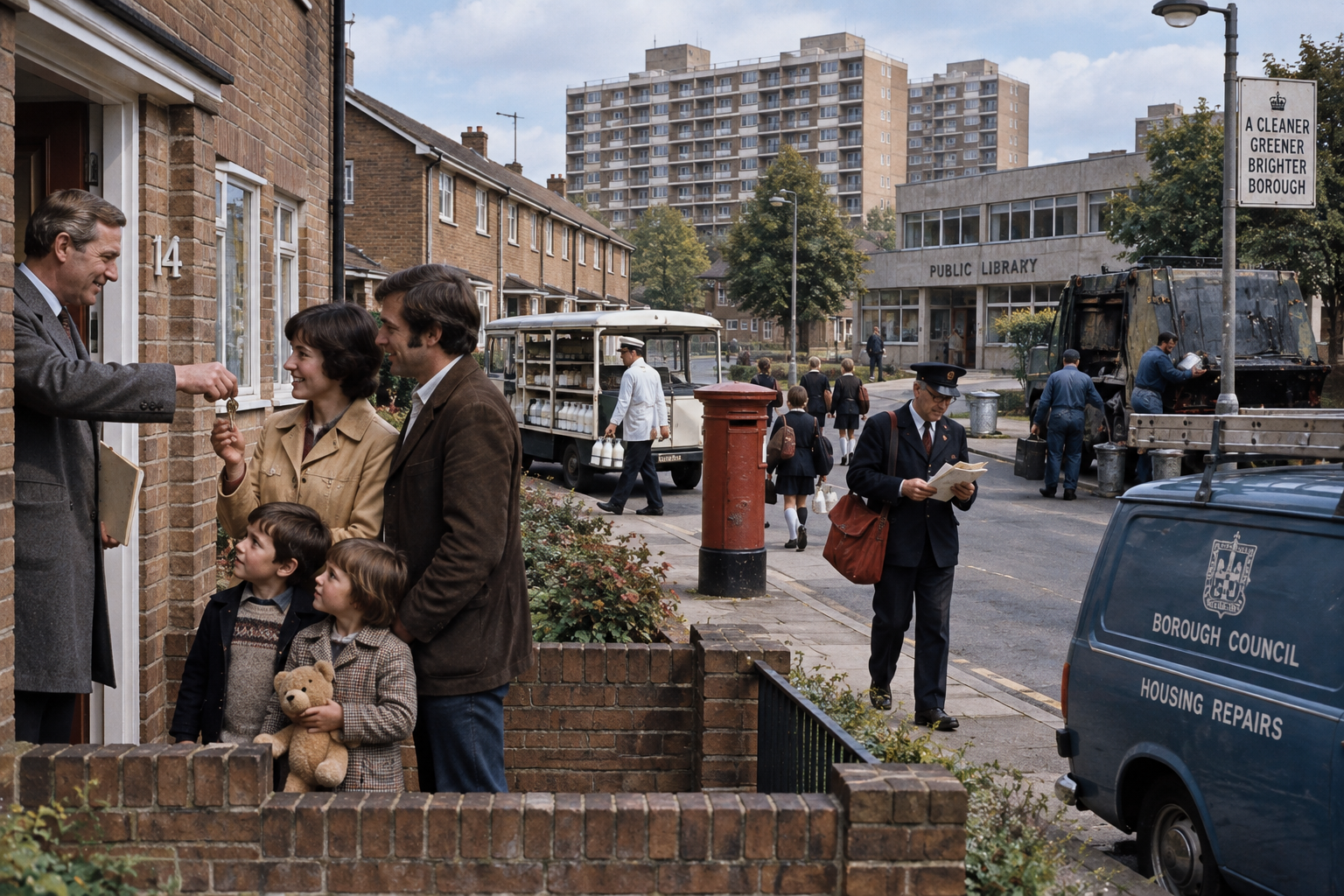
Thatcher goes local
Right to Buy, rate-capping, compulsory competitive tendering and eventually the Community Charge changed the relationship between Westminster, councils and residents.
Follow the change →England still uses property values from this year to determine council-tax bands.
Enter the time machine →Council tax arrives
The poll tax disappears. Council tax replaces it. The valuation date stays behind.
How the tax works →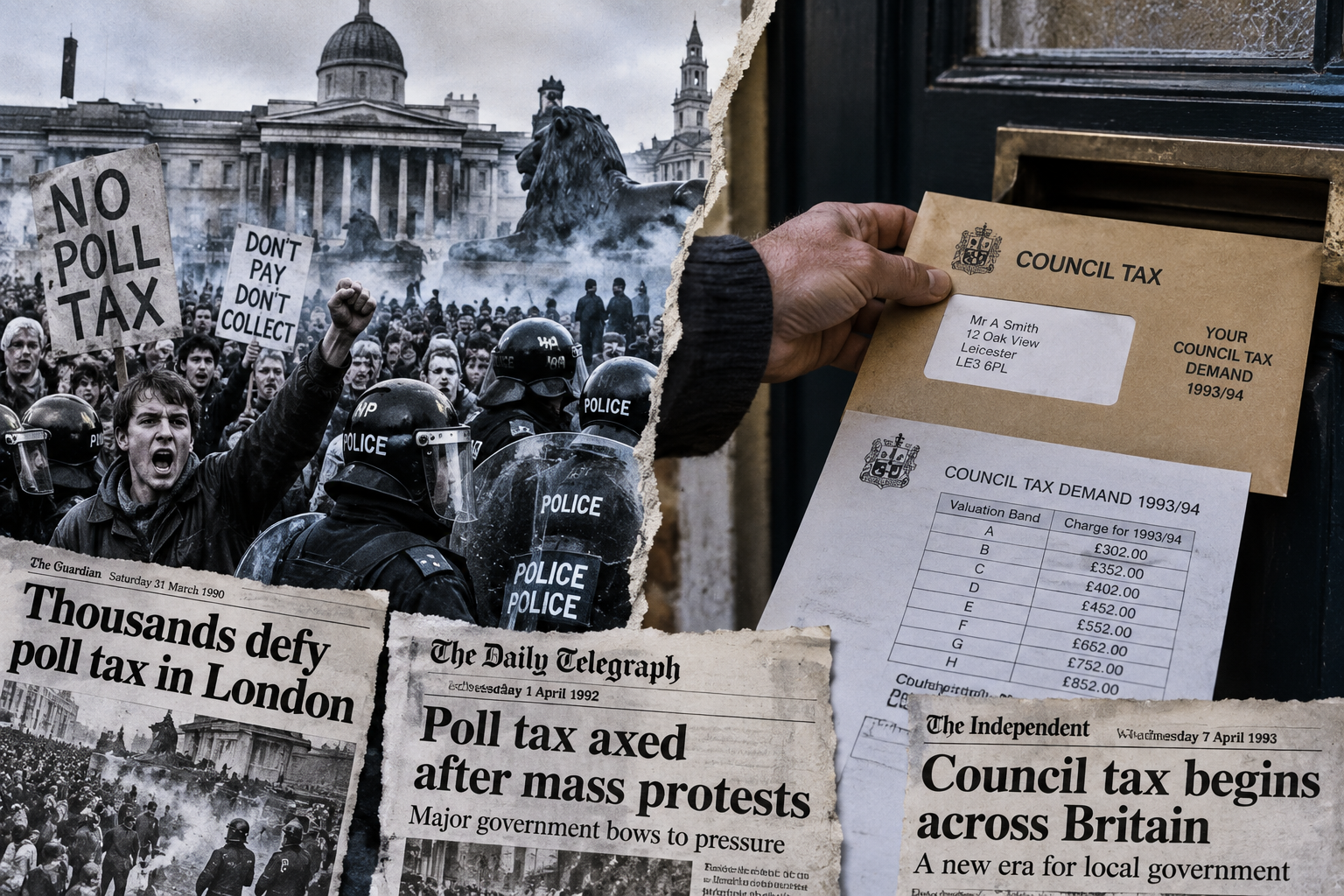
The austerity years
Central funding falls sharply. Councils protect acute and statutory responsibilities while many visible services absorb deep reductions.
Follow the money →Go and make your own money
Property, regeneration, commercial companies and investment become part of the search for income. Some bets work. Others become extraordinary failures.
Follow the bets →The bill arrives
Emergency support. Commissioners. Asset sales. Rising tax. Growing demand. And residents wondering what happened to the services outside their front door.
STATE OF THE COUNCILS / 2026–27
This is bigger than one bad council.
agreed Exceptional Financial Support for 2026–27.
agreed to help authorities manage exceptional financial pressures.
still underpin council-tax bands in England.
in the average Band D council-tax bill for 2026–27.
Exceptional Financial Support is not the same thing as a council declaring bankruptcy. Different mechanisms, interventions and financial circumstances sit behind these figures.
THE WATCHLIST
Same crisis?
Not quite.
The names recur in headlines, but the causes are different. Debt, investments, equal pay, failed companies, governance, structural deficits and national funding pressures all appear in different combinations.

Britain’s biggest council hits the wall
Equal-pay liabilities. Oracle. Savings failures. A huge budget gap. Birmingham’s story cannot be reduced to a single cause.
Open case file →Borrow. Invest. Repeat.
A highly unusual investment strategy built around borrowing and returns eventually became one of local government’s defining financial failures.
Open case file →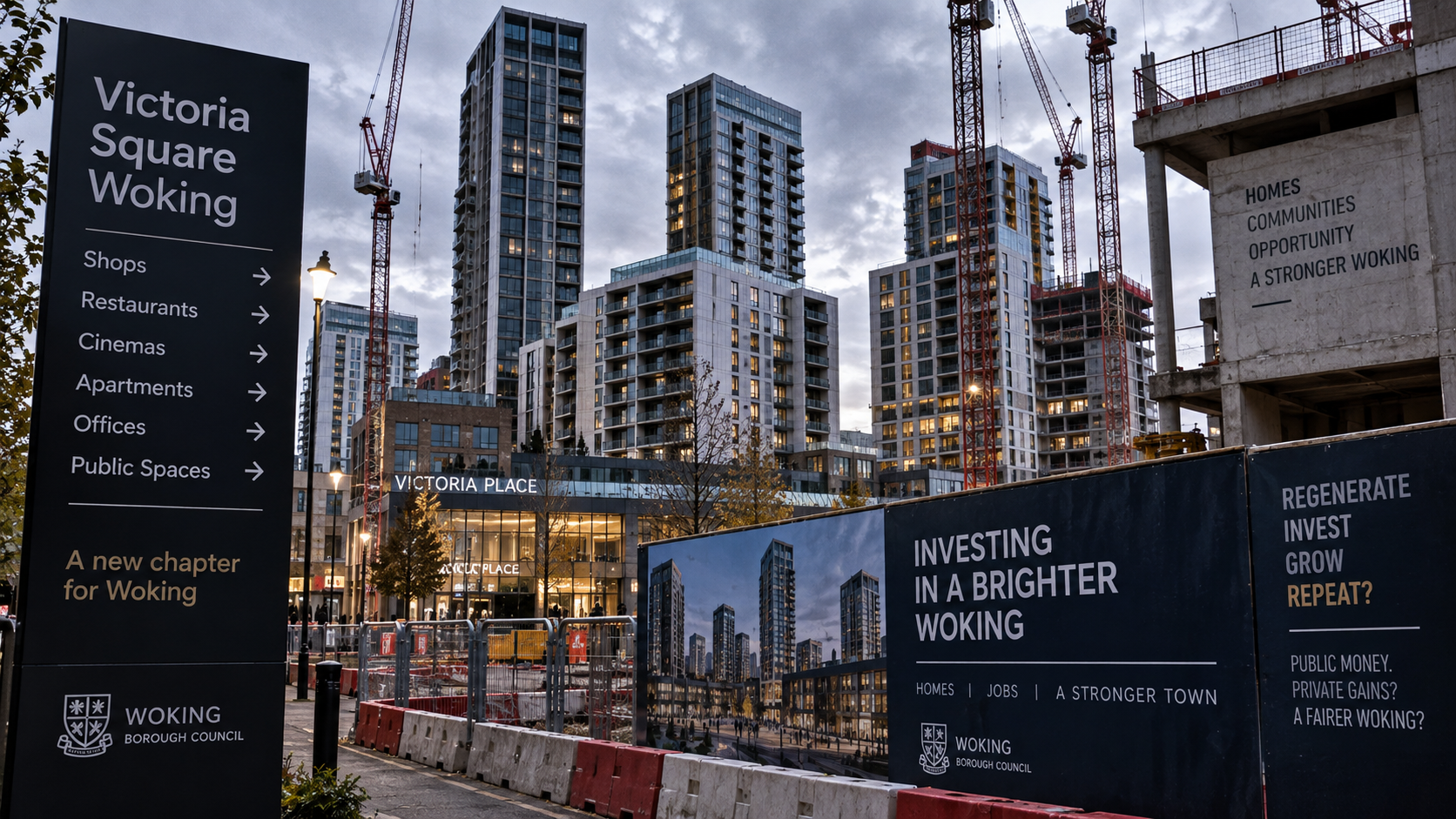
When ambition outruns the balance sheet
Borrowing and investment became wildly disproportionate to the size of the authority. Auditors later identified serious failures of control, risk management and governance.
Open case file →Brick by Brick. Fairfield Halls. Section 114.
Commercial housing, escalating project costs and financial assumptions that failed to materialise became part of a much larger breakdown.
Open case file →The energy company that couldn’t save the council
Robin Hood Energy became a warning about municipal commercialisation, governance and the temptation to use one-off solutions for structural problems.
Open case file →FOLLOW THE MONEY
Where does your £100 go?
The services residents see are not necessarily the services consuming most council resources.
This visual is conceptual. The detailed investigation will use published expenditure data rather than pretending every authority spends £100 in exactly the same way.
Follow £100 through a council →THE INVESTIGATION
Warts and all.
Funding cuts matter. So does bad government. This series follows both.
I Noticed the Leaves 🍂
The smallest sign of a much larger transformation: what happens when the everyday council quietly disappears?
When Councils Were Councils
Thatcher Goes Local
Frozen in 1991
A modern property tax still looking backwards to the housing market of another era.
The Austerity Years
Go and Make Your Own Money
They Gambled. We Paid.
Property. Energy. Regeneration. Borrowing. The council bets that went catastrophically wrong.
Where Does £100 Go?
Waste Is Real
The Myth of the Rich Council
Why Nobody Picks Up the Leaves
After the history, the taxes, the cuts, the bets, the debt and the statutory pressures, return to the street where this investigation started.
THE LIVING RECORD
The Council Ledger
Councils will keep changing. So will this page.
New interventions. Failed projects. Asset sales. Emergency support. Audit reports. Service cuts. Recoveries. Reforms.
If it changes the story of how local government works, it belongs here.
Add the next case. Then the next one. There is no fixed end to this record.