A history of information, ownership and power
From Empire
to Algorithm
How Britain taught the population to read, sold it a version of the world, and built the information system we now live inside.
Explore the seriesThe beginning
Before Britain became a newspaper nation, it had to create millions of readers.
For much of British history, political information belonged disproportionately to people with money, education and power. Books were expensive. Newspapers were taxed. Printing was licensed. Publishers could be prosecuted, presses seized and radical material suppressed.
Working people were never entirely voiceless or universally illiterate. News travelled through churches, pubs, workshops, markets, pamphlets, political meetings and newspapers read aloud. But regular access to printed information was restricted by education, cost and law.
Whoever controls the repeated story does not need to control every individual.
This is the history of how access to information expanded—without the power to shape that information expanding equally with it. It begins with who was permitted to read. It ends with who decides what millions of people see.
The printing press produced pamphlets.
Steam printing produced mass newspapers.
Radio produced a national audience.
Television carried authority into the home.
The algorithm personalised the front page.
The machinery changes. The struggle over attention survives.
Before the mass reader
Information belonged to authority.
Before printing, Britain was predominantly an oral society. Information travelled through sermons, proclamations, markets, songs, rumour and local authority. Literacy existed, but it was concentrated among the clergy, administrators, merchants and social elites. Most people depended upon someone else to interpret written knowledge for them.
William Caxton established a printing press at Westminster in 1476. Printing made wider distribution possible, but it also presented the state with a new danger: ideas could travel without the speaker being present.
Royal licensing followed. The Stationers’ Company received control over the printing trade. Unauthorised material could be confiscated and publishers punished. From its earliest development, mass communication was never simply a contest between freedom and censorship. Political authority and commercial privilege frequently operated together.
The state controlled what could be printed.
Selected businesses controlled the machinery needed to print it.
The price of knowledge
Political information was kept expensive.
After pre-publication licensing lapsed in 1695, Britain did not suddenly acquire an equal and democratic press. Newspapers remained expensive, and publishers could still be prosecuted for sedition or libel.
In 1712, the government imposed stamp duty on newspapers. Taxes were also placed upon advertising and paper. Together, they became known as the taxes on knowledge.
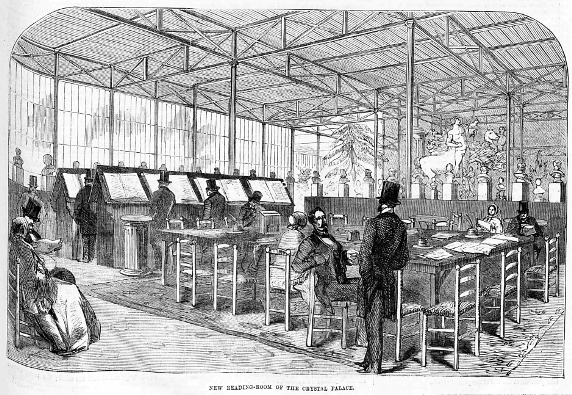
These duties raised revenue, but they also made regular political information harder for poorer people to obtain. One newspaper could circulate through a coffee house, tavern or reading room, and papers were frequently read aloud—but personal, everyday access remained unequal.
Industrialisation made that inequality increasingly political. Workers gathered inside factories and rapidly expanding cities. They could exchange information, organise and recognise that what looked like individual hardship was being experienced by thousands of others.
The French Revolution intensified elite fear of radical politics. After Peterloo, the Six Acts restricted public meetings and extended controls over radical publications.
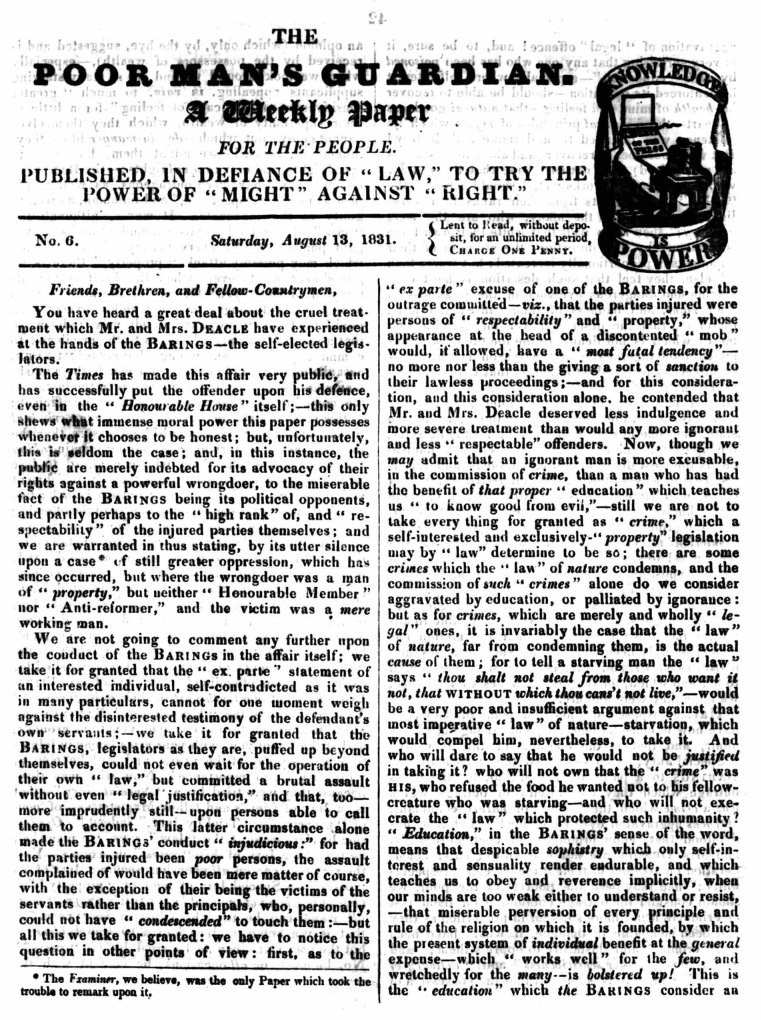
During the 1830s, radical publishers fought back through the War of the Unstamped. Illegal newspapers such as Henry Hetherington’s Poor Man’s Guardian deliberately defied the tax. This was more than a dispute over price. It was a battle over whether political knowledge was a commodity, a privilege or a public right.
Creating the mass audience
Britain taught the population to read.
The taxes gradually fell. Advertising duty was abolished in 1853, newspaper stamp duty in 1855 and paper duty in 1861.
Meanwhile, industrial Britain required workers who could read instructions, calculate measurements, follow timetables, operate machinery and function within an increasingly complicated state. Education was emancipatory—but it was also economically useful.
The 1870 Education Act began filling gaps in elementary schooling. Attendance subsequently became compulsory and elementary education became effectively free.
By the end of the nineteenth century, Britain possessed something historically new: a large, overwhelmingly literate working population with access to cheap printed news.
Millions of people could now read.
But teaching people to read did not determine what they would be given to read.
Manufacturing difference
Empire turned classification into government.
The expansion of information occurred alongside the expansion of empire. European powers did not invent prejudice, conquest or human enslavement. They did, however, develop and globalise modern racial ideology: the belief that humanity could be separated into fixed biological races and arranged into a supposedly natural hierarchy.
Commercial exploitation was presented as civilisation. Theft became development. Human classifications were dressed in religion, law and eventually pseudoscience.
The Atlantic slave economy demonstrated how an enormous population could be controlled through more than physical violence. It required unequal legal categories, carefully distributed privileges, intermediaries, moral justification and repeated stories about who was superior, dangerous, idle or naturally suited to serve.
British imperial government repeatedly applied comparable principles. It did not invent every social division it encountered. Caste, religious difference, ethnic identity and local hierarchy already existed in many societies. Imperial power learned to identify those differences, record them, rank them and make them administratively useful.
In India, complex and locally variable identities were classified through censuses, law, military recruitment and colonial ethnography. Communities were labelled as castes, tribes, martial races and even supposedly hereditary criminals.
The full economic history of British slavery, compensation and inherited wealth belongs in the separate Slavery hub. Here, the focus is the governing machinery it helped to develop.
The hierarchy at home
Power taught the population to look sideways.
The experience of British workers was not equivalent to enslavement or colonial subjugation. The legal conditions, violence and degrees of freedom were profoundly different.
But the same preference for classification shaped domestic government. People were divided into respectable and disreputable, industrious and idle, deserving and undeserving, ratepayer and pauper, worker and agitator.
Empire offered economically powerless white Britons a symbolic place within the hierarchy. A worker might own no land, factory, newspaper or colony. He might possess little political influence and live in severe poverty. But the national story encouraged him to believe that Britain’s imperial power also belonged to him.
The working man might possess almost nothing of the empire, but the newspaper allowed him to feel that the empire belonged to him.
A person could be exploited from above while being offered cultural superiority over someone placed below. If the governed were encouraged to look sideways at one another, they were less likely to look upwards at the institutions extracting from all of them.
Empire becomes daily news
The newspaper proprietor became an unelected political actor.
Steam-powered printing, rail distribution, the telegraph, news agencies and cheaper paper transformed journalism. News became faster, more regular and more profitable.
Successive Reform Acts expanded the male electorate. Political parties and newspaper proprietors now had a growing reason to influence ordinary people directly.
The Daily Mail, launched in 1896, recognised the new market. News became shorter, faster and more emotional. Crime, scandal, patriotism, personality and fear could be manufactured into a daily consumer product.
Information no longer needed merely to report events. It needed to capture attention, provoke emotion, satisfy advertisers, increase circulation and advance the interests of its owner.
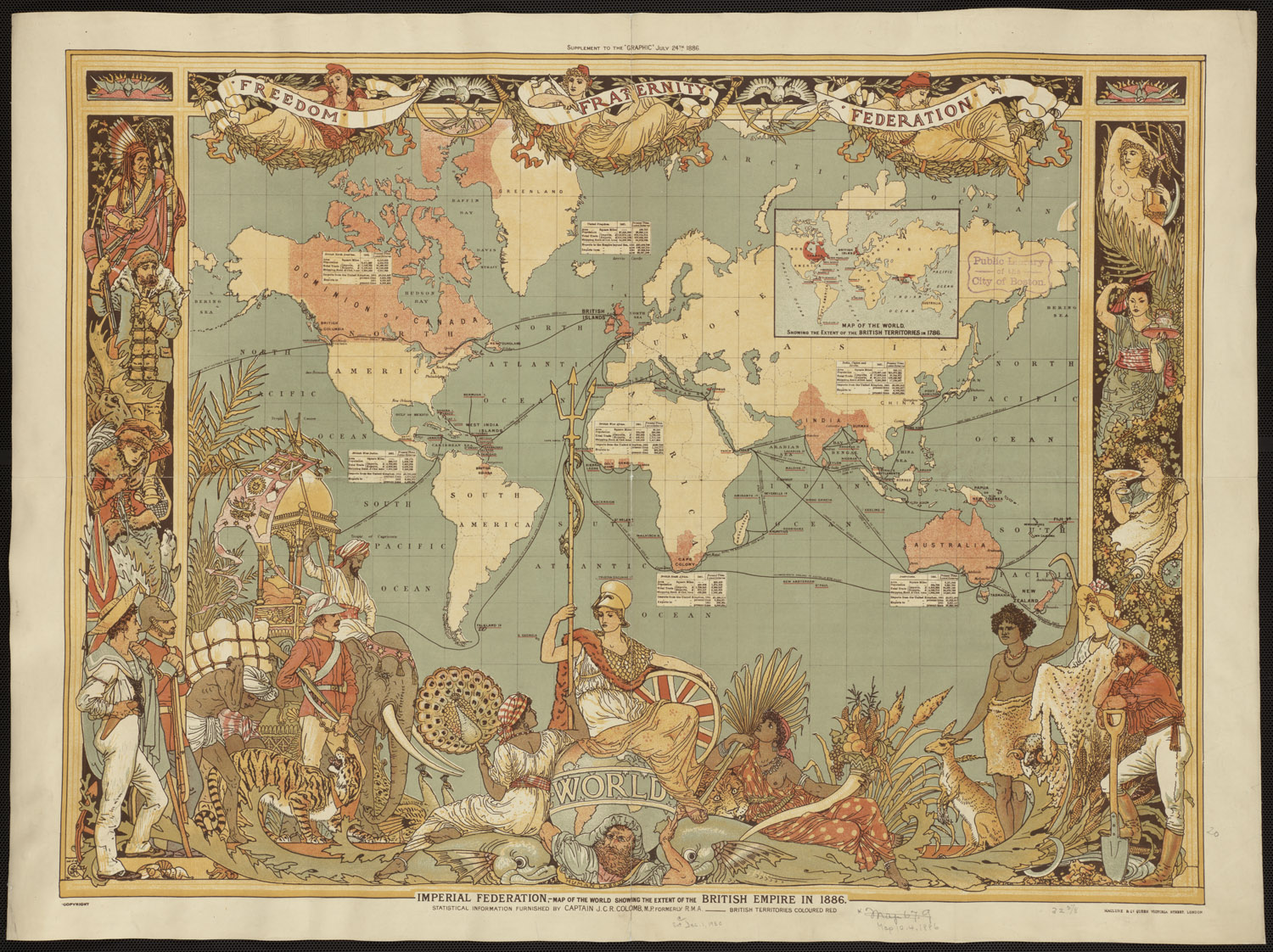
Empire supplied perfect material: distant wars, heroic explorers, foreign enemies, military victories and enormous maps coloured to represent British control. Millions of readers who received little of the empire’s material wealth were encouraged to inherit its pride.
From empire to war
The audience became part of the mobilisation.
The Boer War became an early demonstration of modern imperial journalism. War produced spectacle, patriotism, atrocity, competition and circulation. Newspapers did not merely reflect public emotion; they participated in organising it.
Behind the triumphal language sat scorched-earth tactics, civilian displacement and British concentration camps.
By 1914, the machinery required for mass persuasion was already in place: a highly literate population, cheap national newspapers, powerful proprietors, rapid communications, imperial patriotism and familiar stories about loyalty, enemies and national destiny.
The government did not need to invent mass persuasion from nothing. It could work through a culture already trained to understand war as duty, sacrifice and national belonging.
The mass press gave working people membership in the imperial nation just as the state required their labour, obedience and bodies.
Broadcasting the nation
A single voice could now enter millions of homes.
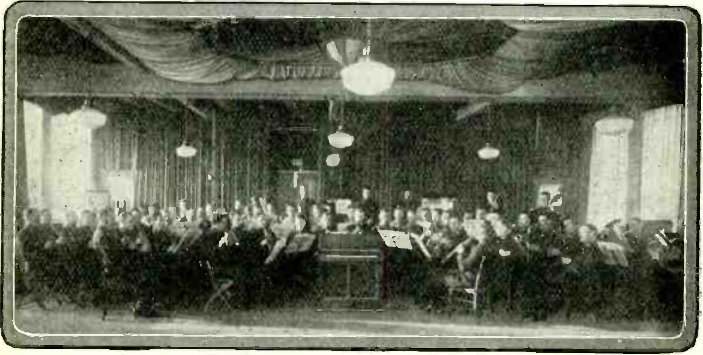
Radio created a new relationship between information and power. The newspaper spoke to different political and social constituencies. The BBC could speak to the country simultaneously.
Its public-service model differed from the openly partisan press, but it was never entirely outside the structures of government and establishment power. During the 1926 General Strike, the BBC’s claim to impartiality was tested by political pressure and institutional caution.
During the Second World War, broadcasting became essential to censorship, public information, overseas messaging and national morale. Some wartime secrecy protected military operations and lives. Some communication managed what the public was permitted to know.
Broadcasting gave Britain a shared national voice. It also gave extraordinary authority to the institution selecting that voice.
The post-war story
Empire disappeared from the map before it disappeared from the imagination.
After 1945, newspapers remained embedded in everyday British life. Different classes, regions and political traditions possessed recognisable titles. Local newspapers employed reporters inside the communities they covered. Public-service broadcasting existed alongside a powerful, partisan national press.
The imperial story survived through reporting on immigration, Commonwealth citizenship, race, crime, welfare and national decline. Migrants were frequently discussed without the imperial history that explained why Britain and the Commonwealth had become connected.
Old classifications found new language. Colonial subjects became immigrants. The poor became claimants. Trade unionists became enemies of modernisation. Structural problems were increasingly transformed into stories about defective individuals.
Murdoch, Thatcher and the market
The owner’s freedom became press freedom.
From 1979, the language of British politics changed. Public ownership became inefficiency. Trade unions became obstruction. Council tenants became failed homeowners. Welfare recipients became burdens upon taxpayers.
The press did not create every one of these ideas, but it repeated, personalised and normalised them.
Rupert Murdoch’s acquisition of The Times and Sunday Times expanded an already formidable newspaper empire. The defeat of the print unions at Wapping shifted power further towards proprietors. New technology reduced costs and changed production. It also weakened one of the organised groups capable of resisting an owner from inside the industry.
Hillsborough exposed what that structure could produce. Police authority, class contempt, anti-Liverpool prejudice and newspaper sensationalism combined to transform victims into offenders. The truth eventually emerged, but the lie had already completed its immediate cultural work.
Spin, access and managed politics
Political communication became a professional industry.
Satellite television and 24-hour news accelerated the cycle. Political parties developed press offices, message discipline, rapid rebuttal operations, focus groups and strategic leaks. News organisations needed constant material.
New Labour chose accommodation with concentrated press power rather than confrontation. Politicians did not need to believe that one newspaper could single-handedly determine an election. They only needed to fear what sustained hostility across a powerful media network might do.
The Iraq War exposed the consequences of a political and media system heavily dependent upon official sources, intelligence claims, patriotic pressure and repetition.
Who supplied the claim?
Who repeated it?
Who benefited from belief?
Who was punished when it proved false?
Scandal without transformation
Individuals fall. The structure survives.
Phone hacking revealed the intimacy between newspapers, politicians, police officers, private investigators and corporate executives. The News of the World closed. The Leveson Inquiry documented extensive failures of press culture and self-regulation.
But the deeper ownership structure survived. A title disappeared. Executives changed. A new regulatory name emerged. Some individuals were prosecuted. The concentration of influence remained.
- A journalist can be dismissed.
- A newspaper can print a correction.
- A regulator can uphold a complaint.
- A title can even close.
The economic incentives, political access and ownership system can continue almost untouched.
The algorithm inherits the newspaper
The source disappears. The repetition remains.
The internet appeared to break the old monopoly. Anyone could publish. Information could cross borders instantly. Readers no longer needed a printing press, broadcasting licence or distribution network to speak publicly.
But the collapse of the newspaper business model damaged local journalism. Advertising revenue migrated to technology companies. Newsrooms contracted. Publications became increasingly dependent upon subscriptions, search engines, social-media referrals, constant output and emotional engagement.
Facebook became the new front page. It did not need to originate most political narratives. It could select, fragment and amplify them.
A newspaper publishes a framing. A politician repeats it. A broadcaster debates it. An influencer condenses it. A user turns it into a meme. Thousands of reactions make the original framing appear to have emerged spontaneously from the public.

From gatekeeping to amplification
Everything may enter. Very little receives equal attention.
The old information system decided what could enter public circulation. The modern system can allow almost everything to enter—then decide what will be amplified, buried, recommended or repeated.
The algorithm does not need a coherent political ideology of its own. It rewards material most likely to hold attention, stimulate reaction and keep people on the platform.
Anger travels well.
Fear travels well.
Humiliation travels well.
Simple enemies travel better than complicated systems.
The commercial incentive and the political incentive increasingly meet in the same place. A divided population produces engagement. Engagement produces data. Data produces profit. Profit funds the machinery that produces more division.
The old categories return
A society experiencing insecurity is given someone else to blame.
Real disagreements exist inside every one of these subjects. But power also exists in determining which disagreements receive constant national attention and how their participants are classified.
The population looks sideways.
Ownership remains above the frame.
A different idea of freedom
Freedom should belong to the reader as well as the owner.
Britain has often treated press freedom as the proprietor’s freedom from government interference. That freedom matters. A government able to dictate newspaper content presents an obvious danger.
But ownership presents another question: what does freedom mean when a small number of wealthy organisations possess far greater power than everyone else to define the national conversation?
Countries such as Norway have been more willing to protect media plurality through public policy, ownership transparency and support for smaller publications. That model is not perfect, and Norway is not historically innocent. But it demonstrates that concentrated commercial ownership is not the only possible definition of a free press.
A genuinely free information system should protect more than the owner’s right to publish. It should protect the population’s ability to encounter diverse, credible and independent information.
The structure beneath the history
Five threads run through the entire story.
Access
Who was allowed to know, and who could afford the information?
Classification
How were people divided into social, racial and moral categories?
Ownership
Who controlled the machinery through which information travelled?
Repetition
How did a selected idea begin to resemble common sense?
Accountability
Who carried the punishment when institutions produced harm?
These questions connect the newspaper tax to Facebook, colonial classification to the culture war, and the press baron to the platform billionaire.
Six starting points
Explore the series
The title cards are in place. Each will become a full article as the series develops.
Print · censorship · taxation
Who Was Allowed to Know?
Before Britain created the mass reader, information was controlled through education, licensing, prosecution and cost.
Article to comeEducation · industry · audience
Teaching Britain to Read
Literacy created greater freedom—but also an audience that could be sold news, nationalism and fear.
Article to comeSlavery · caste · classification
Manufacturing Difference
Empire identified divisions, hardened them into official identities and governed through them.
Article to comePress barons · empire · war
Selling the Empire
Patriotism became a product, distant conquest became daily entertainment and war became a circulation opportunity.
Article to comeBBC · Murdoch · Iraq
Who Broadcasts Britain?
Governments, broadcasters and proprietors learned to compete—and cooperate—over the limits of acceptable debate.
Article to comeBrexit · Facebook · attention
The Algorithm Inherits the Newspaper
A concentrated framing travels through platforms and people until it resembles spontaneous public opinion.
Article to comeThe question underneath everything
This is not an argument that ordinary people are stupid.
It is an argument that no population forms its understanding independently of the information environment surrounding it.
People can question, resist, organise and seek alternatives. They always have. Radical pamphleteers, working-class newspapers, anti-war campaigners, trade unionists, investigative journalists and independent publishers all belong inside this history.
But resistance does not remove the imbalance of power.
Britain expanded literacy. It expanded voting rights. It expanded access to broadcasting and publication. What it did not expand equally was ownership of the machinery that determines which stories dominate national life.
The press became cheaper.
The audience became larger.
The delivery became faster.
The targeting became more precise.
And the people selecting the story became harder to see.
We moved from an age in which ordinary people were prevented from reading to one in which they are surrounded by information every waking hour.
That looks like complete freedom. But access to unlimited information is not the same as equal power over the information system.
The final question is no longer simply: “Who is allowed to speak?”Who owns the machinery that decides who will be heard?