BOURNE END · OXFORDSHIRE
The Workers Changed. The Dependency Didn’t.
Stopped at a services near Bourne End, outside Oxford earlier today. 🛣️
McDonald’s. KFC. Petrol station.
The usual modern British roadside ecosystem.
And like almost every services in Britain now.
Now Hiring.
Always hiring.
But the thing that struck me wasn’t even the signs anymore.
It was the workforce.
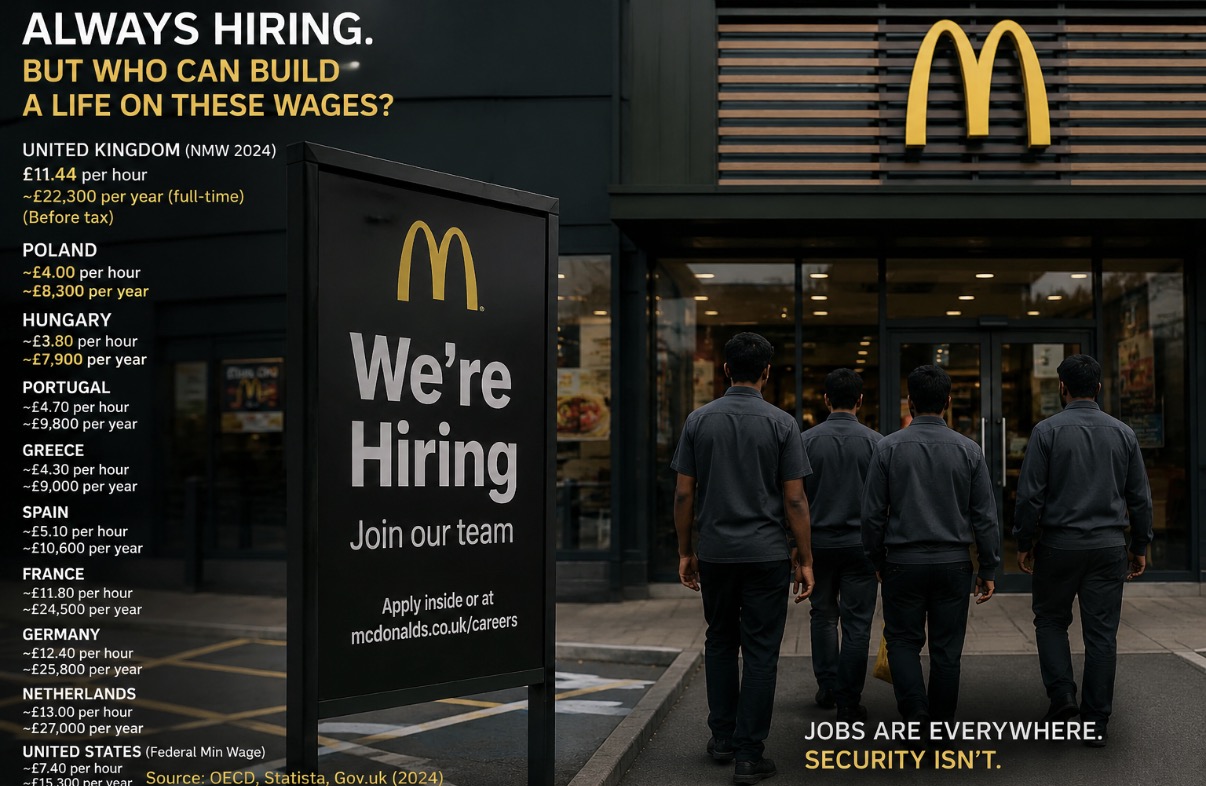
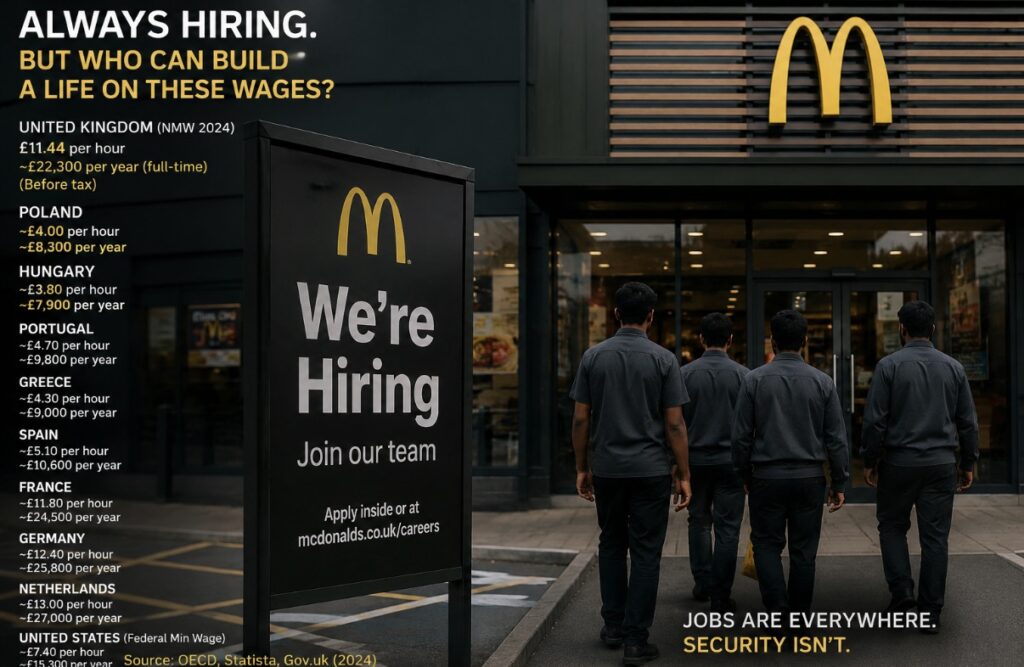
Years ago, places like this were packed with Polish, Romanian and Lithuanian workers. Eastern Europeans largely kept huge parts of Britain’s low-wage economy functioning after EU expansion.
Now?
Increasingly South Asian, African and Middle Eastern workers.
I watched four Indian lads walk across the car park for shift, in a remote part of rural Oxfordshire.
And honestly, once you start noticing it, you see it everywhere now. 👀
But this isn’t about attacking workers.
Because the reality is simple:
Without migrant labour, parts of Britain would genuinely stop functioning.
The jobs
are everywhere.
The jobs are there.
That’s the contradiction.
Britain doesn’t have a complete “jobs shortage”.
It has a quality-of-life crisis.
Because let’s be honest:
How many people are realistically buying homes, raising families or building long-term security working rotating low-wage service jobs?
That’s the elephant in the room. 🐘
WORKING ≠ SECURITY
You can work
full-time
and still…
- Struggle to rent
- Struggle to save
- Struggle to own
- Struggle to feel stable
So businesses recruit globally because somebody still has to keep the machine alive. ⚙️
And after Brexit and COVID, why would many Eastern European workers stay?
But the labour demand never disappeared.
Britain after Brexit didn’t end dependency on migration.
It simply changed where the labour now comes from.
And standing there earlier in rural Oxfordshire, you could almost see the entire modern British economy condensed into one motorway stop:
That’s the pattern I’ve noticed since COVID.
And honestly?