WHO OWNS THE MUSIC?
You can write it. Sing it. Make it famous. That doesn’t necessarily mean you own it.
START HERE
We hear a song.
The industry sees assets.
A singer can become synonymous with a record without owning the recording. A songwriter can create something worth millions while somebody else controls how it is exploited. A catalogue can outlive the person who made it.
Music looks simple from the outside. Artist. Song. Album. Tour. Behind it sits an entirely different architecture: publishing, masters, labels, advances, recoupment, licensing, royalties, catalogues, platforms and contracts.
Who Owns the Music? follows the money backwards. From the song we hear to the contracts, companies and rights underneath it.
Before there is an industry,
somebody creates something.
The first distinction changes everything: the composition and the recording are not the same property.
The Composition
Melody, lyrics and songwriting. This is where publishing begins.
The Master
The particular recorded performance — a separate asset with separate ownership.
The Performance
The artist becomes the public face of something they may not entirely control.
You Made It. Do You Own It?
Masters, publishing and the basic ownership structure behind recorded music.
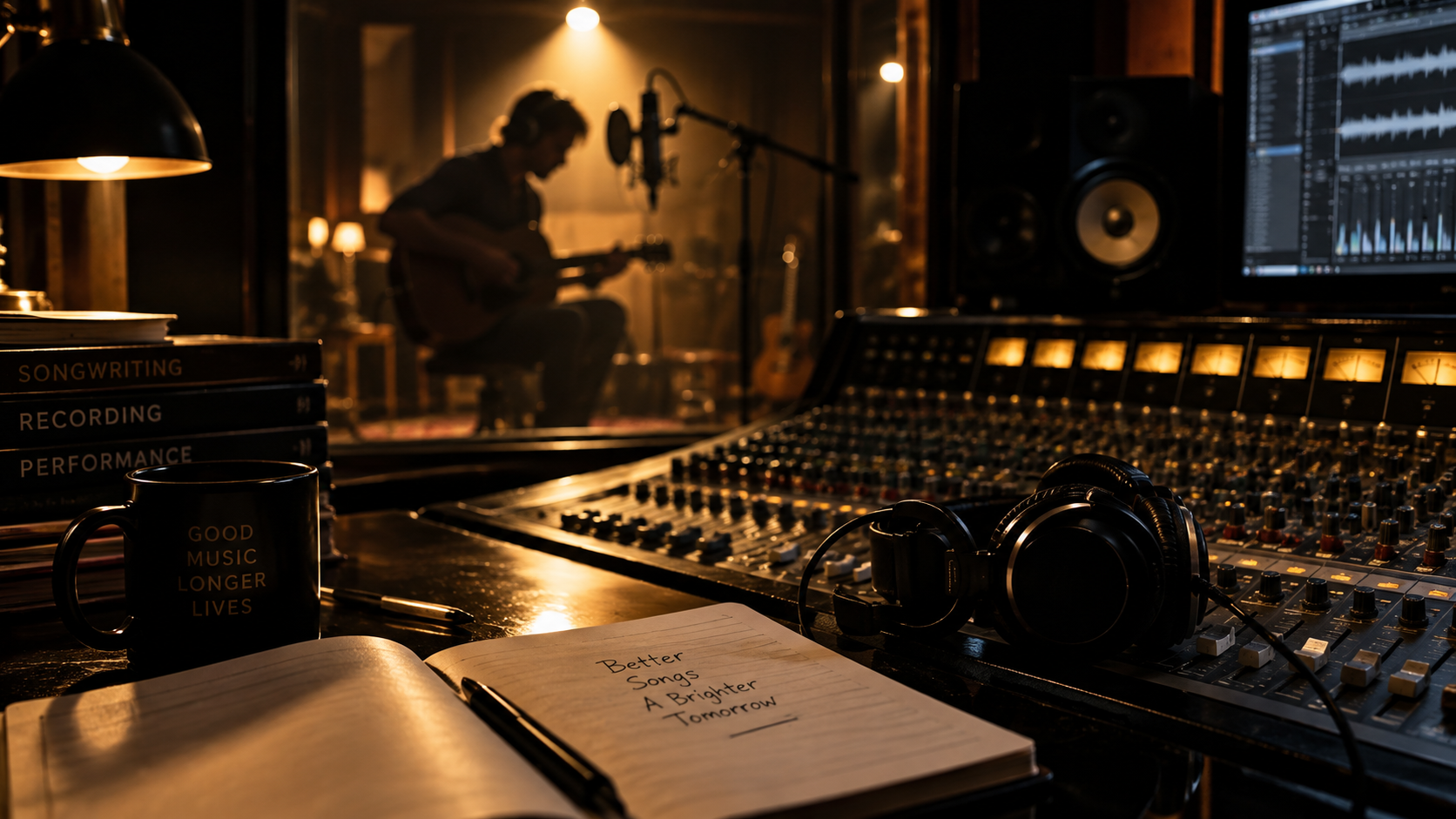
Before the contracts, catalogues and royalty statements, somebody has to make the music.
The cheque can be enormous.
The small print can be bigger.
Record deals are routinely reported as wealth. But an advance, a royalty and ownership are three very different things.
“A million-dollar deal does not necessarily mean a million dollars in the artist’s pocket.”
Advances can be recoupable. Recording costs can come back out of an artist’s share. Contracts can contain options stretching years into the future.
The Deal
Advances, recoupment, royalties, options and what the headline number doesn’t tell you.
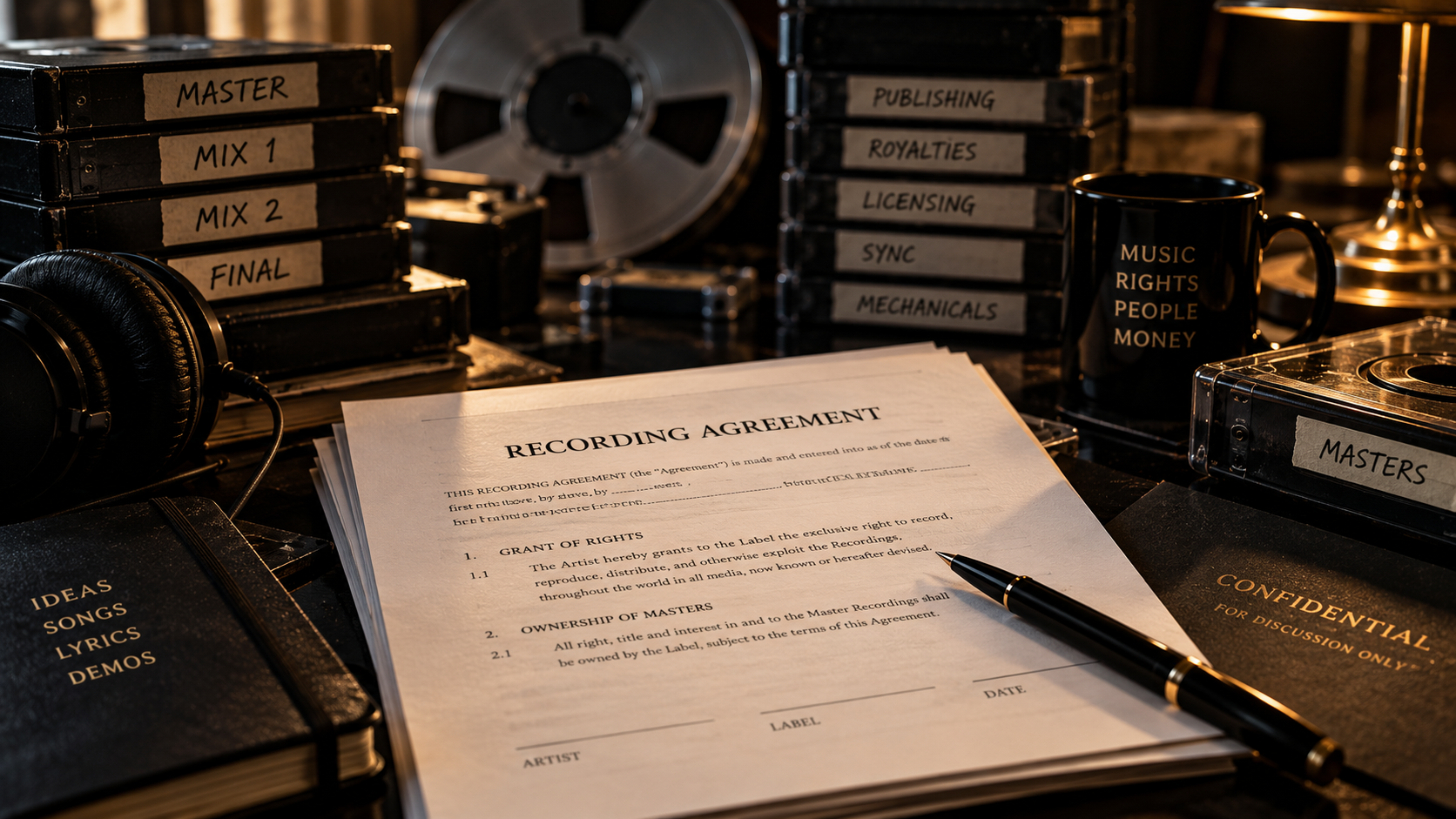
The music leaves the studio. The rights begin to separate. Artist, writer, publisher, label, master.
Eventually, some artists
start asking who owns what.
Different decades. Different contracts. The same recurring argument: control.
The format changed.
The ownership question didn’t.
Music moved from objects to files and from files to access. The listener stopped buying individual recordings and began renting an almost infinite library.
Meanwhile, the underlying rights became increasingly valuable financial assets — capable of being bought, sold, licensed, bundled and valued against decades of future income.
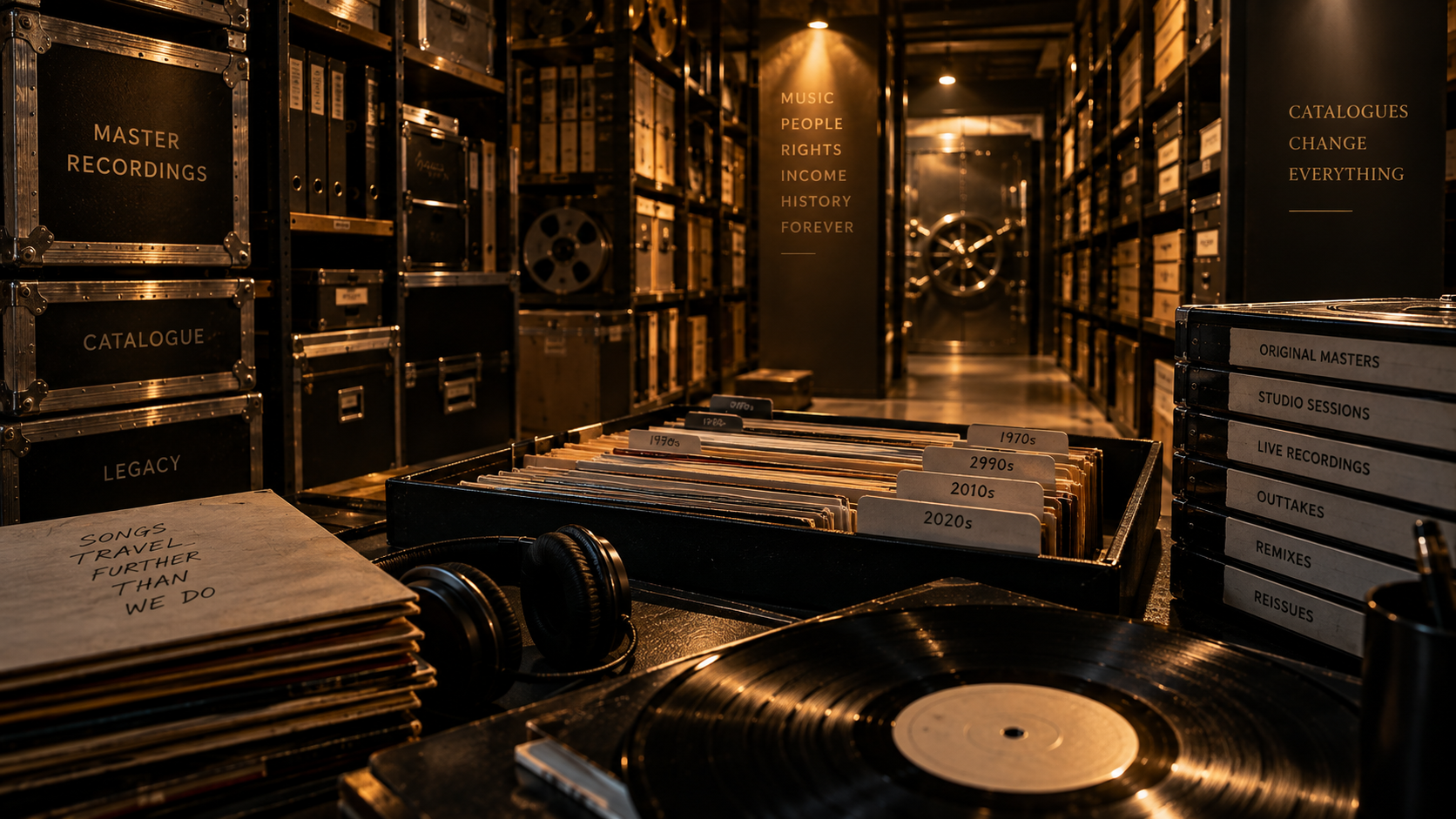
A song can generate income for decades. The catalogue becomes an asset that can be valued, sold and inherited.
What happens when
the asset is no longer
just the song?
Artificial intelligence changes the ownership question again. A voice can be imitated. A performance can be synthesised. A dead artist can theoretically produce something new.
The next fight may not simply be about who owns the master. It may be about who controls the artist’s voice, image, likeness and identity.
AI: Who Owns Your Voice? ↗
If you make the culture
but somebody else owns the asset
what exactly do you own?
A continuing Unsent Studio series about music, ownership, contracts, power and the business behind the sound.