The Chemist That Became an Asset
How Boots travelled from affordable medicine for Nottingham’s workers to a £7 billion prize passed between billionaires.
Boots still looks like a familiar British institution. Underneath the blue sign, however, the company has been merged, leveraged, internationalised, separated and prepared for sale.
For generations, Boots appeared to be one of those institutions that simply belonged to Britain.
It stood on the high street beside the bank, the post office, the butcher and the department store. People went there for prescriptions, toothpaste, baby products, photographs, perfume, plasters and quiet medical advice. Its blue sign did not merely advertise another shop. It indicated that somewhere inside was a pharmacist: a qualified professional who could be approached without an appointment and without first proving an ability to pay.
That distinction matters because Boots has always occupied an unusual position.
It is a retailer, but it is also part of Britain’s healthcare infrastructure. It sells luxury fragrance at one counter and dispenses publicly funded medicine at another. Its commercial success has been built partly upon its position as a familiar and trusted entrance into the NHS.
Now Boots may be sold again
The American private-equity firm Sycamore Partners is reportedly in advanced negotiations to sell the business to the Canadian branch of the billionaire Weston family. The proposed transaction could value Boots at approximately $9 billion—around £7 billion—including debt.
No final agreement has been announced. The discussions could still change or collapse. But Boots has already been separated from Walgreens Boots Alliance and established as one of five standalone businesses following Sycamore’s takeover of the wider group in 2025.
It would be easy to treat this as an ordinary corporate transaction: one wealthy owner selling to another.
But Boots is not an ordinary retailer, and this is not simply another change of name at the top.
The proposed sale is the latest stage in a much longer transformation. Boots began as a business attempting to make healthcare affordable to industrial workers. It became a national manufacturer, scientific research organisation, major employer and permanent fixture of British towns.
It is now an internationally traded financial asset whose ownership can change while the blue signs outside its shops remain exactly the same.
The brand continues. The institution beneath it has been repeatedly reconstructed.
Healthcare for the many
The story began in 1849, when John Boot opened a small herbalist shop in Goose Gate, Nottingham.
After his death in 1860, his widow Mary continued running the business with the assistance of their young son, Jesse. Jesse Boot eventually assumed sole control in 1877 and began transforming a family shop into something much larger.
His decisive innovation was not simply selling medicine. It was selling products at prices ordinary working people could afford.
Nottingham was an industrial city. Healthcare remained beyond the reach of much of its population, and medicines were frequently expensive, inconsistently produced or surrounded by extravagant claims. Boots developed a business model based upon scale, standardisation and lower prices.
The company would later describe its purpose as providing accessible healthcare to Nottingham’s industrial workers: serving “the many and not just the privileged few”.
That should not be confused with charity. Boots was a commercial enterprise, and Jesse Boot became an extremely successful businessman. But profitability and social usefulness were not presented as opposites. Scale allowed the company to manufacture and purchase more efficiently. Lower prices brought products within reach of more households. Greater access generated trust, and that trust produced further growth.
Branches opened in Sheffield and Lincoln in 1884. By the eve of the First World War, Boots had expanded to approximately 560 shops. The chemist was becoming part of the physical and social fabric of British towns.
More than somewhere to buy things
The early Boots stores were not identical to the pharmacies people know today.
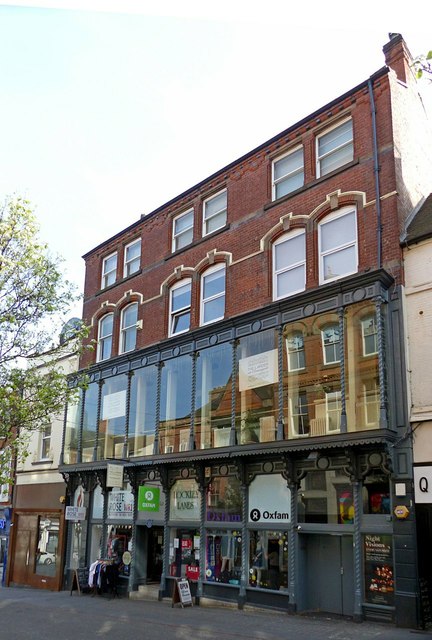
As the company expanded, many branches offered products and services extending beyond medicine. Boots sold stationery, books, toiletries, photographic equipment and household goods. Larger locations developed into something closer to small department stores.
Between 1898 and 1966, numerous Boots branches contained lending libraries. At their height, these libraries allowed customers across Britain to borrow books through a national network embedded within their local shops.
The commercial calculation is obvious: libraries brought people into Boots. But they also made the branches social and cultural spaces. People could enter without being ill and without necessarily making a significant purchase. The company became part of the routine movement of town-centre life.
Jesse and Florence Boot also introduced a range of welfare programmes for employees. These included educational, recreational and medical provisions, with particular attention paid to the large number of women employed by the company. In the 1930s, Boots experimented with a five-day working week.
This was welfare capitalism rather than workplace democracy. The employer retained control, and the benefits were offered on the employer’s terms. They could encourage loyalty, reduce staff turnover and weaken the attraction of organised labour as well as improving workers’ lives.
Boots should not be transformed retrospectively into a benevolent public service. It was a profit-making company operating within the inequalities and commercial structures of its time. Research into Nottingham’s institutions has also demonstrated how the banks, properties and industrial networks supporting local expansion were entangled with wealth originating in the transatlantic slave economy, even where individuals such as Jesse Boot were not themselves directly involved in enslavement.
The history is more complicated than a comforting corporate heritage display.
Nevertheless, the older company reflected a conception of business that has become increasingly unfamiliar: the belief that a large and successful employer accumulated responsibilities to its workers, its city and the society from which its prosperity came.
From shopkeeper to manufacturer
Boots did not remain simply a chain of shops.
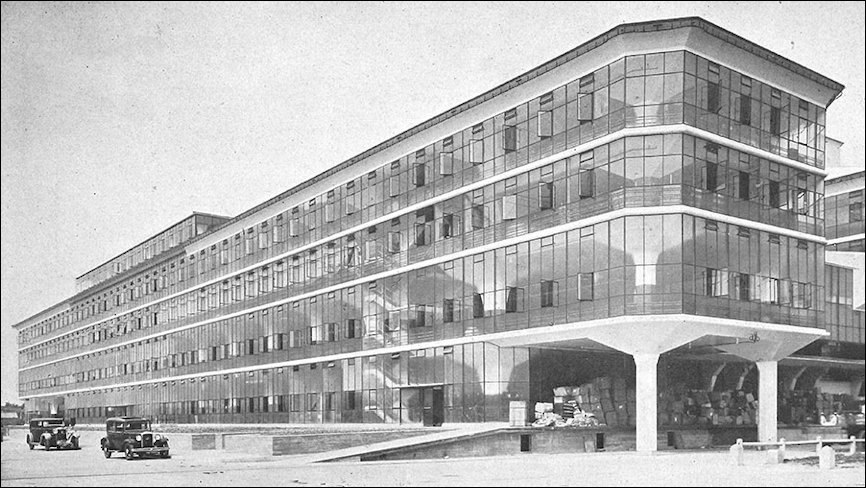
It developed laboratories, factories, warehouses and scientific departments. The Beeston site outside Nottingham became a huge centre for manufacturing, research and distribution. The company made medicines, cosmetics, toiletries and photographic products rather than merely placing the Boots name on goods manufactured elsewhere.
A retailer can change its suppliers relatively quickly. A manufacturer accumulates specialist workers, equipment, knowledge and relationships with a place. Scientific research requires time, institutional memory and a willingness to fund work whose commercial value may not be immediately apparent.
Boots’ most celebrated scientific achievement was the development of ibuprofen. During the 1950s and 1960s, a research team led by Dr Stewart Adams and Dr John Nicholson searched for an alternative treatment for rheumatoid arthritis. The compound that emerged eventually became one of the most widely used painkillers in the world.
Ibuprofen was patented by Boots in the early 1960s and introduced as a prescription medicine before later becoming available without prescription. In 1987, the company received the Queen’s Award for Technological Achievement for its development.
The importance of ibuprofen is larger than the value of one successful product. It represents a version of Boots that employed scientists, developed original medicines and maintained the capacity to turn research into mass-produced healthcare.
Boots meets the NHS
When the National Health Service was established in 1948, Boots was already approaching its centenary.
The NHS dramatically expanded access to medical treatment and increased the volume of prescriptions passing through community pharmacies. Boots quickly advertised that its shops dispensed NHS prescriptions.
A permanent partnership was formed between a universal public service and a privately owned retail network.
The NHS did not own Boots. It did not employ the company’s pharmacists or operate its buildings. Boots remained a commercial retailer. But publicly funded prescriptions brought patients through its doors, while its network gave the NHS an established route through which medicines could reach communities.
At the back of the shop was healthcare. At the front was retail. A person might enter because of illness, wait while a prescription was prepared and purchase shampoo, cosmetics, painkillers or household products before leaving.
Public spending provided an essential service. The retailer received footfall, trust and commercial opportunity. Neither side of that relationship was incidental to Boots’ success.
The prescription counter distinguished it from an ordinary department store. The retail operation helped support a physical network through which prescriptions could be dispensed. Boots became commercially valuable partly because it was socially necessary.
The retreat from making medicine
By the late twentieth century, Boots was diversifying, restructuring and responding to pressure from investors.
Its pharmaceutical research operations became increasingly difficult and expensive to sustain. The failure of Manoplax, a drug developed to treat congestive heart failure, contributed to pressure upon the company during the early 1990s.
In 1994, Boots sold its prescription-drugs division to the German chemical group BASF.
The transaction represented more than the disposal of an underperforming business. It helped separate the familiar Boots retail name from the scientific and manufacturing institution that had produced medicines such as ibuprofen.
The company retained powerful consumer brands, pharmacies and shops. But part of the organisation’s deeper industrial capacity had moved elsewhere.
The deal that changed everything
The decisive modern shift began in 2006, when Boots merged with the European pharmaceutical wholesaler Alliance UniChem to create Alliance Boots.
One year later, Alliance Boots was acquired by the American private-equity firm KKR and Stefano Pessina in a deal worth more than £11 billion. It was a landmark moment: the first time a FTSE 100 company had been acquired by private equity.
The language surrounding such transactions is often deliberately bloodless. A company is “taken private”. Capital is “restructured”. Assets are “optimised”. Efficiency is “unlocked”.
Underneath those terms is a basic shift in power.
A publicly listed company has shareholders demanding returns, but it must still publish regular financial information and answer to a wide group of investors. A leveraged private-equity takeover concentrates control and typically uses substantial borrowing to complete the purchase. The acquired company is then expected to generate the cash required to service the structure built around its acquisition.
Boots did not disappear after the KKR takeover. Customers could still collect prescriptions, buy No7 cosmetics and use their Advantage Cards. The familiar experience continued. But ownership had become more remote, the financial structure more complex and the purpose of the company increasingly tied to the return required from an enormous transaction.
In 2008, Alliance Boots moved its headquarters from Nottingham to Zug in Switzerland. The operational centre at Beeston remained, but the group’s corporate and tax arrangements had become international.
From family chemist to movable asset
Walgreens and the promise of global scale
In 2012, the American pharmacy company Walgreens acquired a 45% stake in Alliance Boots. Two years later, it completed the purchase of the remaining 55%, creating Walgreens Boots Alliance.
On paper, the logic appeared compelling. Walgreens brought thousands of American pharmacies. Alliance Boots contributed its British stores, European wholesale operations, consumer brands and international reach. Greater scale was expected to improve purchasing power, reduce costs and create new growth opportunities.
But global scale did not remove the underlying pressures facing retail pharmacy. Online shopping weakened traditional high-margin retail sales. Pharmacy reimbursement came under pressure. Maintaining thousands of physical shops remained expensive. Walgreens expanded aggressively and made a series of costly strategic decisions in the United States.
The group that had once appeared capable of dominating international pharmacy suffered a spectacular decline in market value.
Boots, however, generally performed more strongly than Walgreens’ American operation. Its beauty business remained powerful. Its shops recovered footfall after the pandemic. Online sales grew. The company retained enormous brand recognition and remained an important dispenser of NHS prescriptions.
Boots had become one of the healthier pieces inside a struggling international group. That did not protect it from cuts. It made it valuable enough to separate and sell.
The disappearing network
In 2019, Boots began a programme to reduce its UK store estate.
Walgreens Boots Alliance later said its cost-saving plans included the closure of as many as 650 Boots branches. By May 2024, 581 had closed. More recent figures place the remaining UK network at approximately 1,800 stores.
Individual closures could be explained commercially. Some branches were close to another Boots. Some leases were expiring. Some shops were small, underperforming or expensive to operate. Shopping patterns had changed, and more customers were buying products online or visiting larger retail parks.
Considered one by one, each closure could appear rational. Considered together, they described the gradual withdrawal of a national institution.
This is how the high street often declines. There is rarely one announcement declaring that a familiar service has ended. Instead, provision is thinned out location by location.
One town loses its branch. Another keeps a Boots but loses convenient opening hours. Another is directed towards a larger shop several miles away. The company continues trading, the website grows and the most profitable stores receive investment.
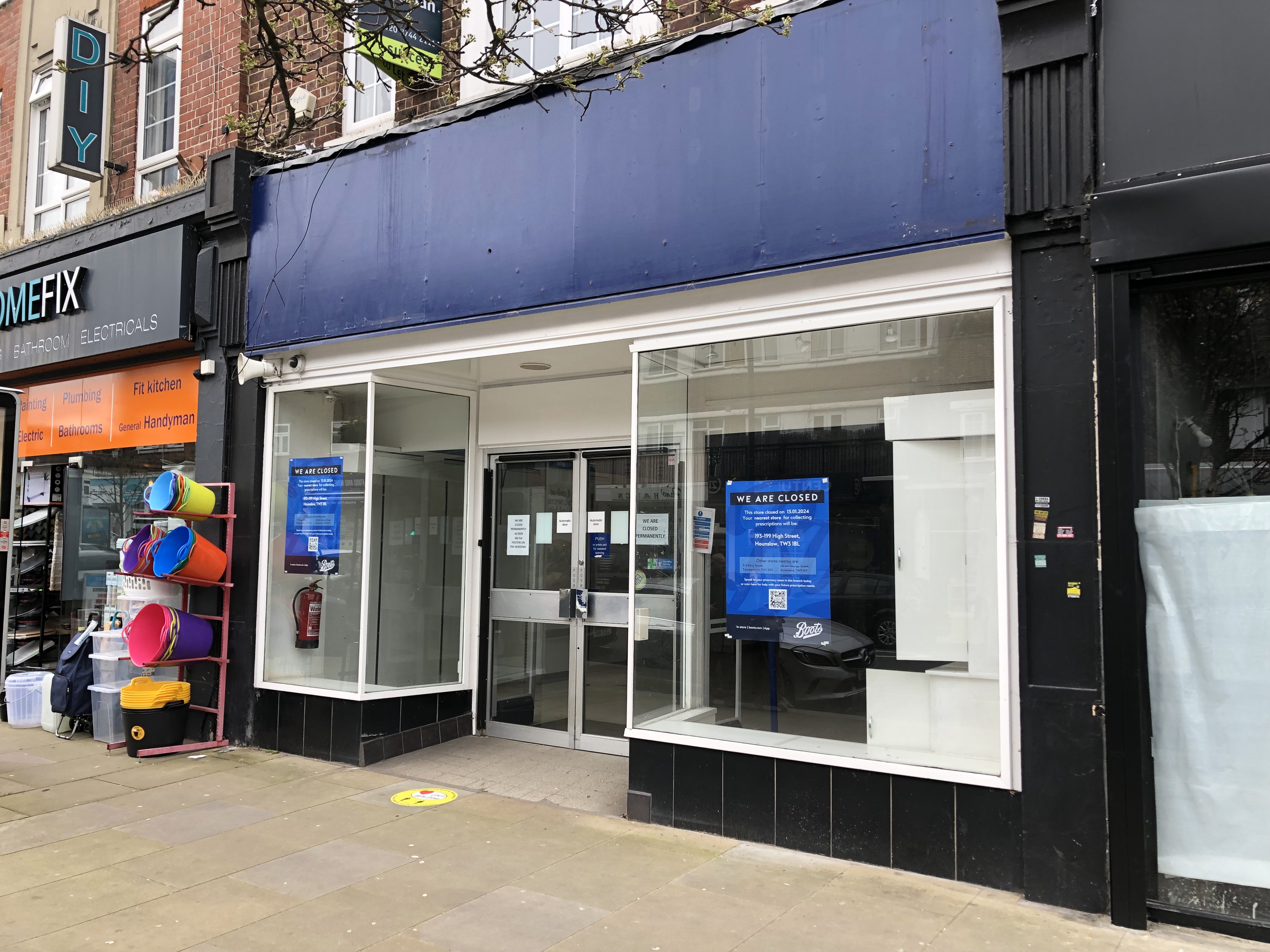
The brand remains national. Access becomes increasingly selective.
Between February 2016 and February 2026, England lost more than 1,000 community pharmacies. Boots was not solely responsible for that decline, and independent pharmacies have faced severe pressures of their own. But its closures formed part of the same weakening network.
This matters because the government is simultaneously expecting pharmacies to carry more of the healthcare burden. Pharmacy First asks pharmacists to assess and treat a range of common conditions that might previously have required a GP appointment.
Yet a service cannot relieve pressure upon the NHS if the physical places delivering it are disappearing. A prescription may remain legally available. That does not mean it remains locally accessible.
The pension obstacle is removed
For years, one of the barriers to selling Boots was its large pension scheme.
In 2023, Walgreens Boots Alliance transferred approximately £4.8 billion of Boots pension liabilities to Legal & General through a bulk annuity agreement. The transaction secured members’ benefits through the insurer, but it also removed a major complication facing any prospective buyer.
This was presented as protection for pensioners, which it was. It also made Boots easier to sell.
The business had already reduced its store estate. Its pension obligations had been transferred. Its performance was improving. Its beauty brands, online operation, pharmacy contracts and remaining locations could now be presented as a cleaner commercial proposition.
Private equity returns
In 2025, Sycamore Partners acquired Walgreens Boots Alliance in a transaction valued at approximately $23.7 billion including debt. Walgreens left the stock market, ending nearly a century as a publicly traded company.
Sycamore then separated the organisation into five standalone companies: Walgreens, The Boots Group, VillageMD, CareCentrix and Shields Health Solutions. The Pessina family reportedly retained a 44% interest in each business.
This restructuring made the logic visible. Walgreens Boots Alliance was no longer being treated primarily as a global group whose different operations would support one another. It was being divided into components whose individual value could be realised separately.
Within roughly a year of acquiring the wider group, Sycamore was already in advanced discussions to sell Boots.
This does not prove that the new owner neglected the business or intended to destroy it. Separating a stronger division from a troubled parent can provide clarity and investment. But the speed of the process tells us something important about the modern company.
Boots was acquired inside a larger transaction, separated from the group and prepared for another sale. It had become a financial event capable of generating a return before it had become a long-term responsibility.
A profitable company is offered for sale
Boots is not being sold because nobody wants it.
For the year ending August 2025, it reportedly generated £7.5 billion in revenue. Pre-tax profit rose by 25% to £337 million, supported by beauty sales and growing demand for weight-loss treatments.
The prospective purchasers are not being asked to rescue a corpse. They are being offered a profitable company with approximately 1,800 UK stores, around 51,000 employees, powerful consumer brands, a large online operation and one of the most trusted names in British healthcare.
When a struggling business is sold, closures and restructuring can be presented as unavoidable measures required for survival. When a profitable company is sold for billions, the pressure comes from somewhere else: the need to justify the purchase price and produce an acceptable return upon it.
A buyer paying £7 billion will not preserve every branch because people feel affection for the sign. It will examine revenue, leases, staffing, prescription volumes, beauty sales, digital growth, private treatments, property costs and opportunities to integrate the business with its existing operations.
The proposed purchaser is the Canadian branch of the Weston family, whose businesses include Loblaw and Shoppers Drug Mart.
That makes the potential acquisition more complicated than a straightforward private-equity exit. The Westons are not outsiders to pharmacy. Shoppers Drug Mart is one of Canada’s dominant pharmacy chains. Its parent group has invested in pharmacy-care clinics, digital health, beauty, weight management and the closer integration of retail with healthcare services.
Boots would therefore be going to an owner that understands the commercial possibilities of a pharmacy network. That could bring investment. It could also accelerate the conversion of Boots from a traditional chemist into an integrated platform selling healthcare, beauty, private treatment, digital access and customer insight.
But that is the subject of Part Two.
From institution to asset
The history of Boots is not a simple decline from a perfect past.
The company has always been commercial. It has previously had American owners. Its welfare programmes could be paternalistic. Its expansion depended upon the wider inequalities and financial structures of British capitalism. It sold products because they generated revenue, not solely because they improved public health.
But something fundamental has still changed.
The older Boots accumulated factories, laboratories, libraries, scientific knowledge, workers and obligations to a place. It used scale to sell healthcare products more cheaply and built trust through physical presence.
The modern Boots is increasingly valued through the portability of its parts.
Its pension liabilities can be transferred. Its parent company can be divided. Its branches can be assessed and closed individually. Its headquarters can move across borders. Its ownership can pass from a public company to private equity and then to a billionaire family.
The most revealing fact is not that Boots might be sold. It is that the shops can look almost identical while the institution behind them changes completely.
The sign survives every transaction. The obligations do not necessarily survive with it.
The high street after the institution
Britain often discusses the decline of the high street as though it were primarily a problem of appearance.
There are too many empty units. The shopfronts need improvement. Parking charges are too high. Councils should organise more markets, festivals and seasonal displays.
Those things may matter, but they do not explain the deeper loss.
The traditional high street was useful because it concentrated everyday infrastructure. It brought together banks, post offices, food shops, pharmacies, department stores, public transport and places where people could speak to another person.
Boots was one of its surviving anchors because people did not visit only when they felt like shopping. They visited because they needed medicine.
Once an anchor is reduced, surrounding businesses lose footfall. Once a pharmacy closes, patients travel farther. Once several essential services disappear, the high street becomes less useful. Once it becomes less useful, fewer people visit.
The decline sustains itself.
A profitable national chain can rationally close an underperforming branch. A town cannot rationally lose every essential service.
The business calculates the return from one store. The community absorbs the cumulative loss.
The £7 billion question
Boots began by making healthcare more accessible to Nottingham’s industrial workers. It grew by placing recognisable and trusted chemists in towns across Britain. It developed medicines, employed scientists, supported a major manufacturing base and became a partner to the NHS from the moment the health service was established.
Its commercial value today still rests upon that history of access and trust.
Yet the company has travelled a considerable distance from Jesse Boot’s Goose Gate shop. It has been merged, leveraged, internationalised, partly dismantled, separated and prepared for sale. Each stage has been presented as a rational business decision. Taken together, they reveal the conversion of a national institution into a portfolio of financially valuable components.
Boots may now receive another experienced owner. The Weston family may invest in stores, expand clinical services and strengthen the business. The company could remain profitable for decades.
But survival of the company is not the same thing as preservation of its social function.
Boots can flourish as a brand while withdrawing as a presence. It can sell more beauty products, private treatments and weight-loss medication while closing the smaller branches upon which local patients depend. It can become more efficient while becoming less accessible.
The £7 billion question is not whether Boots will survive. It probably will. The question is what kind of Boots will survive and which communities will still have one when the financial calculations are finished.
Boots Will Survive.
Your Local Boots May Not.
Part Two examines the Weston–Shoppers Drug Mart model, NHS prescriptions, pharmacy clinics and what the next owner could do with Britain’s largest chemist.