Boots Will Survive.
Your Local Boots May Not.
A Canadian pharmacy empire could give Boots a future. That does not guarantee a future for every branch, every pharmacist or every community that depends upon one.
The question is not whether an experienced retail family knows how to make money from pharmacies. It does. The question is what happens when a public health service becomes increasingly dependent upon stores governed by private calculations.
The easiest mistake would be to imagine that a takeover must destroy Boots in order to damage the service people associate with it.
It does not.
The name can survive. The website can grow. The flagship branches can become brighter, more clinical and more technologically sophisticated. Beauty sales can rise, private treatments can expand and profits can improve.
At the same time, a smaller branch can close. A prescription counter can lose hours. A pharmacist can be asked to complete more consultations with fewer colleagues. A patient can be directed to another town.
That is the central risk surrounding the reported £7 billion sale of Boots to the Canadian branch of the Weston family. The danger is not necessarily a sudden collapse. It is a commercially successful transformation that preserves the valuable parts of Boots while thinning out the part Britain quietly relies upon.
This is not a family buying a sentimental British shop
The Westons already understand pharmacy at industrial scale.
Through Wittington Investments, the Canadian side of the family controls Loblaw Companies, the country’s largest food and pharmacy retailer. Loblaw owns Shoppers Drug Mart, a chain so embedded in Canadian daily life that the comparison with Boots is immediate: medicine, beauty, convenience, trusted locations and a familiar sign.
That makes the proposed deal more credible than a speculative purchase by an owner with no experience of healthcare. It also tells us what the attraction may be.
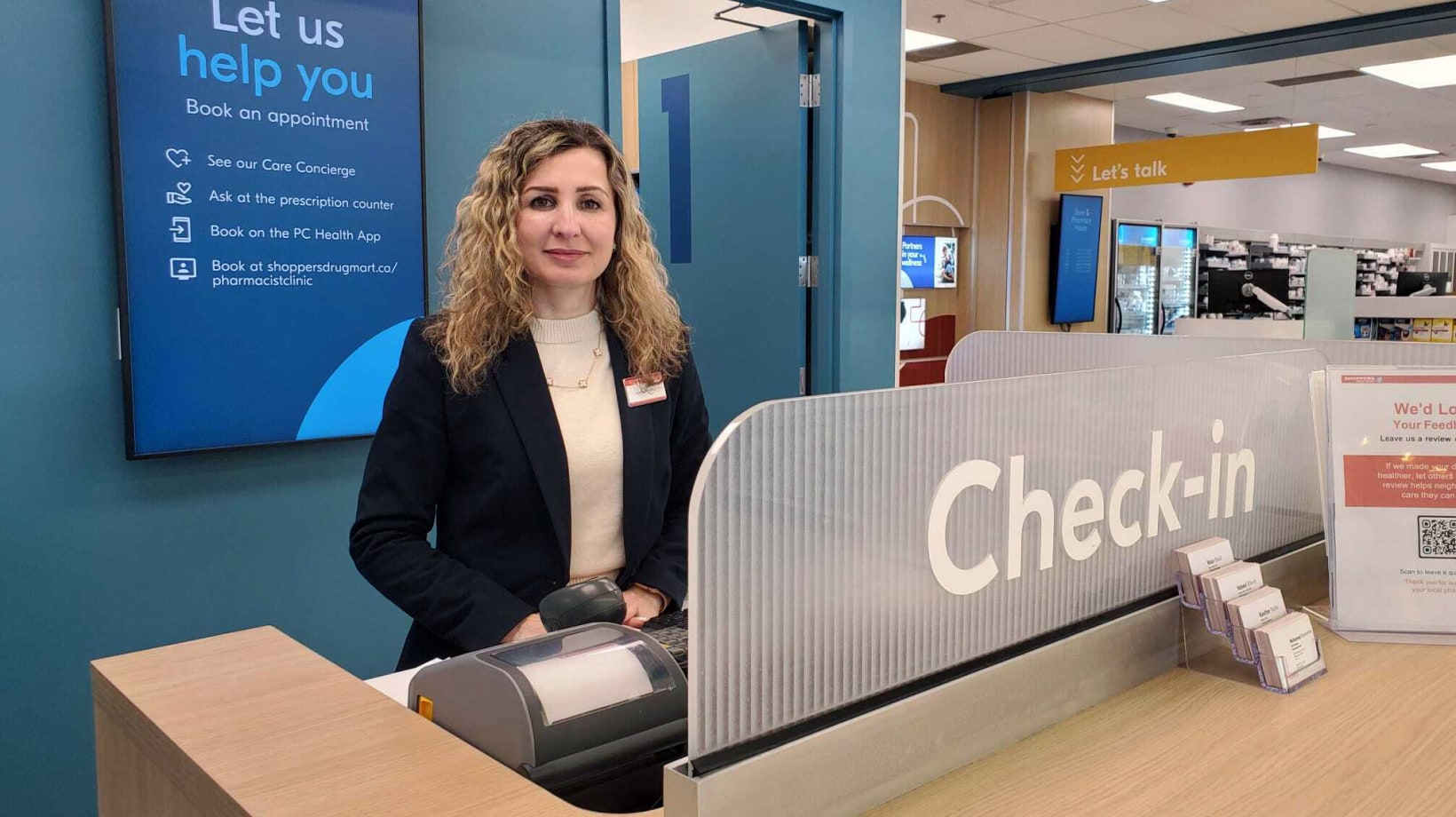
Shoppers Drug Mart is not simply a row of shops dispensing tablets. Its parent has been building pharmacy care clinics, digital health services, centralised prescription fulfilment and a wider relationship between retail, healthcare and customer data. Loblaw said it had opened its 200th Pharmacy Care Clinic in September 2025 and was on course for 250 by the end of that year.
The clinic is not hidden at the back as an incidental service. It is part of the proposition: consultation rooms, examinations, vaccinations, management of chronic conditions and treatment for minor illnesses, all attached to a retail network.
The model is integration
There is nothing inherently sinister about putting more healthcare inside a pharmacy. In many respects it is sensible.
Pharmacists are highly trained clinicians. Their skills have long been underused. Pharmacies are easier to enter than GP surgeries, usually require no appointment and already exist in places people visit. Moving routine treatment closer to patients can improve access and reduce pressure elsewhere.
The commercial logic is equally strong. A consultation brings a patient into the store. A prescription creates a continuing relationship. A digital account connects the physical visit to an app. A loyalty scheme records purchases. Private services create revenue outside the limits of public reimbursement. Centralised dispensing can remove repetitive work from individual branches and release pharmacists for services that attract clinical fees.
Each element can be defended on its own. Together they form something more powerful: a healthcare platform built upon a retail estate.
One patient. Several revenue streams.
The public service is not separate from the commercial system. It is one of the routes through which the relationship begins.
Boots already contains most of the machinery
A new owner would not need to invent this future from nothing.
Boots already has a national brand, a large store estate, prescription relationships, an online pharmacy, the Boots app, the Advantage Card, private vaccination services, travel health, hearing care, opticians, beauty brands and a growing business in weight-management treatment.
It has also demonstrated that its pharmacies can deliver clinical work at scale. Boots said that, between the launch of NHS Pharmacy First in January 2024 and August 2025, its branches completed more than one million consultations.
That figure matters. It means Boots is already functioning as an extension of primary care. People are not merely buying medicine after seeing a doctor. Pharmacists are assessing symptoms, following clinical pathways and, where appropriate, supplying prescription-only treatment for seven common conditions.
For the NHS, that is capacity. For Boots, it is capability, relevance and footfall. For an owner experienced in pharmacy clinics, it is a base that can be developed.
The takeover does not place Boots outside healthcare. It makes control of the doorway into healthcare more valuable.
What happens to prescriptions?
They are not likely to disappear.
NHS prescriptions bring regular visits, reinforce trust and connect Boots to a service people cannot simply postpone indefinitely. Dispensing is heavily regulated, pharmacists retain professional duties and the NHS contract cannot be rewritten by a new owner at will.
There would be no commercial sense in spending billions on a pharmacy network and abandoning the activity that makes it a pharmacy.
But that reassuring answer is incomplete.
A prescription can remain available nationally while becoming harder to collect locally. The question is not only whether Boots continues dispensing. It is where, when and under what operating pressures.
A company can consolidate dispensing into larger sites, automate parts of the process, direct more customers online, close branches with weak retail sales or shorten hours where staffing is difficult. The NHS service continues. The map through which patients reach it changes.
Availability is not the same as access
Corporate reporting counts stores, transactions and prescription volumes. Patients experience distance, opening hours, queues, mobility, bus routes and whether a pharmacist is actually available.
If a branch closes and its prescriptions are transferred to another pharmacy, the medicine has not vanished from the system. On paper, continuity may have been maintained.
For a person with a car, flexible working hours and a smartphone, the change may be irritating. For an older patient collecting several medicines, somebody with limited mobility, a carer making repeated journeys or a worker dependent upon an infrequent bus, it can be the difference between convenient access and a recurring obstacle.
This is why the closure of a small pharmacy cannot be assessed only through the sales recorded inside it. Its social value includes journeys avoided, questions answered, mistakes noticed and pressure prevented elsewhere.
Those benefits are real. They simply do not all appear on the branch profit-and-loss account.
The spreadsheet and the street
The most vulnerable branches are the least spectacular
The branches most exposed to commercial rationalisation are unlikely to be the giant city-centre stores with extensive beauty halls, private services and heavy footfall.
They are more likely to be the smaller locations: limited retail space, modest sales, an awkward lease, lower cosmetic spend, difficulty recruiting pharmacists or another company branch judged to be close enough on a map.
Yet these can be precisely the stores whose healthcare role is greatest relative to their retail performance.
A branch serving an older population may process essential prescriptions without generating fashionable retail growth. A pharmacy in a poorer area may be heavily used for advice but produce less private-service income. A rural or peripheral store may be expensive to operate because it lacks the volume available in a major town.
Commercial weakness and social importance can occupy the same building.
A healthcare system built on shops it does not control
Community pharmacies are overwhelmingly private businesses contracted to provide NHS services. That arrangement has practical advantages: the state gains access to premises, staff and distribution networks without owning them directly.
It also creates a structural vulnerability.
The NHS can commission Pharmacy First, blood-pressure checks, contraception services, vaccinations and, increasingly, independent prescribing. It can ask pharmacies to absorb demand that general practice and hospitals cannot handle.
But it does not automatically control whether every branch remains commercially viable. The government can fund services and shape contracts; the operator still pays the rent, hires the staff and decides whether the location fits its strategy.
In 2026 the government increased the Community Pharmacy Contractual Framework in England to £3.636 billion and placed Pharmacy First funding inside the core settlement. That recognises the sector’s importance. It does not erase the underlying contradiction: public policy is expanding the clinical role of a network that private owners can continue to reshape.
The NHS can commission a service. It cannot make an unwanted shop remain open.
More clinical work does not remove commercial pressure
Expanding the pharmacist’s role can be good public policy and good business simultaneously. The problem begins when those two objectives are treated as though they can never conflict.
A pharmacist assessing an infection is not performing an ordinary retail transaction. The consultation requires time, privacy, professional judgement, accurate records and the freedom to decide that no product or treatment should be supplied.
A retailer, meanwhile, measures throughput, staffing, utilisation and return. It wants consultation rooms used, appointments completed and expensive space made productive.
Good governance can keep those pressures apart. Poor governance can allow commercial targets to shape the environment in which professional decisions are made, even without anybody explicitly ordering a pharmacist to act improperly.
The issue is not whether a Canadian owner will arrive with a crude instruction to sell medicine unnecessarily. There is no evidence that it will. The issue is whether a more integrated, performance-managed healthcare retailer places increasing demands upon the same professionals whose independence makes the service trustworthy.
Your health becomes part of the customer relationship
The next phase of pharmacy is digital as well as physical.
Patients order repeat prescriptions through apps, receive reminders, book consultations, manage treatment, collect loyalty points and purchase health or beauty products through the same commercial ecosystem.
Health data is subject to strict legal protection. Medical records cannot simply be treated like a shopping list, and a takeover does not remove UK data law or professional confidentiality.
But integration still matters. Even where datasets are lawfully separated, a company learns which services attract demand, which locations produce repeat engagement, which customers adopt private treatment and how digital convenience changes the value of its stores.
The commercial asset is not merely a name and 1,800 leases. It is the continuing relationship between millions of people and a trusted point of care.
Private healthcare grows inside public scarcity
Boots does not need to replace the NHS to make money from the difficulty of accessing it.
When GP appointments are scarce and waiting lists are long, speed acquires a price. A customer who can pay may choose a private vaccination, travel consultation, screening service, weight-management programme or another treatment delivered through a familiar pharmacy.
Those services can be useful. They may identify illness earlier, provide convenience and employ clinical capacity that would otherwise not exist.
They can also deepen a two-speed system: publicly funded treatment remains available, while faster or broader access expands for those able to pay. The same branch can embody both realities—an NHS prescription counter and a growing private-health marketplace.
For a buyer, that combination is attractive. The public service sustains trust and traffic. Private treatment creates growth beyond the constraints of NHS funding.
This pressure is already visible
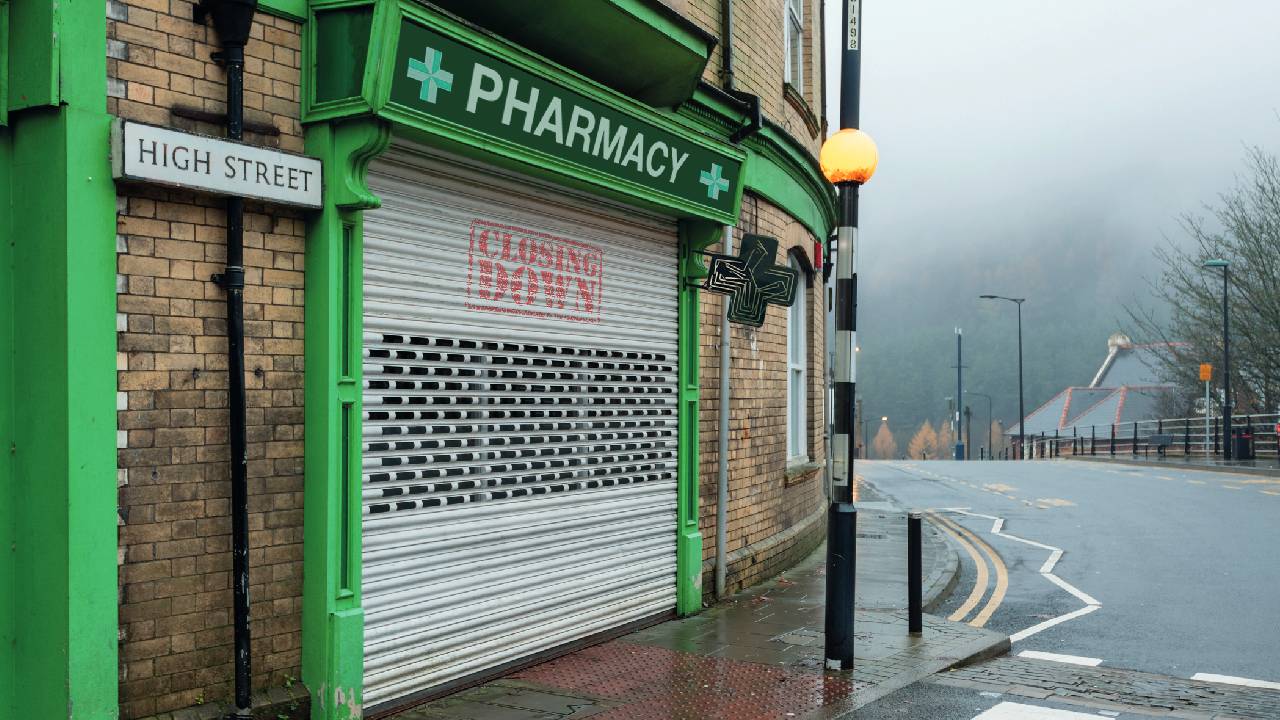
The National Pharmacy Association estimated in 2025 that around 1,400 pharmacies had closed in England since 2016, with deprived communities hit particularly hard. Community Pharmacy England reported that another 51 closed permanently between January and August 2026—roughly two each week.
Boots did not create that crisis. Independent operators, supermarkets and other chains have faced the same pressures: reimbursement, staffing costs, medicine-price volatility, rent and rising workloads.
But Boots matters because of its scale. Decisions taken about its estate are not isolated property decisions. They alter the shape of community healthcare.
The loss is cumulative. A bank shuts, then the post office goes, then the pharmacy closes. Each organisation can demonstrate why its decision made sense. The town is left with the combined result.
This could be investment. It could also be extraction.
The Weston family could be a patient owner. It could invest in stores, technology and pharmacists. Its experience with Shoppers Drug Mart could help Boots become a stronger clinical business and a more useful partner to the NHS.
That possibility should be stated plainly. A takeover is not proof of decline, and private ownership is not automatically incompatible with public usefulness.
But neither should experience be confused with benevolence.
The proposed buyer understands exactly how valuable the junction between retail and healthcare can become. The reported purchase price will still have to be justified. Capital will still expect a return. Stores, staff, services, property, technology and data will still be examined for the value they can produce.
The future of Boots will therefore be determined not by whether the new owner knows pharmacy, but by what it believes a pharmacy is for.
Not for Boots. Perhaps for the old bargain.
Boots is unlikely to vanish from Britain. The brand is too valuable, the business too profitable and its position in healthcare too strategically useful.
The more plausible future is selective strength.
Large branches improve. Digital services expand. Clinical rooms multiply. Beauty and private treatment grow. Prescriptions continue. The company becomes more efficient, more integrated and potentially more profitable.
Meanwhile, the weaker location closes, the smaller counter loses hours and the patient who does not fit the digital model travels farther.
That is why the sale matters. Britain has allowed a substantial part of its everyday healthcare infrastructure to sit inside businesses it does not control. It then asks those businesses to provide more care while accepting that they must make private decisions about where providing it remains worthwhile.
Boots will probably survive the next owner. The question is whether your local Boots survives the next calculation.
Selected sources
- Financial Times: reported Weston-family negotiations
- Loblaw Companies: pharmacy clinics and centralised care
- Boots: one million Pharmacy First consultations
- NHS England: Pharmacy First
- DHSC: Community Pharmacy Contractual Framework 2026–27
- National Pharmacy Association: closures and deprivation
- Community Pharmacy England: 2026 closure concerns