UK Rail · Managed decline
You Wouldn’t Know This Was a Railway Station
Banstead once displayed its name across the roof for pilots. Today, pedestrians can barely identify it.
There is still a railway station at Banstead.
Trains stop here. Passengers arrive and leave. There is a ticket machine, a departure screen and a staircase leading down to the single surviving platform.
But you would not know any of that from the street.
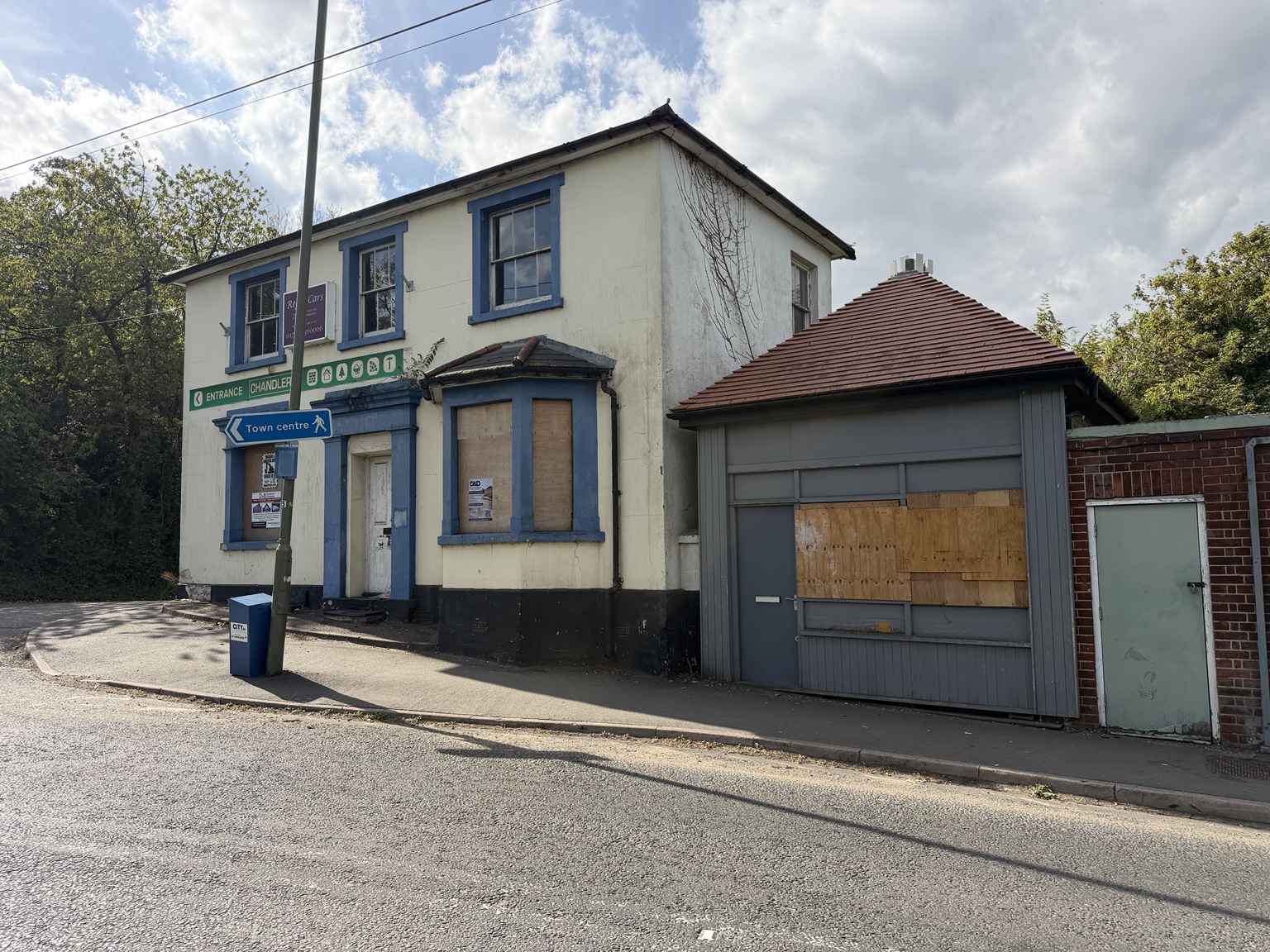
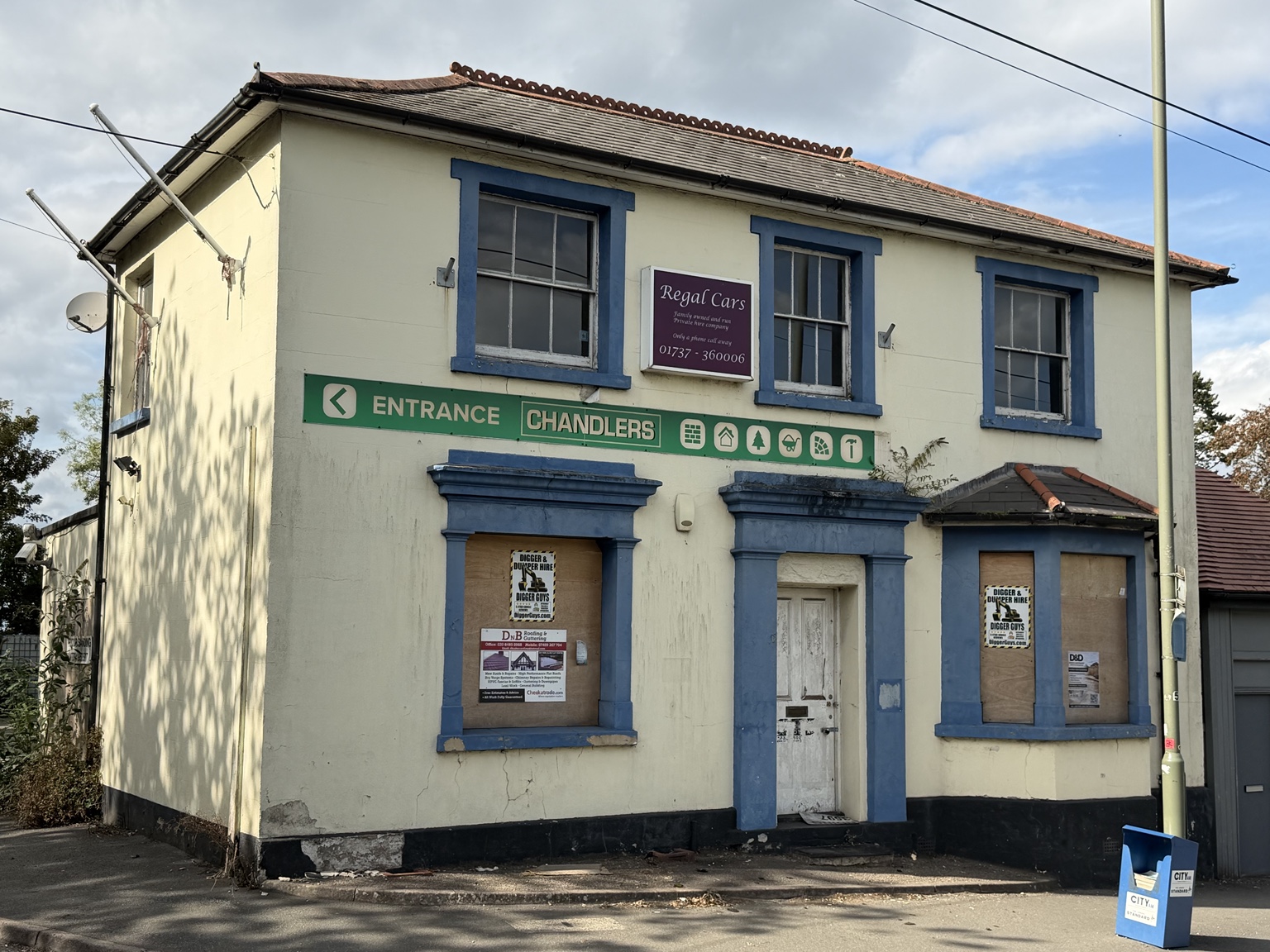
What confronts you first is a boarded-up, two-storey building. Its windows have been covered with plywood. Its walls are stained. Small advertisements for local trades have been pinned across the boards.
Above them, the clearest permanent sign belongs to Chandlers, the builders’ merchant behind the station.
There is also an old sign for a private-hire company.
There is a fingerpost pointing towards the town centre.
What there is not—at least not where anyone approaching might reasonably expect to see it—is a large, unmistakable sign saying:
BANSTEAD STATION.
The railway is here. Its identity has almost disappeared.
Hidden in plain sight
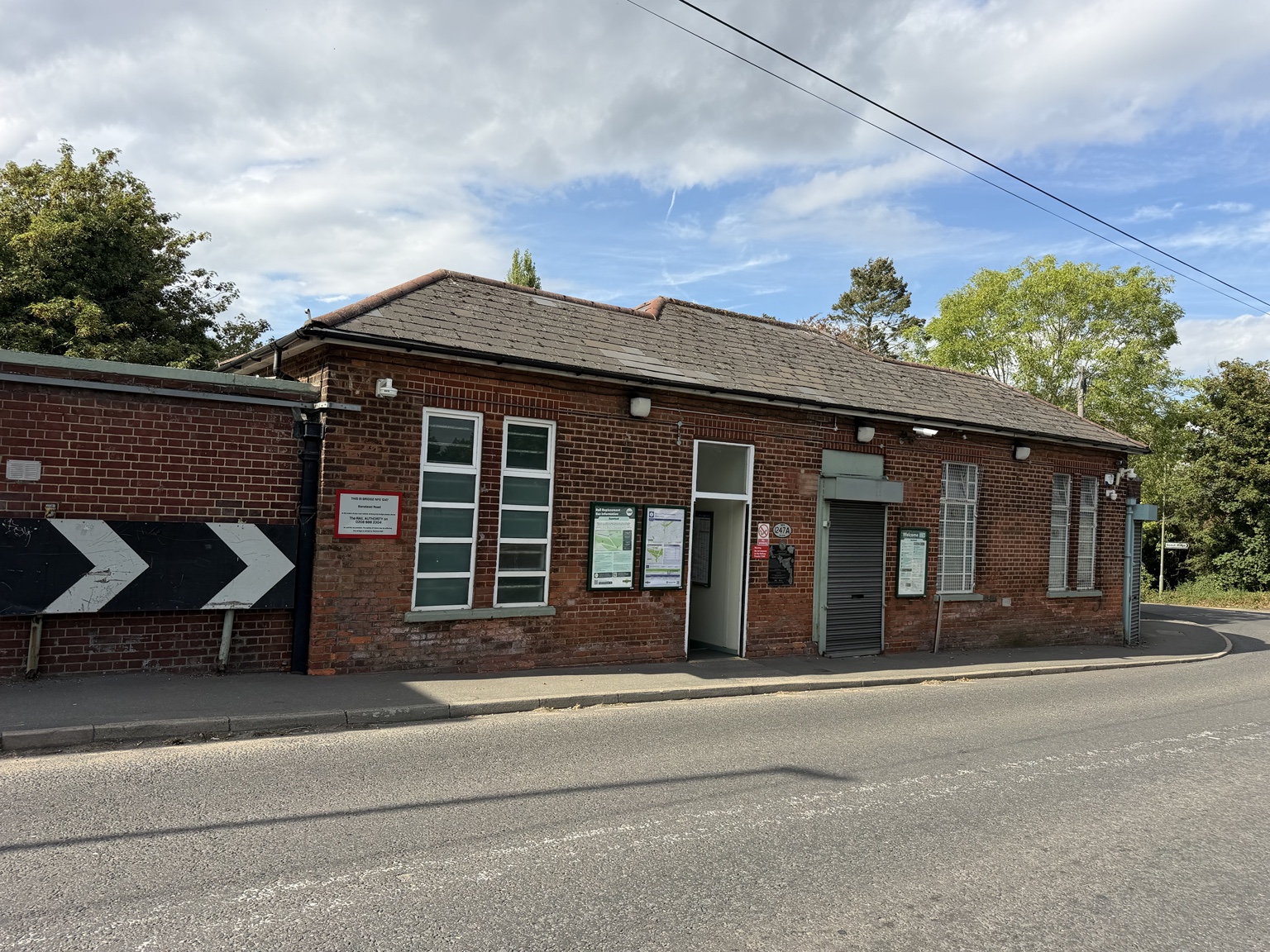
The low red-brick building alongside the boarded property is the surviving station entrance.
It does not look entirely abandoned. Railway posters remain in display cases. There are help points and passenger information beyond the doorway.
But nothing on the frontage gives the station the public presence that a functioning piece of infrastructure should possess.
Banstead is not a disused station awaiting rescue. It is not a forgotten platform on a closed branch line. It remains part of the National Rail network, operated by Southern and placed inside London’s Zone 6.
Approximately 148,780 passenger entries and exits were recorded during 2024–25. That is not a major London terminus, but neither is it a railway curiosity used by three people and a dog. Thousands of journeys still begin or end here every month.
Yet the station is unstaffed. It has no working ticket office, no toilets and no step-free access to its platform. Passenger assistance is delivered remotely through help points.
The service survived.
The place around it was allowed to fade.
From landmark to afterthought
Banstead Station opened on 22 May 1865 as part of the London, Brighton and South Coast Railway’s branch to Epsom Downs.
The line was built partly to carry enormous numbers of passengers to the Epsom races. It originally had two tracks, with platforms in both directions. The station was modernised and extended in 1935.
For 33 years, Walter Henry Iles served as stationmaster.
That fact alone tells you something about what a station once represented. It was not merely somewhere a train paused. It was a staffed public institution with a recognisable place inside the community.
Banstead’s identity was once so prominent that its name was painted in enormous letters across the station roof. Pilots approaching Croydon Airport reportedly used it to check their position from the air.
THENYou could identify Banstead Station from an aircraft.
NOWYou can stand outside it and wonder whether you have arrived at the correct place.
That is not simply a failure of signage. It is a visible record of Britain’s changing relationship with public infrastructure.
The railway was reduced—and never rebuilt
The Epsom Downs branch was electrified in 1928.
But after the Epsom Downs signal box was destroyed by fire in 1981, most of the branch was reduced to a single track in October 1982. At Banstead, the former Up line and platform were removed. One of the two staircases leading from the entrance was subsequently taken away.
That history can still be read in the buildings.
The station entrance was designed for something larger than what remains beneath it. The surviving structures belong to an earlier railway: one with two tracks, two platforms, a ticket office, staff, waiting rooms and a stationmaster.
Today, the building survives without the institution that once gave it meaning.
The former railway premises have gradually been divided between different commercial functions. Chandlers operates from Station House and the former goods-yard area. The company invested in expanding and refurbishing its Banstead branch in 2019.
That business is not the problem. If anything, it is one of the few parts of the site still announcing its presence.
The problem is that the railway has become the least visible occupant of its own station.
Managed decline rarely announces itself
This is what managed decline looks like at street level.
It does not always arrive as a spectacular closure.
There is no minister standing outside Banstead Station announcing that the railway has been abolished. No barrier has been placed across the stairs. No Beeching-style map has appeared with a red line struck through the branch.
The trains continue to run.
That is what makes the decline easier to overlook.
A ticket office closes. Staff disappear. One platform goes. The second track is lifted. The toilets vanish. The buildings are rented, divided, boarded or left to deteriorate. Proper signage becomes optional.
Nothing is lost in one dramatic moment.
Instead, the public receives less and less until the diminished version begins to feel normal.
Britain has become very good at maintaining the technical existence of things while allowing their physical presence, usefulness and dignity to disappear.
The station exists on a database.
The station exists on the timetable.
The station exists on an app.
But in the place itself, where the public actually encounters it, the railway has almost retreated from view.
Is this what prosperity looks like?
Andy Burnham has promised to bring “good growth to every postcode.”
As Prime Minister, he has also promised a ten-year plan for Britain, stronger public control over life’s essentials and a new economic model intended to rebuild the country.
Fine.
But when does the rebuilding become visible?
When does prosperity stop being a speech, a fund, an announcement or another strategy with a launch date—and start appearing in the places people use every day?
Because this is also Britain.
A functioning railway station within London’s fare system, serving almost 150,000 passenger movements a year, concealed behind deteriorating buildings and barely identified from the road.
Burnham did not create Banstead Station’s decline. It predates his premiership by decades. That is precisely why it is a useful test.
The question is not whether he can be blamed for the condition he inherited.
The question is whether anything will now change.
Prosperity cannot mean only new developments, investment zones, conference speeches and photographs of politicians wearing hard hats.
It must also mean caring for what already exists.
It means restoring public buildings before their deterioration becomes irreversible. It means a station entrance that looks like a station entrance. It means accessible platforms. It means infrastructure which tells the public—clearly and confidently—that it belongs to them.
A country is not renewed merely because its economic indicators improve.
Renewal should be visible in the fabric of the place.
A small station asking a larger question
Banstead is not Euston. It is not Manchester Piccadilly. It will never command a multibillion-pound rebuilding programme.
That is exactly why it matters.
Governments always find monumental schemes to photograph. The harder task is maintaining the thousands of smaller assets that make the country function: suburban stations, bridges, bus shelters, public toilets, libraries, pavements and community buildings.
These are the places through which people experience the state.
When they are neglected, the message is absorbed even when it is never formally spoken:
This place does not matter enough.
These passengers do not matter enough.
This piece of history can wait.
Banstead Station has been waiting for years.
Its name was once visible from the sky. Today, the old station house has become a support for other people’s signs, while the railway itself hides behind it.
The trains still arrive.The station has almost vanished.
And if Britain really is about to turn itself around, places like this should tell us when that turnaround has begun.