Systems Power
Jason Arday:
Guilty Before the Facts
Britain did not wait for an inquiry to establish what Jason Arday had or had not done. An allegation became a verdict, a career became a confidence trick, and a Black academic became evidence against Black advancement itself.
There were serious questions concerning Jason Arday’s academic work and parts of the public story built around him. Those questions deserved a proper investigation. What they did not justify was the instant conversion of a disputed case into a complete public biography: fraud, con man, diversity appointment, never belonged.
That distinction matters. It is the difference between examining conduct and erasing a human being.
Arday earned a doctorate, published work, taught at universities and became Professor of Sociology of Education at Cambridge. “Academic” is not an award for moral perfection; it describes the work he did. Whatever an investigation might eventually have concluded, allegations could not retrospectively make that career imaginary.
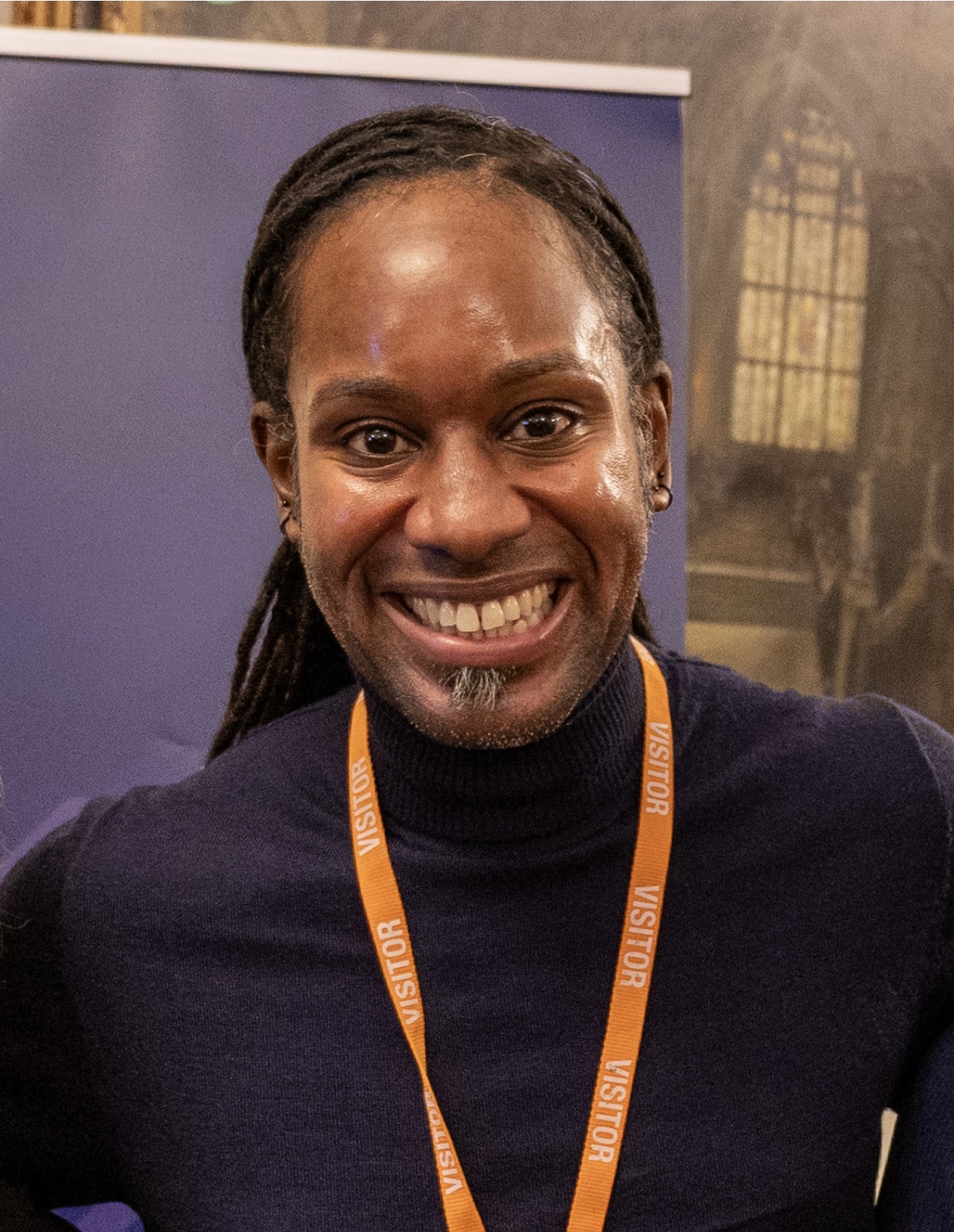
01 — What was actually established?
An allegation is not a completed inquiry
Plagiarism allegations and inconsistencies in Arday’s record were reported publicly. He denied plagiarism, while acknowledging some mistakes. An earlier investigation at Liverpool John Moores University reportedly cleared him. Cambridge later opened a further investigation after receiving additional information, and Arday resigned before that process reached a conclusion.
Cambridge then announced reviews into the circumstances of his appointment and its procedures. That is important: the institution itself accepted that questions existed not only about Arday, but about the machinery that recruited and promoted him.
Yet much of the public conversation skipped those categories entirely. It moved directly from “questions have been raised” to “he was a con man.” No qualifications. No proportion. No room for conflicting evidence. The inquiry had barely begun; the social verdict was already complete.
02 — The machinery
How a question became a racial verdict
A white academic accused of wrongdoing is normally treated as an academic accused of wrongdoing. Arday became something larger: a referendum on diversity, Black excellence and whether Black people had been allowed into places they had not earned.
That is the racial asymmetry. White misconduct remains personal. Black misconduct is made representative. A white professor may disgrace himself; a Black professor is used to disgrace the very idea of Black advancement.
A Black man at Cambridge was not permitted to be complicated. He had to be inspirational or fraudulent, exceptional or worthless. There was no space in between for an imperfect human being.
03 — Institutional power
Jason Arday did not appoint himself
Cambridge is not a village hall handing out honorary badges. Senior appointments pass through applications, references, panels, committees and institutional approval. Other universities employed and promoted Arday before Cambridge did. If checks were inadequate, if warning signs were missed or if a compelling public story displaced ordinary scrutiny, those were institutional failures too.
But institutions are skilled at surviving their own decisions. Once something goes wrong, the individual can be isolated as the contaminant. The institution becomes deceived; the appointee becomes the sole author of the failure.
The useful question was never only, “What did Jason Arday do?” It was also, “What did these universities verify, reward and advertise—and why?”
Cambridge benefited from Arday as a symbol of progress. Its opponents benefited from him as a symbol of supposedly fraudulent diversity. Both sides made him carry an argument far larger than one man. When the symbol fractured, the human being underneath received the full impact.
04 — The older pattern
From Windrush to the presumption of illegitimacy
Windrush was not the same kind of case. It concerned citizenship, immigration enforcement, detention, employment and access to public services—not academic conduct. But it exposes a familiar British mechanism.
People from the Windrush generation had a legal right to live in Britain. The state had failed to give many of them documents proving that status and had failed to keep adequate records. Decades later, the same state demanded documentary proof and punished people when they could not produce what it had never properly supplied.
The official Windrush Lessons Learned Review described a “culture of disbelief and carelessness” and “institutional ignorance and thoughtlessness” concerning race. That language matters because racism does not always arrive as an explicit instruction. It can operate through disbelief, indifference, disproportionate suspicion and systems that never ask who is most likely to be crushed by their assumptions.
Arday’s circumstances were different, but the presumption is recognisable: prove that you belong; prove that you earned it; prove every part of yourself perfectly—or your whole presence becomes suspicious.
05 — The impossible standard
Black excellence comes without permission to fail
No argument about racism requires us to pretend that Black people cannot lie, plagiarise, exaggerate or behave badly. Equality cannot mean immunity from scrutiny. It must mean equality within scrutiny: the same evidence, the same patience, the same proportionality and the same capacity to remain human after making a mistake.
That is precisely what disappears when a Black public figure falls. Every discrepancy becomes essential; every allegation confirms the darkest interpretation; every achievement is reopened as though it could only have been obtained by deception.
Meanwhile, white politicians can repeatedly mislead the country and return as commentators, campaigners and elder statesmen. White institutions can make catastrophic appointments and describe them as procedural lessons. Their failure is containable. It does not become a verdict on white competence.
Arday, however, had become Cambridge’s youngest Black professor. That description made him visible, useful and vulnerable. It turned a personal career into public property. Once allegations emerged, culture warriors did not merely examine a thesis; they prosecuted the entire social meaning of his presence.
06 — What accountability means
Facts without the public execution
There was a legitimate public-interest story here. Academic integrity matters. Appointment procedures matter. Universities must be able to examine serious allegations rigorously and independently.
But accountability is not the same as humiliation. Investigation is not permission for racial abuse. Evidence is not strengthened by spectacle, and a person’s vulnerability does not become irrelevant because questions have been raised about their conduct.
The family said Arday endured years of abuse and that the pressure became overwhelming. Reports described racist messages, threats and extensive security measures. Those facts do not determine whether every allegation was true or false. They establish something else: this was never a calm seminar about academic standards.
It became a public demolition.