Scene / Politics / Power
FUCKING HELL.
A short history of Liz Truss becoming Liz Truss.
Forget the lettuce for a moment. The more interesting story is how Mary Elizabeth Truss, raised by left-leaning parents, educated at a state school and once a republican Liberal Democrat, travelled all the way to Downing Street — and then somewhere stranger still.
I don’t know who painted it.
I don’t know what possessed them to paint it.
But as summaries of the political career of Liz Truss go, FUCKING HELL. is surprisingly difficult to improve upon.
The temptation is to start with the lettuce.
Don’t.
Because the genuinely interesting thing about Liz Truss isn’t simply that she became Britain’s shortest-serving prime minister. It is how Mary Elizabeth Truss, born in Oxford in 1975, became this version of Liz Truss.
And the journey is extraordinary.
She wasn’t born a Tory
This is where the easy caricature begins to fall apart.
Truss’s father, John Kenneth Truss, was an academic mathematician. Her mother, Priscilla Mary Truss, was a nurse, teacher and activist. Truss has described accompanying her mother on Campaign for Nuclear Disarmament demonstrations as a child.
This wasn’t a miniature Margaret Thatcher being raised in a Conservative country house.
The family lived in Scotland and Canada before settling in Leeds. Truss attended Roundhay School, a state comprehensive.
That matters.
She wasn’t privately educated. She wasn’t born into an aristocratic dynasty. She didn’t arrive in politics carrying a family seat in Parliament.
But neither is this a rags-to-riches story.
There is a difference between being born wealthy and growing up in a professional, highly educated household. Having a university academic for a father doesn’t hand you Downing Street. But it can provide something else: familiarity with education, institutions, argument and the expectation that university is somewhere people like you can belong.
Truss eventually went to Oxford to study Philosophy, Politics and Economics.
And she wasn’t even a Conservative.
She was a Liberal Democrat.
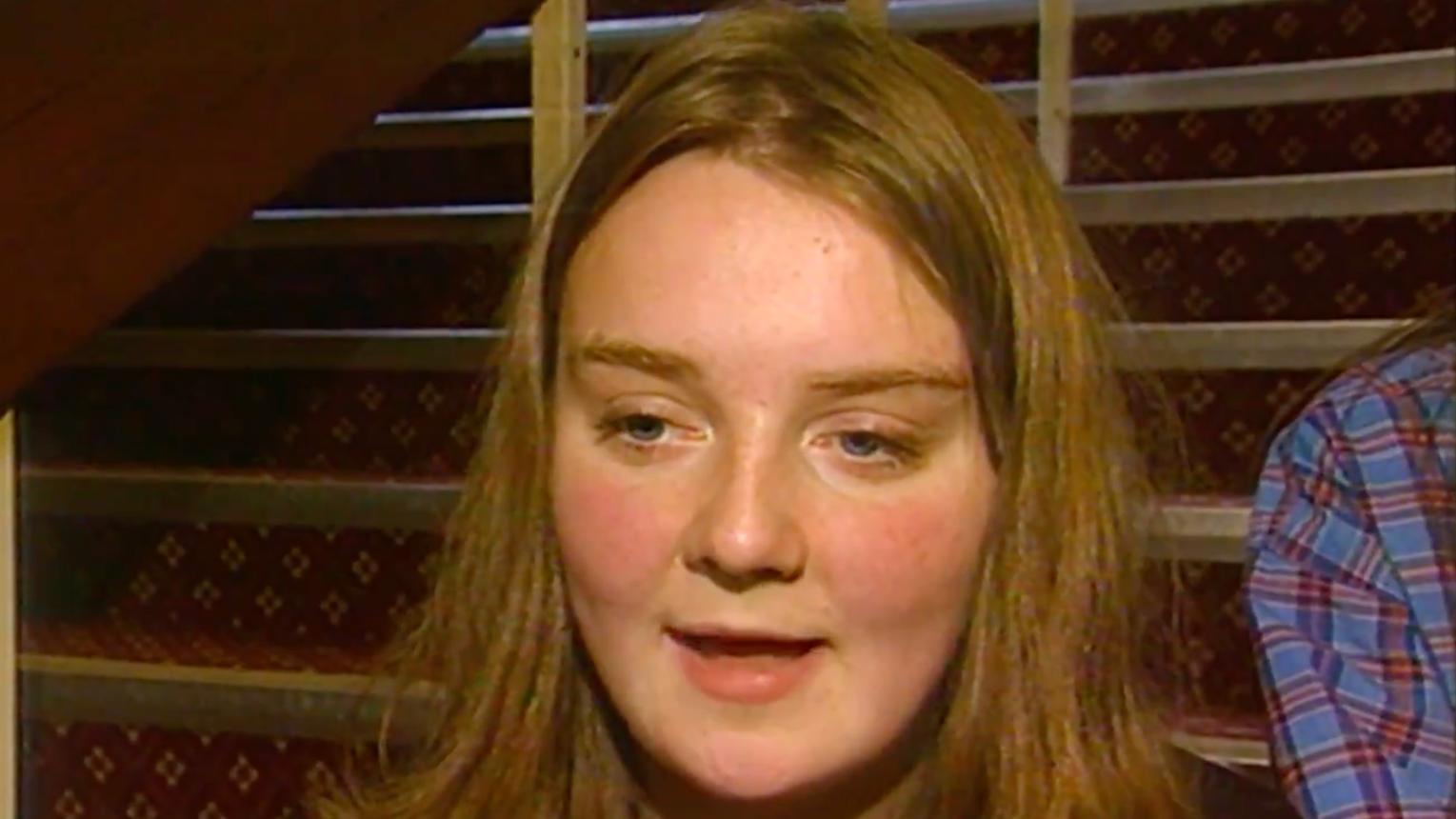
In 1994, a 19-year-old Truss stood before the Liberal Democrat conference and argued for the abolition of the monarchy.
“We do not believe people are born to rule.”
Liz Truss, Liberal Democrat conference, 1994
Keep that sentence.
We’re going to need it later.
So when did Liz Truss become Liz Truss?
Truss joined the Conservatives in 1996.
That same year, she began working for Shell.
That doesn’t prove anything sinister. Working for an oil company doesn’t make somebody an oil-company sleeper agent, and it would be ridiculous to suggest otherwise.
But it is part of the biography.
Truss trained as a management accountant and worked commercially at Shell before moving to Cable & Wireless, where she eventually became an economic director.
Then came the free-market think-tank world.
Then Conservative politics.
Then Parliament.
The interesting question isn’t simply whether Truss changed her mind.
People change their minds.
It’s how many times she changed it, in which direction, and what was happening around her each time.
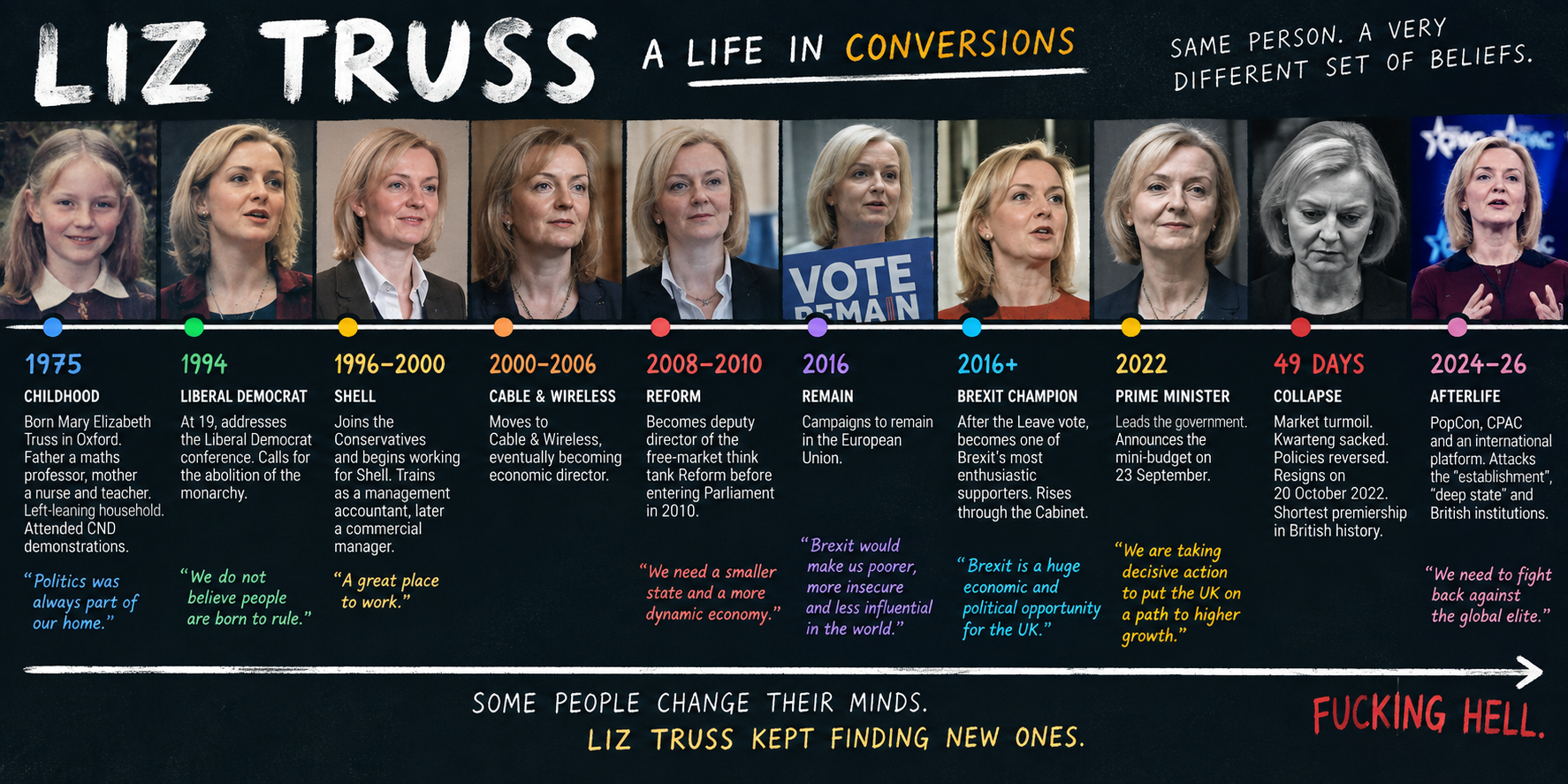
The trajectory
A life in conversions
Before Downing Street came water
Here’s another part of the Truss story that deserves considerably more attention.
From 2014 to 2016, Liz Truss served as Secretary of State for Environment, Food and Rural Affairs.
Which meant that before most people associated her with mortgages, pensions and financial markets, she occupied one of the most important positions in Britain’s environmental regulatory system.
And this is where water enters the story.
Truss didn’t work for a water company. The corporate connection in her earlier career was Shell.
But while she was Environment Secretary, the Environment Agency was operating through a period of substantial spending restraint. Funding available for environmental protection and regulatory activity was squeezed.
That matters because Britain had created an extraordinary arrangement.
Regional water companies were privatised, but their customers could not meaningfully choose a competing network of pipes.
In other words, Britain had private natural monopolies.
Which makes effective regulation rather important.
The argument shouldn’t be that Liz Truss caused Britain’s sewage crisis. She didn’t. The problems span decades, governments, regulators, investment decisions and the structure of the privatised industry itself.
The more useful question is systemic:
What happens when you privatise a natural monopoly and then reduce the capacity of the public institutions responsible for policing it?
That’s much bigger than Liz Truss.
But Liz Truss passes directly through the middle of it.
Then there was Brexit
In 2016, Truss campaigned for Remain.
She warned about the consequences of leaving.
Britain voted Leave.
And Liz Truss changed.
Not quietly, either.
She became one of Brexit’s most enthusiastic political advocates.
Again, perhaps she genuinely changed her mind.
Politicians are allowed to.
But this is where treating every Truss conversion as an isolated event becomes less satisfying.
At some point it becomes reasonable to ask:
When did Liz Truss change her mind — and when did changing her mind become politically advantageous?
Those aren’t necessarily the same thing.
And they aren’t necessarily mutually exclusive.
The energy crisis
Then comes another collision between biography, ideology and government.
The former Shell employee becomes prime minister during an extraordinary European energy crisis.
Wholesale gas prices had surged following Russia’s invasion of Ukraine. Household bills were soaring. Energy producers were reporting extraordinary profits.
Truss opposed another windfall tax.
Her argument was straightforward: Britain needed investment, and repeatedly taxing profits would discourage it.
That’s a legitimate political position.
But the alternative creates another question.
If government doesn’t recover more of those extraordinary profits from producers while simultaneously promising to shield consumers from wholesale prices, somebody else has to absorb the cost.
Ultimately, government does.
Which means taxpayers.
Or borrowing.
Or future taxpayers.
The free-market government found itself undertaking an enormous state intervention to prevent the energy market reaching households at market prices.
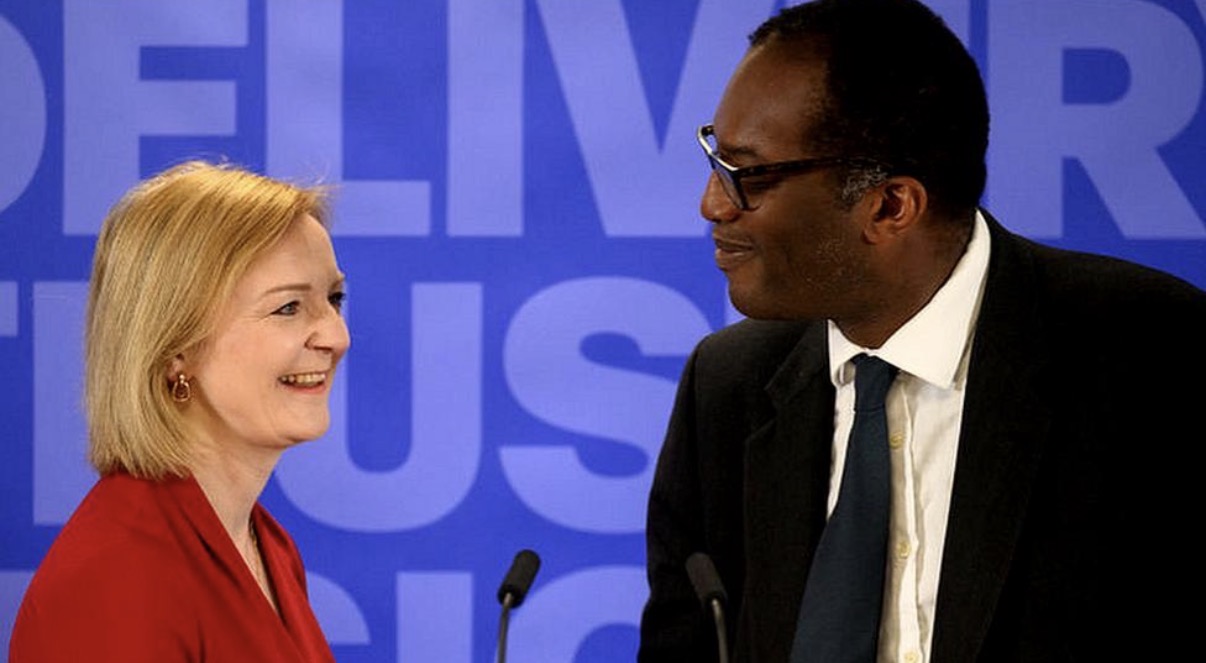
23 September 2022
Then the experiment began
Kwasi Kwarteng stood in the House of Commons and announced what became known as the mini-budget.
Except there wasn’t much mini about it.
Tax reductions. The proposed abolition of the additional 45p income-tax rate. Cancellation of the planned corporation-tax increase. National Insurance changes. Stamp-duty reductions.
And behind them sat one enormous political promise:
GROWTH.
Cut taxes.
Release enterprise.
Encourage investment.
Expand the economy.
The problem wasn’t that wanting growth was irrational.
Britain desperately needed growth.
The problem was what happened when the theory encountered the financial system that actually had to fund it.
Sterling fell sharply.
Government borrowing costs surged.
The gilt market became severely disrupted.
Mortgage lenders withdrew products and repriced others.
And something obscure to most of the public suddenly became extremely important: liability-driven investment.
Rapid movements in gilt yields generated collateral calls for some pension funds using leveraged LDI strategies. Funds needed liquidity. Selling pressure threatened to feed back into falling gilt prices and still higher yields.
The Bank of England intervened.
Not because the Governor woke up one morning and decided he disliked Liz Truss.
Because parts of Britain’s financial plumbing were approaching a dangerous feedback loop.
Forty-nine days
Then everything started disappearing.
First the policies.
Then Kwasi Kwarteng.
Jeremy Hunt arrived as Chancellor and began dismantling much of the programme.
And finally Liz Truss disappeared too.
On 20 October 2022, she announced that she would resign as prime minister.
She had been prime minister for 45 days when she announced her resignation and remained in office until Rishi Sunak formally succeeded her on 25 October.
Her premiership lasted 49 days.
The shortest in British history.
And that’s usually where the Liz Truss story ends.
Lettuce.
Mini-budget.
Markets.
Goodbye.
But I think that’s where the more interesting Liz Truss story starts.
What did Liz Truss learn from Liz Truss?
Because Truss didn’t disappear.
She developed an explanation.
Her economic project, in her telling, hadn’t simply failed.
It had encountered institutions and interests powerful enough to prevent it from succeeding.
Truss has repeatedly argued since leaving office that Britain’s economic and administrative establishment constrained the programme she wanted to implement.
Gradually, the language surrounding her politics began sounding less like that of a former British prime minister and increasingly like language familiar from sections of the American populist right.
The woman who had occupied the British state began campaigning against powerful institutions within the British state.
That’s quite a transformation.
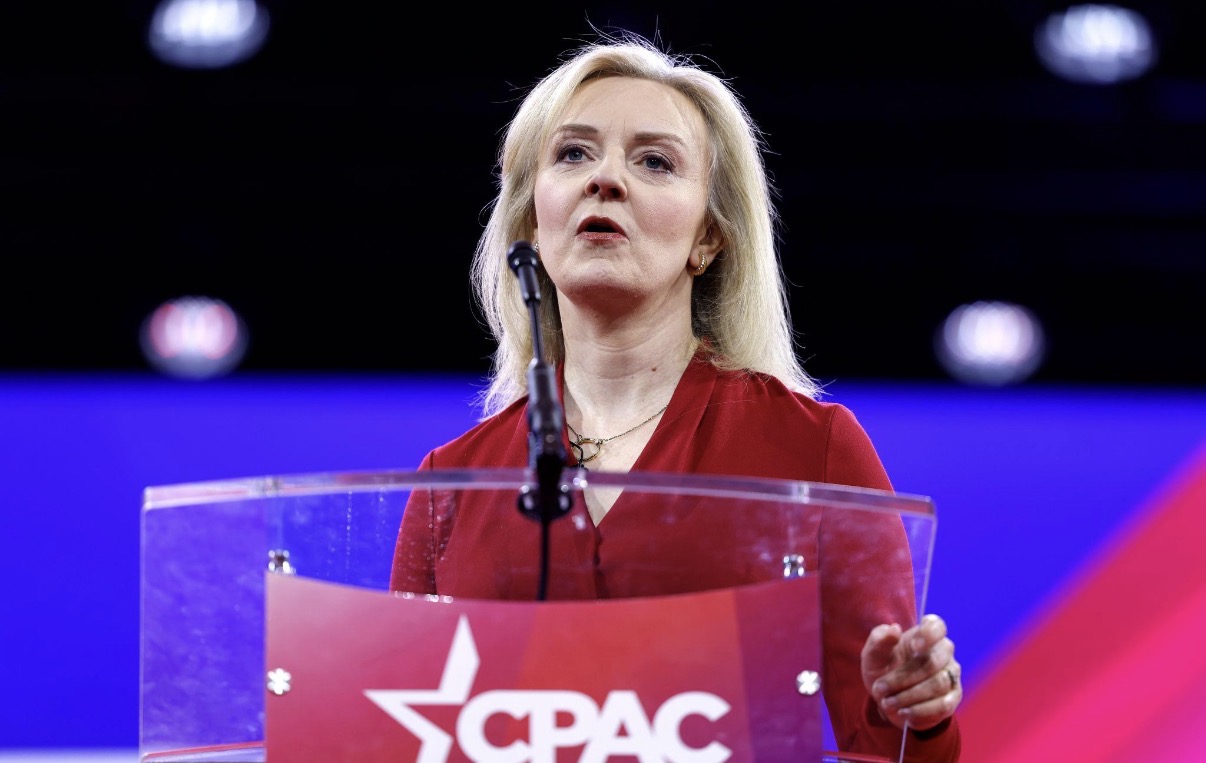
Save Britain. Save the West.
And here we arrive at Liz Truss after Liz Truss.
CPAC.
American conservative politics.
Popular Conservatism.
The “deep state”.
The administrative establishment.
By 2026, Truss was chairing CPAC GB in London under the banner “Save Britain. Save the West.”
The political project had become larger.
Her premiership was no longer presented simply as an unsuccessful British government lasting seven weeks.
It became part of a broader struggle between politicians seeking radical change and institutions portrayed as preventing that change.
And there is something fascinating about that worldview.
Because it can become extremely difficult to disprove.
Failure no longer necessarily challenges the belief.
Failure can become evidence for the belief.
And that is considerably more interesting than a lettuce.
Back to the beginning
We do not believe people are born to rule
Which brings me back to that 19-year-old Liberal Democrat.
“We do not believe people are born to rule.”
She was right.
And contrary to the caricature, Liz Truss herself wasn’t born to rule.
She wasn’t born into enormous wealth.
She didn’t attend Eton.
She wasn’t born into a Conservative dynasty.
She went to a comprehensive school.
But Britain has never divided neatly into people born with power and everybody else.
There are ladders into power.
Liz Truss climbed virtually all of them.
And that makes her more interesting, not less.
Because eventually someone who had once stood on a conference stage attacking the idea that anybody should be born to rule found herself standing inside 10 Downing Street, possessing more executive political power than almost anybody in the country.
What did she do with it?
What happened?
Who does she believe was responsible?
And what has she concluded from the experience?
Those are better questions than whether a lettuce lasted longer.
References & further reading
Sources
- UK Parliament — The Growth Plan, 23 September 2022
- House of Commons Library — Economic situation following the September 2022 fiscal statement
- Bank of England — Gilt market operation, 28 September 2022
- The Guardian — Liz Truss: political and professional timeline
- The Guardian — Environment Agency funding during Truss’s Defra tenure
This article distinguishes documented events from interpretation. Links are provided to primary records wherever practical.