Systems / Feedback Loops
49 DAYS. THE BILL THAT OUTLIVED HER.
Liz Truss left Downing Street in October 2022. Some of the financial consequences did not leave with her.
The mini-budget lasted weeks. Mortgages can be fixed for years. Government debt can mature decades later. Market shocks can disappear from the front pages while the prices created during them remain embedded in household and public finances.
So what did those 49 days actually cost Britain?
There is a problem with the way Britain remembers Liz Truss.
We remember the lettuce.
We remember sterling falling.
We remember Kwasi Kwarteng being recalled from Washington, Jeremy Hunt arriving and most of the programme being ripped apart.
Then Truss resigned and, politically at least, the country moved on.
Money doesn’t always work like that.
A financial shock doesn’t need to remain visible for its consequences to remain expensive.
If a homeowner fixes a mortgage at a higher rate, the rate available six months later doesn’t automatically change their contract.
If government issues debt when borrowing is expensive, falling yields later don’t retrospectively rewrite the interest terms of that debt.
If businesses delay investment because financing suddenly becomes more expensive, some of that investment doesn’t magically reappear when conditions improve.
The event can end.
The price created by the event can continue.
The mechanism
How a political decision reaches your kitchen table
First: not everything was Liz Truss
This distinction matters.
Britain did not wake up on 23 September 2022 with a perfectly healthy economy that Liz Truss single-handedly destroyed before lunchtime.
Inflation was already high.
The Bank of England had already started increasing Bank Rate.
Russia’s invasion of Ukraine had intensified an enormous European energy shock.
Mortgage rates were already moving upwards.
Government borrowing costs were already under pressure.
Any serious attempt to calculate a “Truss cost” therefore has to distinguish between three things:
If we simply blame every mortgage increase after September 2022 on Liz Truss, we aren’t doing analysis.
We’re doing politics.
The more interesting question is how much additional damage can reasonably be associated with the policy shock itself.
23 September 2022
The announcement
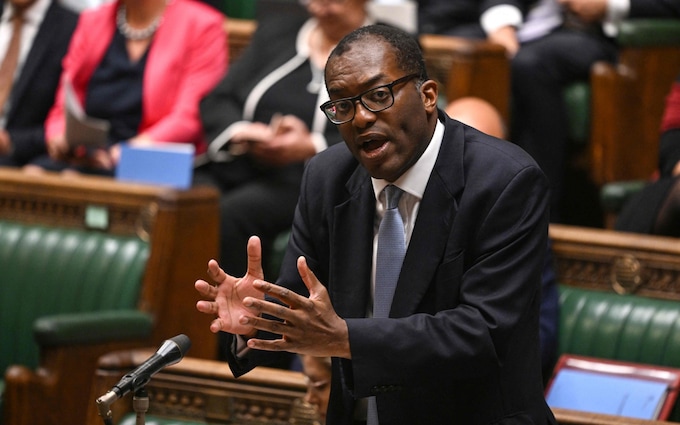
Kwasi Kwarteng stood at the despatch box and presented what the government called its Growth Plan.
The package included cuts to National Insurance and stamp duty, cancellation of the planned rise in corporation tax and the proposed abolition of the 45p additional rate of income tax.
The House of Commons Library later calculated that the tax measures announced would have reduced Treasury revenues by around £45 billion in 2026/27 had they remained in place.
The government wanted faster economic growth.
The problem was not the word growth.
The problem was that major tax reductions were being announced alongside enormous energy-support commitments, without the accompanying independent forecast from the Office for Budget Responsibility normally expected around a fiscal event of this scale.
Financial markets had to decide what that meant for Britain’s future borrowing requirements.
They decided quickly.
The shock
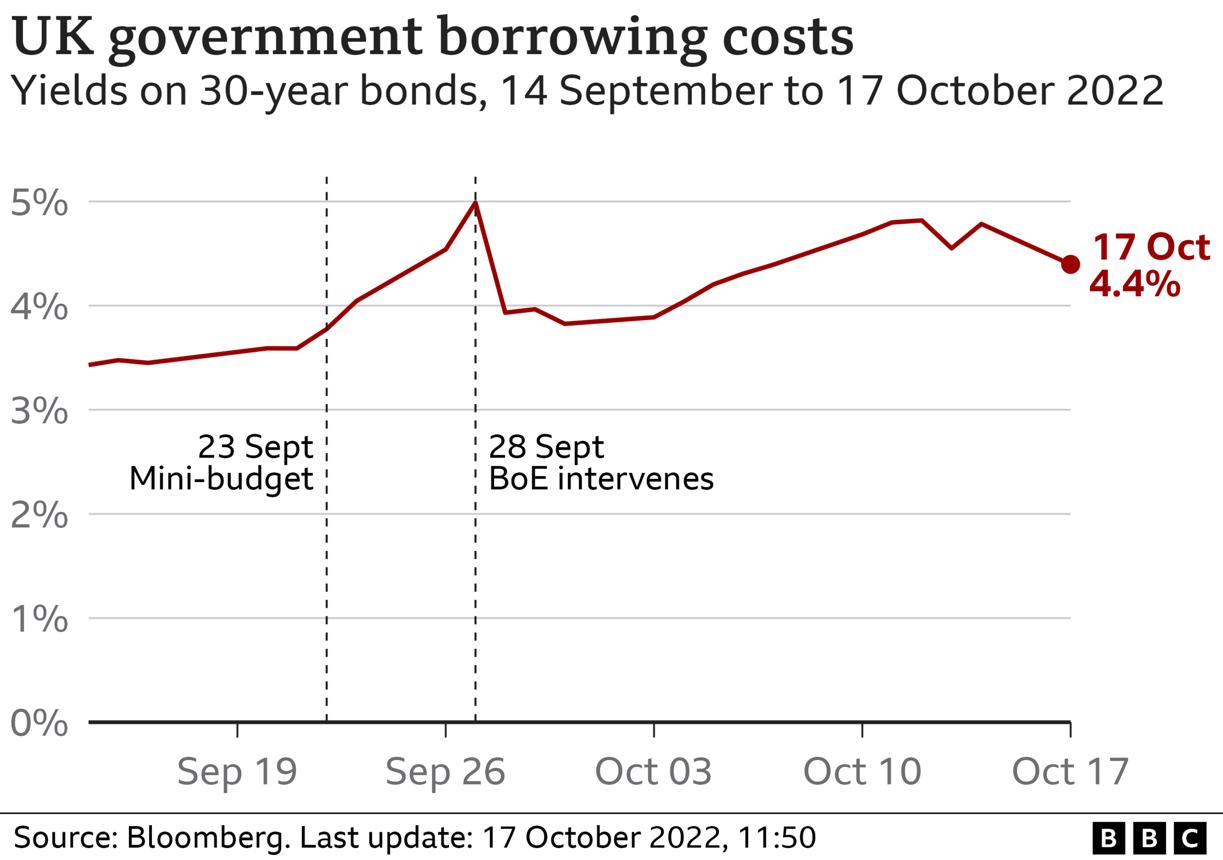
Sterling fell sharply against the dollar.
UK government bond yields moved sharply higher.
Mortgage lenders withdrew products and repriced others.
But the most dangerous part of the episode was happening somewhere most households had probably never heard of.
Liability-driven investment.
LDI strategies were widely used by defined-benefit pension schemes to help match their assets to long-term liabilities.
Some strategies used leverage and derivatives.
When gilt yields moved extremely quickly, collateral calls followed.
Funds needed cash.
Selling gilts to obtain that cash risked pushing gilt prices down further and yields higher.
Which could create more collateral calls.
Which could require more selling.
Which could push yields higher again.
A feedback loop doesn’t need anybody to intend the next step. Each reaction creates the conditions for another.
On 28 September, the Bank of England announced temporary purchases of long-dated UK government bonds to restore orderly market conditions and reduce what it described as a material risk to UK financial stability.
One number worth correcting
£65 BILLION.
No, Britain did not simply “lose £65 billion”.
The Bank of England’s intervention is frequently reduced to a claim that £65 billion was spent rescuing the economy from Liz Truss.
That confuses the maximum scale of the temporary purchase facility with a £65 billion taxpayer loss.
Those are not the same thing.
The intervention involved purchases of government bonds as part of a financial-stability operation. The Bank later unwound those holdings.
If we’re going to calculate what the Truss episode cost, we shouldn’t inflate the number by counting a financial backstop as though somebody set fire to £65 billion in cash.
Then the shock reached mortgages
This is where an abstract market event becomes a household bill.
Mortgage lenders price fixed-rate products partly according to their expectations of future interest rates and their own funding costs.
When those expectations change violently, lenders don’t need to wait for the Bank of England to change Bank Rate.
They can reprice immediately.
Products disappeared from the market during theThe HTML got cut at **“Products disappeared from the market during the…”**. Continue directly from there: “`html Products disappeared from the market during the turmoil and replacement products were offered at substantially higher rates.
For somebody whose fixed deal happened to expire during that period, this wasn’t an interesting movement on a financial chart.
It was their next mortgage offer.
And this is where the idea of a temporary shock becomes misleading.
A market can recover.
A mortgage contract doesn’t automatically recover with it.
The part that gets forgotten
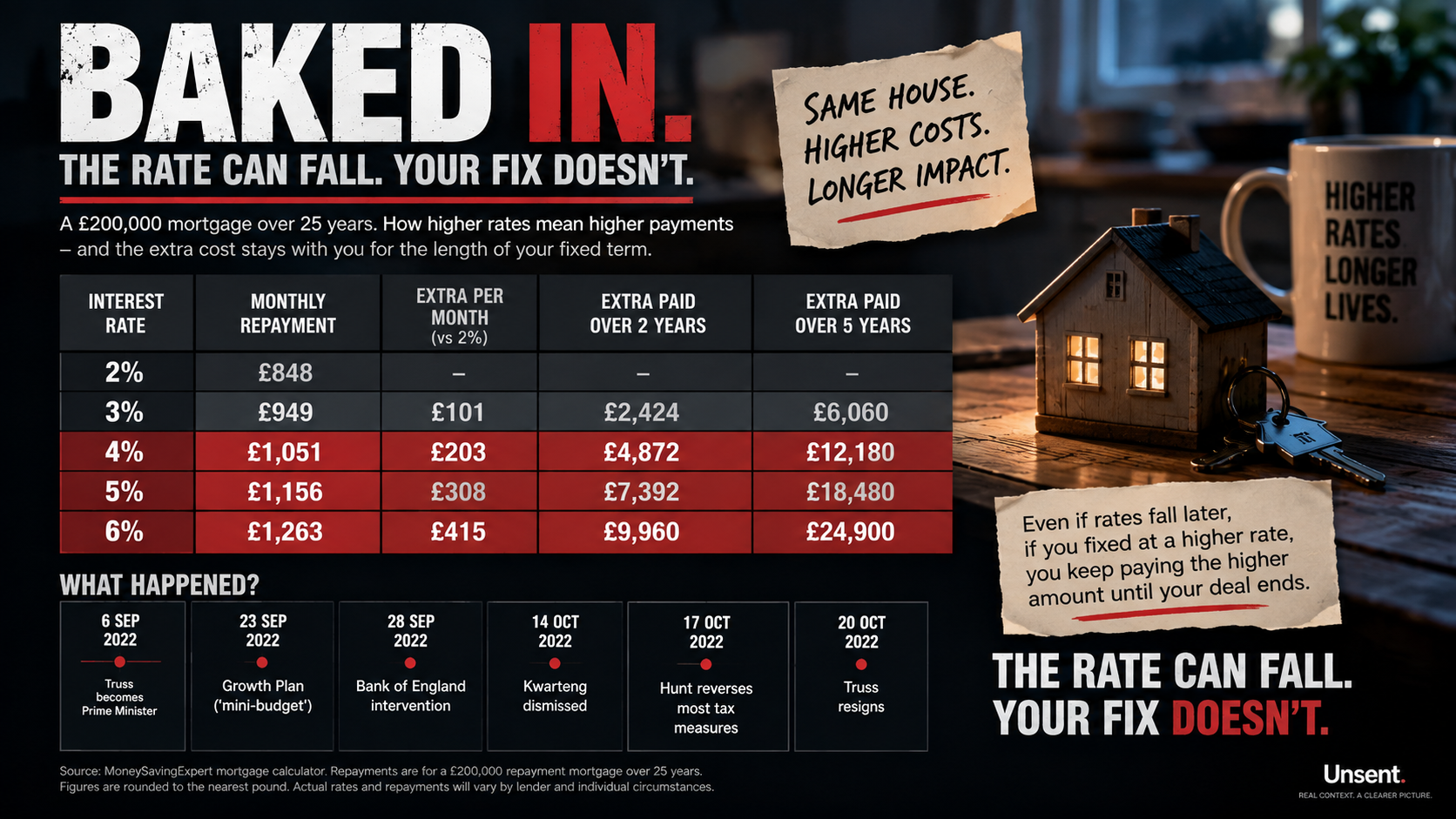
Baked in
Imagine two otherwise identical households.
Same house.
Same outstanding mortgage.
Same income.
One household happens to refinance before a severe market shock.
The other happens to refinance during it.
Their economic circumstances can diverge for years because of a difference in timing measured in weeks.
THE RATE CAN FALL.
YOUR FIX DOESN’T.
If market mortgage rates subsequently fall, the second household doesn’t automatically receive the new lower rate.
It continues paying according to the contract it signed until the fixed period ends, it remortgages, or it pays whatever costs are involved in leaving the agreement early.
This is why simply looking at today’s mortgage rates cannot tell us the complete cost of a previous shock.
Some of yesterday’s rates are still sitting inside today’s direct debits.
The government has a mortgage too. Sort of.
The comparison isn’t exact, but the principle of persistence matters for government borrowing as well.
Britain constantly issues new government debt and refinances debt that reaches maturity.
The interest rate demanded by investors matters.
If the government borrows during a period when gilt yields are higher, that borrowing can continue carrying a higher financing cost after the immediate market panic has subsided.
Falling yields help future borrowing.
They do not travel backwards through time and rewrite every bond already issued.
Again, that doesn’t mean every pound of Britain’s current debt-interest bill can be pinned on Liz Truss.
It can’t.
Britain’s debt stock, inflation-linked liabilities, Bank Rate, quantitative easing arrangements, global bond markets and subsequent fiscal policy all matter.
But it does explain why a short political episode can leave financial traces after the politician responsible has gone.
So how much did Liz Truss actually cost us?
This is where apparently simple headlines become dangerous.
There isn’t one universally accepted number called “the cost of Liz Truss”.
Different estimates measure different things.
This measures the fiscal effect of policies announced in the Growth Plan, many of which were subsequently reversed.
This depends on which period, maturities and counterfactual borrowing costs are being compared.
This depends on mortgage size, refinancing date, product, term and how much of the rate movement is attributed specifically to the UK shock.
Potentially important, but much harder to isolate from the wider economic environment.
Add those categories together carelessly and you can produce an enormous number.
That doesn’t necessarily produce an honest one.
What the evidence supports
What can we actually say?
Britain was already experiencing inflation, rising interest rates and an energy crisis before the mini-budget.
The September 2022 fiscal announcement produced an additional UK-specific market shock.
The disruption contributed to sharply higher government borrowing costs and mortgage-market repricing during the period.
Some households who refinanced at elevated rates subsequently carried those costs beyond Truss’s premiership.
The Bank of England did not simply lose £65 billion rescuing Liz Truss.
Every increase in British mortgage rates or debt interest since 2022 cannot reasonably be attributed to her.
The politics moved faster than the money
This is the part of economic history that political debate is particularly bad at remembering.
Governments change.
Chancellors change.
Prime ministers change.
Newspapers change their front pages the following morning.
But contracts, debt and investment decisions operate on completely different clocks.
A household can still be paying a mortgage rate agreed under one prime minister while listening to another prime minister explain the economy years later.
Government debt issued yesterday can still be paying interest when several governments have come and gone.
That’s what baked in means.
Not that Liz Truss is secretly responsible for every economic problem Britain experiences today.
It means that economic events have memory even when politics doesn’t.
Feedback Loops
The event ends. The consequences circulate.
References & further reading
Sources
- UK Parliament — The Growth Plan, 23 September 2022
- House of Commons Library — Economic situation following the September 2022 fiscal statement
- Bank of England — Gilt market operation, 28 September 2022
- Bank of England — The LDI crisis and the Bank’s response
- Office for Budget Responsibility — Fiscal and economic analysis
Attribution matters. This article separates economic pressures that pre-dated the September 2022 Growth Plan from the additional UK-specific disruption associated with it and from costs that persisted afterwards.