
Every gain leaves something behind.
EVERY SOLUTION PROTECTS SOMETHING — AND SACRIFICES SOMETHING ELSE.
Trade-offs are the unavoidable costs hidden inside every decision.
Systems cannot maximise everything at once.
Every gain creates a compromise somewhere else.
What is protected in one area is often reduced in another.
YOU CANNOT MAXIMISE EVERYTHING.
Every system allocates limited resources. The choice reveals what matters most.
Trade-offs reveal what systems truly value.
They expose priorities that slogans often hide.
Understanding trade-offs helps explain why perfect solutions rarely exist.
Trade-offs emerge whenever resources become limited.
Time, money, energy, attention and capacity all create constraints.
The moment a choice is made, alternatives are left behind.
IN PRACTICE
Examples of trade-offs in motion.
-
Where We Actually Started
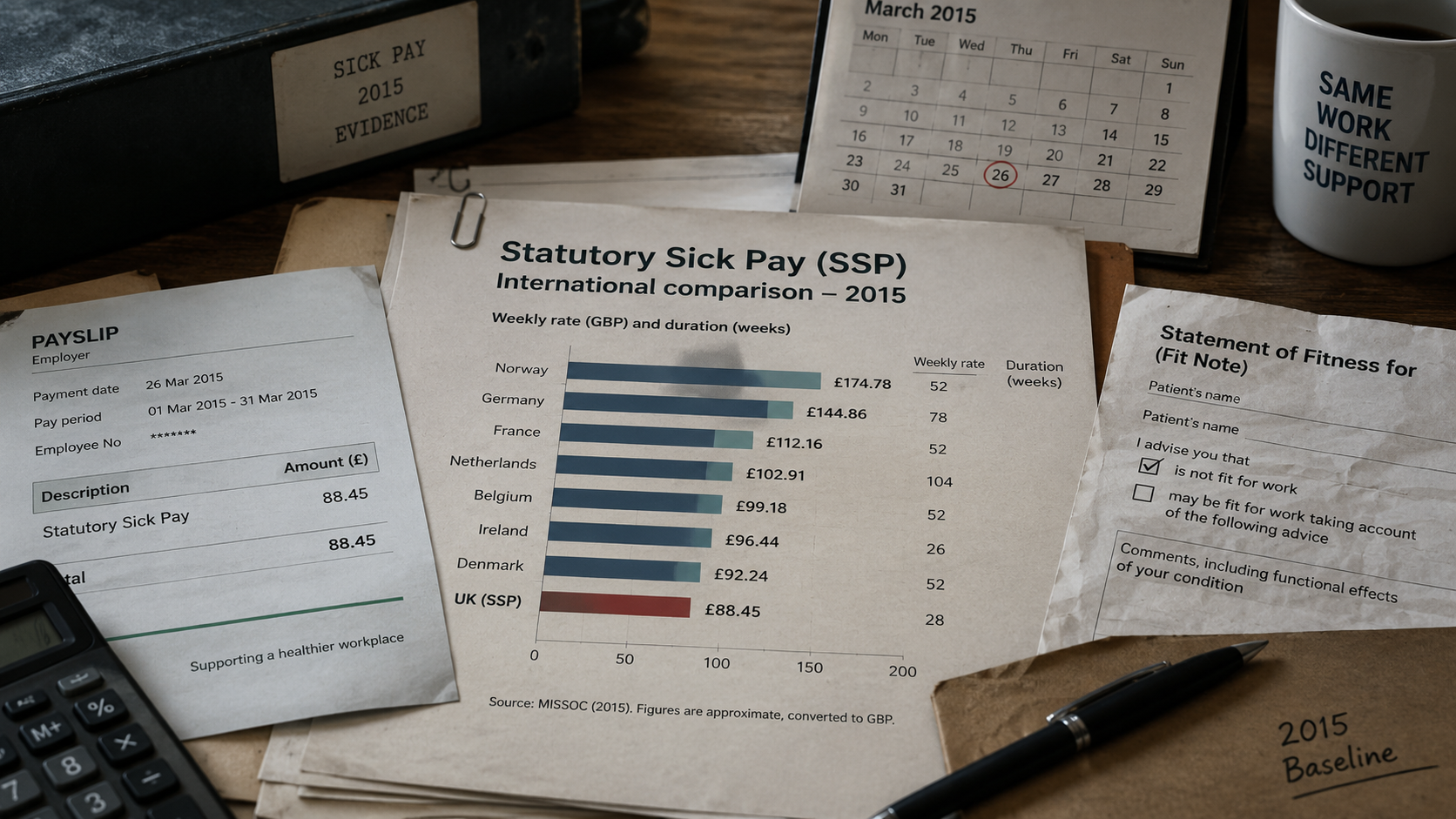
🤒 Before Brexit and Covid, Britain already had one of the weakest statutory sick-pay systems among comparable economies. This is where the story starts. 📊
-
Robbing Peter to Pay Paul
💷 Defence, welfare, housing, energy and infrastructure are repeatedly forced to compete for the same money. Britain keeps moving resources between problems instead of rebuilding the capacity needed to solve them. ⚖️

CONNECTION
Every system eventually arrives here.
Patterns become structures.
Structures create power.
Power creates feedback.
Feedback drives optimisation.
Optimisation creates decline.
Decline creates pressure.
Pressure forces choices.
The map ends here.
Not because systems stop changing, but because every future path begins with a trade-off.
EVERY SYSTEM PROMISES BENEFITS.
EVERY SYSTEM HIDES COSTS.
UNDERSTANDING THE TRADE-OFFIS UNDERSTANDING THE SYSTEM.