The Union
Four nations. One state. Unequal power.
A history of conquest, bargains, empire, money and unfinished constitutional business.
Enter the UnionThe United Kingdom is often described as a family of nations. It sounds warm, natural and permanent—as if England, Scotland, Wales and Northern Ireland simply grew together and agreed to share a home.
That is not how it happened.
The country was assembled in stages. Wales was incorporated into England’s legal and political system. England and Scotland joined in a parliamentary union while Scotland retained important institutions of its own. Ireland’s parliament was abolished and absorbed into Westminster. Most of Ireland later left. Northern Ireland remained, under a settlement in which its constitutional future ultimately rests on consent.
There was no single founding moment and no single bargain. There were bargains, pressures, calculations, conflicts and consequences—different in every nation.
The result is a state that pools money and risk across its territory but does not distribute power equally. Its citizens share a Treasury, a currency, a national debt, armed forces, pensions and many of the same economic shocks. Yet the authority to define the Union, alter its constitution and decide the limits of devolution still rests overwhelmingly at Westminster.
To understand whether the Union works, we first have to understand what it is.
The Union collects.The Union borrows.The Union distributes. Westminster decides the limits.
01
Formation
This Was Never One Simple Union
The modern United Kingdom did not arrive fully formed. In the sixteenth century, legislation under Henry VIII incorporated Wales into the English legal and administrative system. Wales did not enter a new parliament as an equal state preserving a separate constitutional structure. It was brought within England’s institutions.
In 1603, James VI of Scotland inherited the English throne and became James I of England. The crowns were joined, but the kingdoms remained separate. That changed in 1707, when the English and Scottish parliaments approved Acts giving effect to the Treaty of Union and created the Kingdom of Great Britain.
Scotland was not erased. Scots law remained distinct. The established Church of Scotland was protected. Scottish education and other institutions continued to develop separately. The Union centralised the parliament while preserving enough of Scotland to ensure that Britishness never completely replaced Scottish nationhood.
Ireland followed a different path. The Acts of Union that took effect in 1801 abolished the Irish Parliament. After rebellion, repression, famine, Home Rule campaigns, a war of independence and partition, most of Ireland left. The state we now call the United Kingdom is what remained after an earlier version fractured.
Wales
Wales is incorporated into England’s legal and parliamentary structure.
One Crown
England and Scotland share a monarch while remaining separate kingdoms.
Great Britain
The English and Scottish parliaments form a single Parliament of Great Britain.
The United Kingdom
The Irish Parliament is abolished and Ireland joins Great Britain in parliamentary union.
Partition and departure
Most of Ireland leaves; Northern Ireland remains within the United Kingdom.
The present name
The state is formally styled the United Kingdom of Great Britain and Northern Ireland.
Modern devolution
New democratic institutions emerge in Scotland, Wales and Northern Ireland.
Scotland decides
Scotland votes by 55% to 45% to remain within the United Kingdom.
Brexit divides the map
The UK votes to leave the European Union, but its nations do not vote alike.
The internal market dispute
Westminster legislates for a post-EU internal market amid devolved objections.
This is not the history of a settled constitution. It is the history of a state repeatedly redrawn.
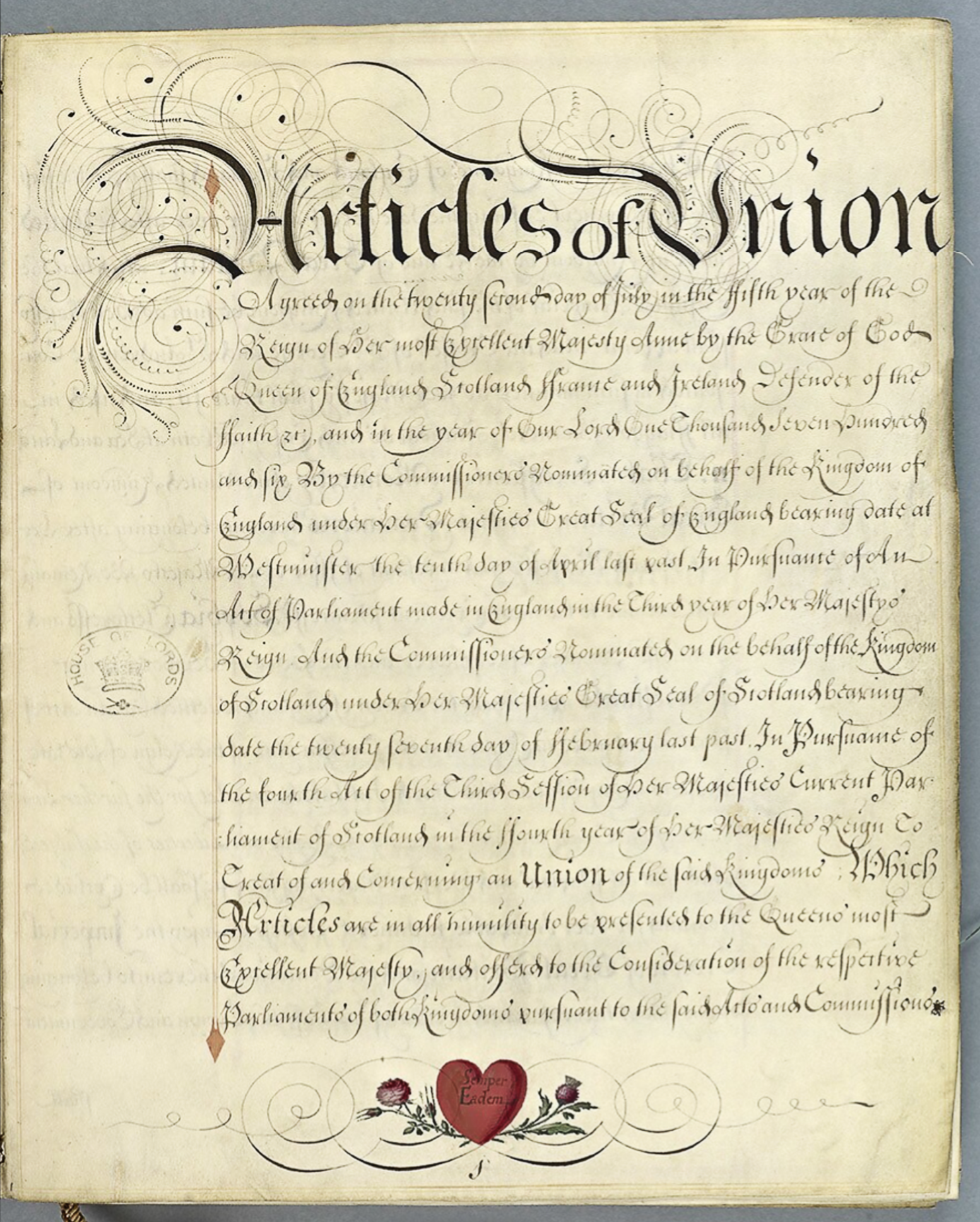
A parliamentary union formed Great Britain while preserving important Scottish institutions.
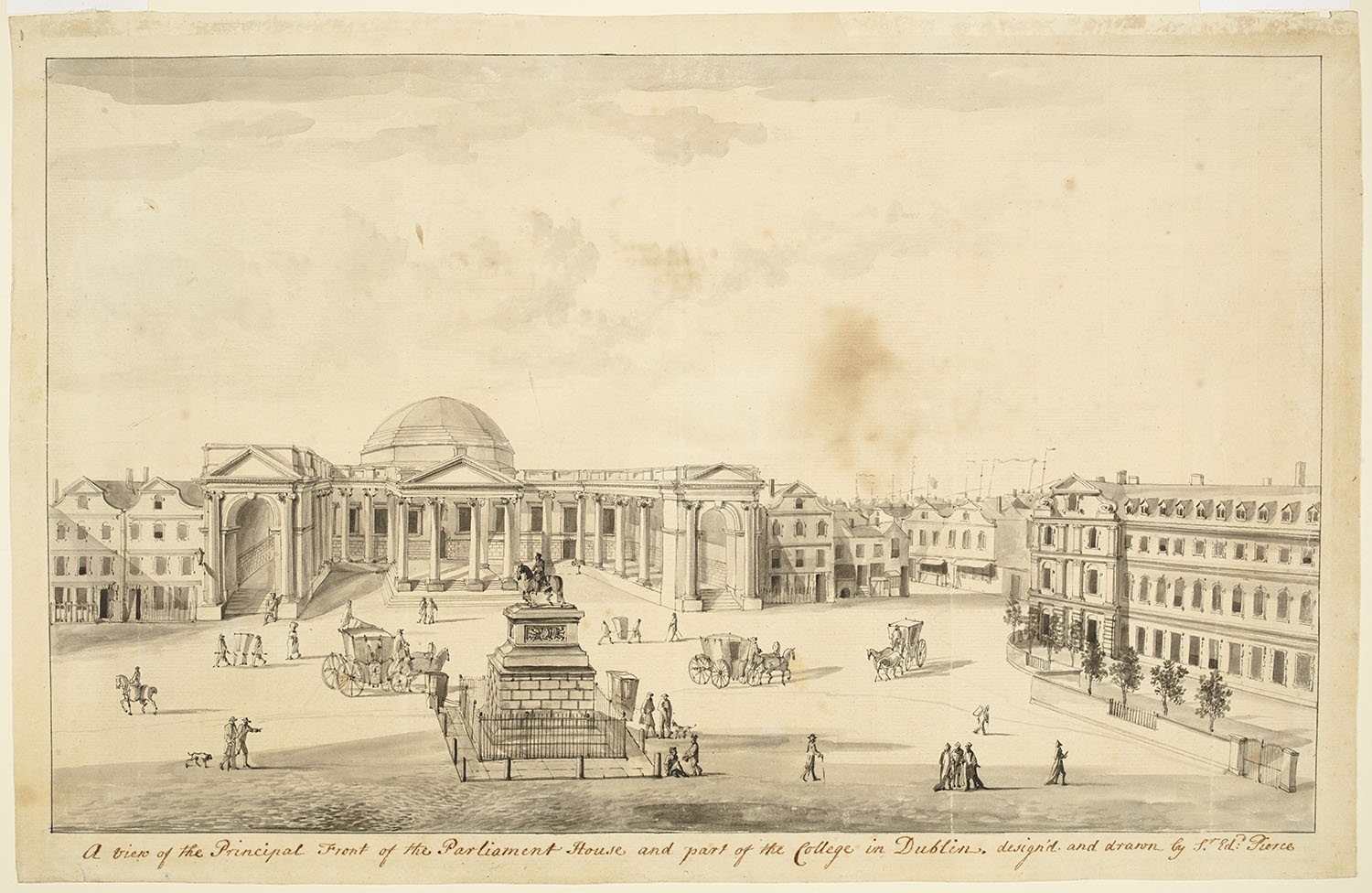
Ireland possessed a parliament before the Union of 1801 abolished it.
02
The national story
The Myth Machine
The Union survives partly through institutions and partly through stories. The problem begins when a fragment of truth is presented as the whole constitutional reality.
Myth 01
Four equal nations chose to become one.
They entered through different processes: incorporation, negotiated parliamentary union, abolition and partition. They are called four nations. They are not four equal constitutional units.
Myth 02
England pays for everybody else.
England supplies most revenue in absolute terms, but its prosperity is not uniform. London and the South East record the strongest fiscal positions while most English regions also receive redistribution.
Myth 03
Barnett decides every nation’s budget.
The formula generally changes devolved block grants when spending on comparable services changes. It does not calculate each budget from scratch or cover every form of spending.
Myth 04
Devolution transferred sovereignty.
It transferred major responsibilities. Westminster remains legally sovereign and can legislate in devolved areas. The word normally carries remarkable constitutional weight.
Myth 05
Brexit returned power to all four nations.
Brexit returned powers to the British state without settling where inside that state those powers should sit.
Myth 06
The United Kingdom has always existed.
Its territory, title and governing arrangements have repeatedly changed. Permanence is one of the Union’s most successful stories. History says otherwise.
03
Authority
Who Carries the Weight of Power?
Westminster carries sovereignty
The UK Parliament controls the constitutional framework. It determines reserved powers, can alter devolution statutes and decides whether Scotland or Wales receives the legal authority required for an independence referendum.
The Treasury carries financial power
The Treasury controls UK borrowing, the overall fiscal framework and most of the major tax base. Devolved spending freedom is real; devolved fiscal sovereignty is not.
England carries numerical power
England’s population gives it the commanding position in the Commons. Yet it has no equivalent of Holyrood or the Senedd. Westminster is simultaneously the parliament of the UK and, across much domestic policy, the government of England.
London carries institutional power
Government, finance, media and corporate authority remain concentrated in the capital. London carries the Union while benefiting from the system that made it the centre.
England dominates the Unionand disappears inside it at the same time.
04
The shared ledger
Who Raises, Who Spends, Who Receives?
A serious Union does more than move departmental budgets. It pools risk. People across the UK share a currency, central bank, government debt, armed forces and broad fiscal system. State pensions and much welfare spending cross internal borders. When one area suffers an economic shock, its services do not depend solely on the taxes raised there that year.
That capacity is one of the strongest practical arguments for the Union. It is also why territorial fiscal figures must be handled honestly.
These are statistical allocations within an existing state—not invoices for independence.
England
Estimated net fiscal deficit per person.
Wales
Estimated net fiscal deficit per person.
Scotland
Including a geographic share of North Sea revenue.
Northern Ireland
Estimated net fiscal deficit per person.
The Union redistributes. That is not evidence of a hidden crime. Redistribution is one purpose of a state. The harder questions are whether the rules are transparent, whether spending reflects present need, whether economic policy reduces regional dependence, and whether the people supplying or receiving resources possess meaningful control.
A transfer can protect a communitywithout giving that community power.
05
The asymmetric state
Four Nations, Four Different Arrangements
England
The nation hidden inside the state
England is the largest nation, the main source of the UK’s population and revenue, and the territory most capable of determining UK election results. It is also the only nation without a national legislature or government of its own.
England is both over-powerful and under-defined. Its constitutional absence allows English and British interests to be spoken of as though they are always the same.
Scotland
Partner, nation and constitutional challenge
Scotland entered parliamentary union while retaining a separate legal system, church and institutional identity. Modern devolution restored a legislature and transferred major responsibilities.
But Holyrood cannot unilaterally authorise a binding independence referendum. Scotland can govern extensively. It cannot alone decide whether it remains governed within the United Kingdom.
Wales
Incorporated, devolved, still recovering a voice
Wales was incorporated into England’s legal and parliamentary system centuries before modern ideas of democratic national consent. Its identity survived without the institutional protection Scotland retained.
Devolution has rebuilt a Welsh political space. If a nation spends centuries rebuilding institutions removed through incorporation, when does devolution become restoration rather than generosity?
Northern Ireland
The Union by consent
Its institutions emerge from conflict, partition and the Belfast/Good Friday Agreement. People may identify as British, Irish or both. Its place in the UK ultimately depends upon majority consent.
Northern Ireland demonstrates that sovereignty can be softened by agreement—and that the survival of the state can depend upon accepting that belonging is conditional.
06
The global project
Empire and the Making of Britishness
The Union did not develop in isolation. It developed alongside empire. The 1707 settlement opened a united trading area governed from London and gave Scots access to England’s overseas commercial world. People and institutions from England, Scotland, Wales and Ireland participated in imperial administration, commerce, settlement, military service and exploitation.
Empire was not simply England acting while the other nations watched. Nor did participation make power equal at home. Different parts of the Union could be subordinated within Britain while individuals from those same places helped administer domination abroad.
Britishness offered something national identities alone could not: membership of a global project. When empire receded, the Union lost more than territory and markets. It lost a project large enough to sit above its internal differences.
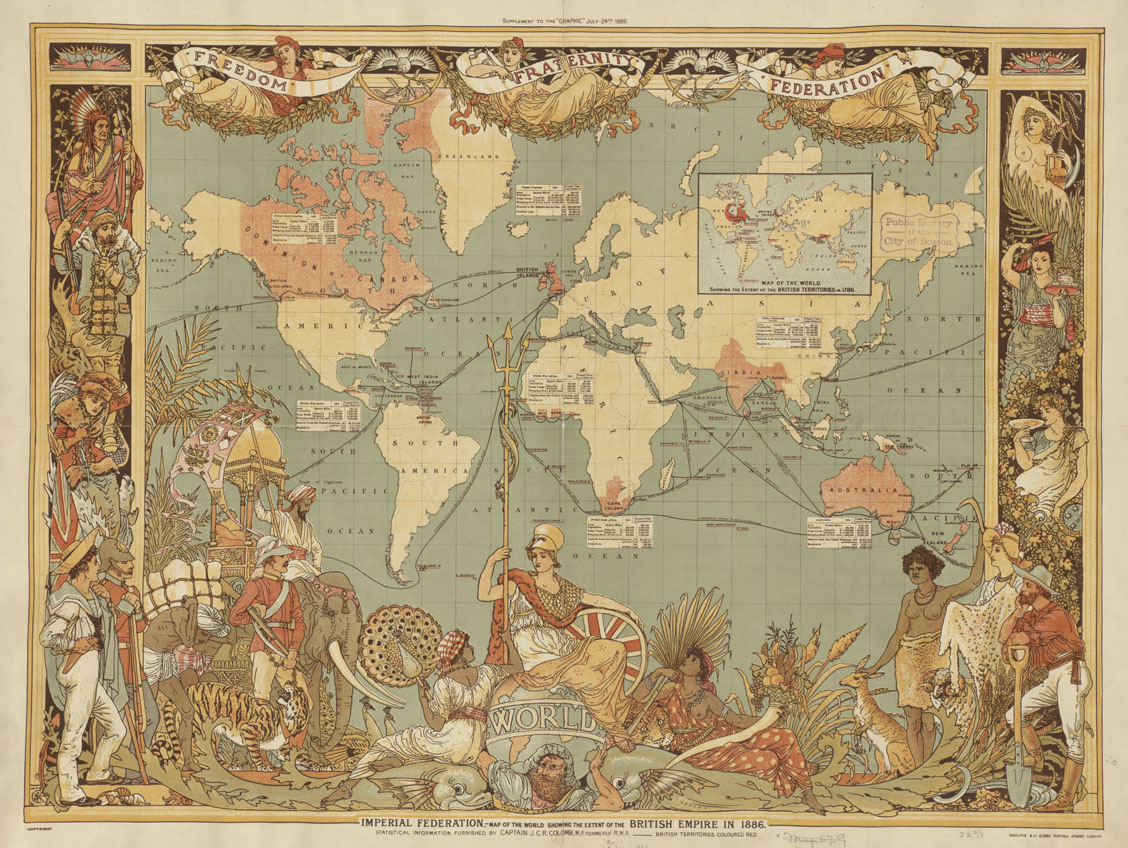
What is Britishness forwhen Britain no longer commands the world?
07
The rupture
Ireland: The Union That Broke
Ireland is often treated as a complicated appendix to British constitutional history. It is central to it.
The 1801 Union abolished the Irish Parliament without resolving Catholic exclusion, land, national identity or demands for self-government. It survived campaigns for repeal and Home Rule, but it did not survive intact.
Revolutionary politics, the Easter Rising, electoral transformation, armed conflict and negotiation produced partition. Most of Ireland left. Northern Ireland remained. The words for ever after had appeared in the old settlement. Political reality proved stronger than constitutional language.
The Good Friday Agreement worked because it moved away from winner-takes-all sovereignty. It created power-sharing, cross-border institutions, rights protections and a democratic route through which Northern Ireland’s status could change.
08
The stress test
Brexit Exposed the Constitution
Brexit did not create the Union’s contradictions. It exposed them.
The 2016 referendum asked one UK-wide question and produced one UK-wide result. Leave won 51.9%. England and Wales voted Leave. Scotland and Northern Ireland voted Remain. The different national outcomes carried no separate veto.
Brexit was sold as the restoration of parliamentary sovereignty. That meant restoring power to Westminster—the institution that speaks for the whole UK, governs England and sets the limits of the devolved constitutions.
Northern Ireland presented the contradiction in physical form. Avoiding a hard land frontier required special arrangements, placing new friction within the Union Brexit was supposed to restore.
Britain had taken back control.Which Britain—and controlled by whom?
09
The unfinished settlement
What Holds the Union Together Now?
Money
Shared resources and borrowing protect people from regional shocks. Persistent transfers can also expose the failure to build productive economies outside the centre.
Identity
Britishness remains meaningful to millions. For others it is secondary, contested or attached to an imperial story that no longer describes their lives.
Institutions
Devolution gave political expression to three nations while making England’s missing settlement more visible.
Consent
A voluntary union cannot rely forever on saying departure is too dangerous, too expensive or simply unavailable.
The United Kingdom could continue through negotiated adaptation. England could receive a clearer settlement. Devolved governments could gain greater fiscal autonomy. A territorial second chamber could replace the House of Lords. The constitution could be written down and the rules governing consent made explicit.
Or the state could remain politically decentralised, legally centralised and permanently uncertain whether its nations are partners, territories or administrative units.
Independence is not cost-free. Union is not neutral. Federalism is not simple. Centralisation is not stability. Every option distributes money, risk and power differently. The honest argument begins when each side admits its price.
The United Kingdom may endure.
But endurance is not the same thing as settlement.
The question is whether the Union has an agreed future.10
Go deeper
The Union Files
The Barnett Formula: What It Actually Does
The calculation everybody invokes and almost nobody explains accurately.
In developmentWho Really Pays for the Union?
Why the fiscal map is not England against everybody else.
In developmentThe Nation Without a Government
How England dominates the state while lacking national institutions of its own.
In developmentLondon Is Not England
The capital’s surplus, institutional gravity and the economy built around it.
In developmentThe Union That Lost Ireland
How a supposedly permanent settlement fractured—and what followed.
In developmentBrexit Returned Power—but to Whom?
The sovereignty slogan and the conflict hiding inside it.
In developmentScotland and the Price of Leaving
Fiscal transfers, currency, trade, institutions and democratic consent.
In developmentIncorporated, Devolved, Still Waiting
A nation rebuilding political authority after centuries inside England’s structures.
In developmentThe Principle of Consent
A constitutional position unlike any other part of the United Kingdom.
In developmentThe Empire That Made Britain
How imperial power helped bind the Union—and what disappeared with it.
In developmentCan Four Unequal Nations Form a Voluntary Union?
The gap between political language and constitutional authority.
In developmentWhat Would a Federal UK Actually Look Like?
The promise, difficulty and unavoidable problem of England’s size.
In developmentFour nations share this state.
They do not share it equally.
The future of the Union depends on whether that inequality can be confronted before history redraws the map again.