Employment
You did everything right. You’re still locked out.
What changed?
For generations, the bargain was relatively simple: learn, qualify, work, progress.
That bargain has changed. Entry-level jobs demand experience. Employers want finished workers but invest less in producing them. Qualifications multiply while access narrows.
Employment looks at what happened between education and work — and why doing what you were told no longer guarantees getting through the door.
The big question
When did getting a job become this complicated?
Britain talks endlessly about getting people into work. Less attention is paid to what the labour market now asks of the people trying to enter it.
Experience before experience. Qualifications before opportunity. Multiple interviews for ordinary jobs. Automated screening. Temporary contracts. Stagnant progression.
And an economy that complains about skills shortages while making it increasingly difficult to acquire skills.
The problem isn’t one broken doorway. It’s the system connecting all of them.
Featured series
Start with the argument.
Employment series
You Did Everything Right. You’re Still Locked Out.
A five-part examination of what happens when qualifications, effort and willingness to work collide with a labour market that increasingly demands experience before it provides opportunity.
Explore the seriesExplore the system
Employment is more than finding a job.
Six ways of looking at the systems that determine who gets in, what happens once they do, and what employment ultimately provides.
Access
Getting through the door
Recruitment, entry-level work, experience requirements, hiring systems and the barriers between applicants and opportunity.
Skills
How workers are made
Training, apprenticeships, universities, further education, qualifications and employer investment.
Work
What the jobs became
Job quality, insecurity, conditions, progression, productivity and the changing experience of work itself.
Pay
What work buys
Wages, housing, commuting, childcare and whether employment still provides a route to economic independence.
Economy
The jobs Britain created
Deindustrialisation, services, productivity, regional economies, investment and the high-skill, high-wage promise.
Next
What happens from here
AI, automation, robotics, demographic change and what happens when traditional routes into employment begin disappearing.
The employment pipeline
The route was supposed to connect.
Latest from Employment
Follow the system.
Analysis of work, access, skills, pay and the changing relationship between employment and economic security.
-
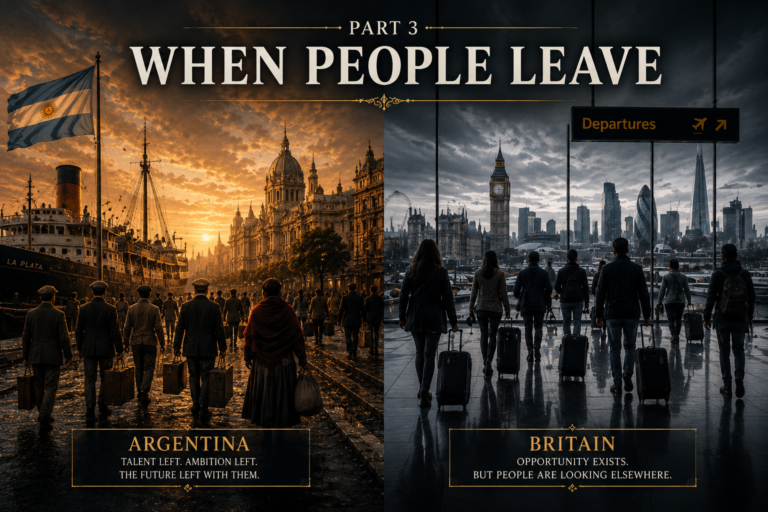
Britain Is Not Special — Lessons from Argentina – Part 3
🇬🇧🇦🇷 Decline does not always announce itself through crisis. Sometimes the warning is quieter: talent leaves, capital moves and confidence follows.
-
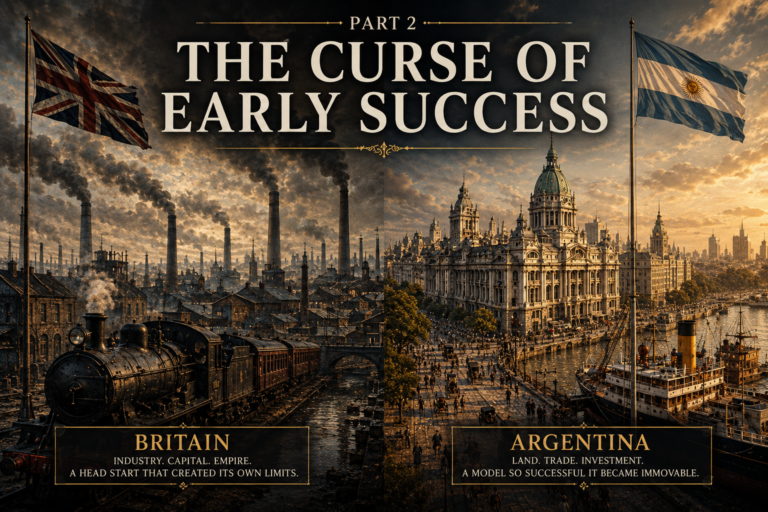
Britain Is Not Special — Lessons from Argentina – Part 2
🇬🇧🇦🇷 Argentina grew rich from land and trade. Britain from industry and empire. But early success can build systems that become increasingly difficult to…
-

You Cannot Treat the Person and Ignore Their Life
🧠 Mental health doesn’t begin and end inside somebody’s head. Rent, debt, work, housing, relationships, loneliness, discrimination and uncertainty all matter. What happens when…
-
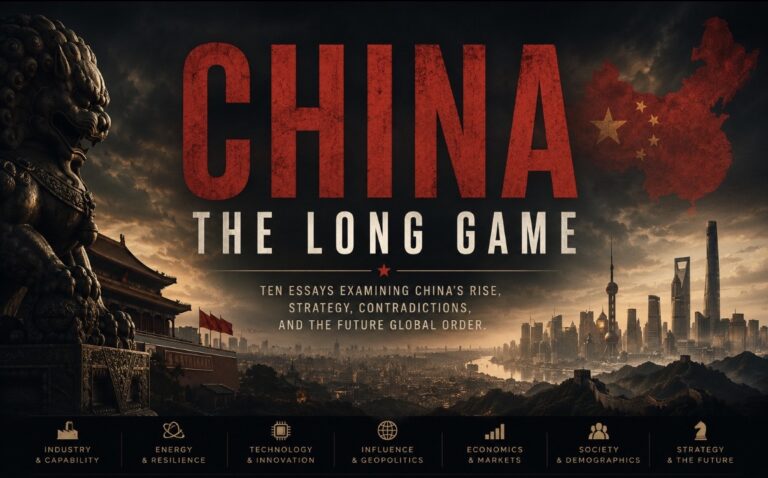
China The Long Game
🇨🇳 China’s rise was not one decision or one policy. From history and energy to manufacturing, infrastructure, technology and trade, China — The Long…
-

Statutory Sick Pay: Where We Actually Started
🤒 What does getting sick actually cost? A nine-part investigation into statutory sick pay, worker protection, Europe, Covid, Brexit and who ultimately carries the…
-

100+ Reasons Britain’s Pubs Declined
🍺 There was never one reason the British pub declined. Across 50+ years, industry disappeared, communities changed, costs rose and habits shifted. 100 pubs.…
Connected systems
Employment does not exist on its own.
Work sits inside a wider system. Education shapes access. Industry creates demand. Housing determines what wages need to cover. Technology changes what employers need next.
Employment
A job is not the end of the story.
The real question isn’t simply whether people are working.
It’s whether the economy creates routes into useful work. Whether people can develop once they arrive. Whether that work provides security.
And whether the next generation is being prepared for the jobs that will actually exist.
Work is the beginning of the question, not the answer.