
Control emerging through structure, not force.
WHO CONTROLS RESOURCES, DECISIONS AND DIRECTION.
Power is not always visible.
It emerges from structure — from who controls resources, decisions and direction.
It does not need to be enforced loudly to be effective.
Most power operates quietly, through systems that make outcomes predictable.
POWER DOESN’T NEED TO LOOK LIKE POWER.
Control becomes most effective when it is embedded inside the structure itself.
-
01
Decision-making concentrated in specific places
-
02
Influence without direct accountability
-
03
Systems that benefit the same groups repeatedly
-
04
Limited access to change or control
-
05
Outcomes that consistently favour certain positions
Power determines who benefits from a system.
It shapes outcomes long before they are questioned.
Without understanding power, it is easy to mistake outcomes for fairness.
Power rarely needs to announce itself.
It is embedded in structure, reinforced by feedback, and protected over time.
The more stable the system, the less visible power becomes.
IN PRACTICE
Examples of power in motion.
-
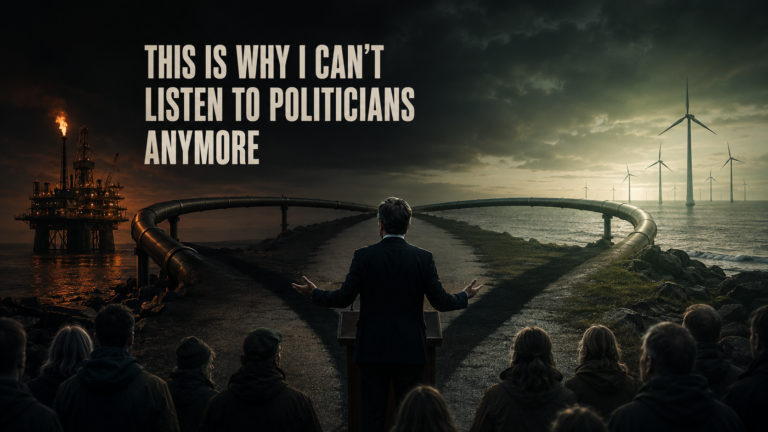
This Is Why I Can’t Listen to Politicians Anymore
🛢️ Andy Burnham says North Sea oil can build the bridge to green energy. But who owns the resources? Who controls the profits? And who exactly is “we”? Political promises mean very little if nobody asks who holds the power.
-
Britain Wasn’t Colonised. It Was Hollowed Out.
🇬🇧 A billionaire living in Monaco says Britain has been “colonised” by immigrants. But the country wasn’t taken by workers. It was hollowed out — through ownership, privatisation, asset sales and the transfer of economic power. 💷
-
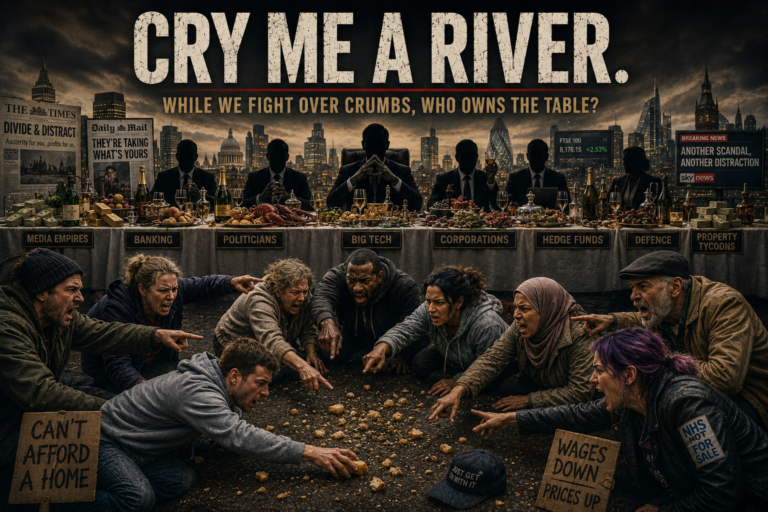
Cry Me A River
🍪 Britain has spent forty years arguing over the crumbs. From Thatcherism and Murdoch to wealth creators, benefit scroungers and the algorithmic outrage machine — someone is always telling you who wants your cookie.
-
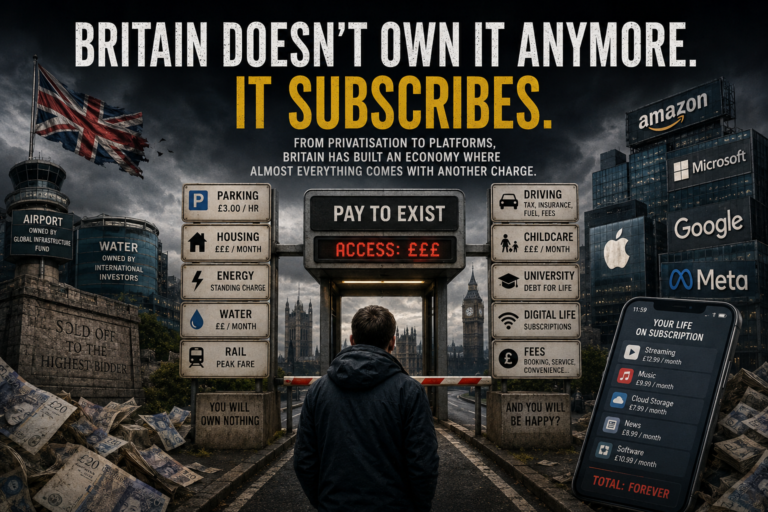
Britain Doesn’t Own It Anymore. It Subscribes.
🇬🇧 Britain sold the assets, privatised the infrastructure and outsourced the services. Now ordinary life arrives as a stream of rents, fees, charges and subscriptions — paid to use what we once owned. 💳

Control becomes self-reinforcing.
Power does not act alone.
It is sustained through repetition and reinforcement.
Control becomes durable when behaviour begins to regulate itself.
What appears stable is often
maintained through invisible feedback.
FEEDBACK LOOPS
What power repeats,
feedback sustains.
TO CONTINUE.